
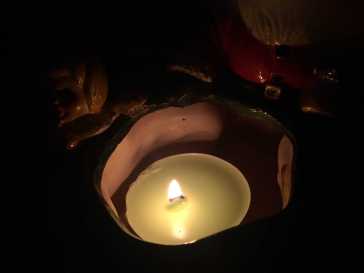
A year of grief, over. It means we have loved, and we need not be fearful of loving again.
2020 has been a year of mass grief; grief for changed bodies and bodies lost forever. I am writing of people and teresapien lives, through pandemic and the vagaries of the Anthropocene. There will be more to come, no doubt.
It takes courage to love again when the love that came before has pierced the skin with a hundred needles. Grief can feel like that. But without giving and receiving love, even love for ourselves, we are all dust. It’s just the way it is, the way more complex lives have evolved, who knows, maybe all life.
Of course, we can have spells of time away from love, like we are holding a drink for someone else at a party. Some people may think they don’t care, rocks and islands and all that, but I think they do mind, deep down. I do.
Sometimes, the love shifts from one type to another, say, from romantic to deep friendship, from fluministic devotion to kindship. Eventually, we need to drink for ourselves.
Whether that love is in full view, the full public view, is another thing. Some believe love is not real unless it is demonstrable in full view of everyone and everything. That also takes courage, a revelation of something that makes us vulnerable. There is a reason why L Frank Baum’s Cowardly Lion was the bravest of all because he told everyone he met he had no heart but wanted one. It’s just that he doubted himself. We all have doubts. My father always said it’s the foolish ones who never doubt themselves.
But some of the most passionate and dedicated love stories across time are surely never told. Life on Earth, of course, is a love and death story.
The good of love may feel like the most searing punishment when the object or flow of our love is hurt or dies. This kind of pain is at least as old as eukaryote cells. We share that in common, and for millions of years. Grief is just as ancient, a kind of ancient trauma. I’m not using that word lightly. Some think ‘trauma’ is an overcooked ham, but it isn’t. When love is strong, the loss, and therefore the suffering, can’t be anything other than trauma. But it has evolved in the avoidance of death, and in the pursuit of care ~ you could say, grief is an aid for survival.
Whether you believe in the afterlife matters less if whoever stirred those emotions of joy and sadness, frustration, and even hate, suffers or suffers and dies. Mother, daughter, sister, lover, bird, dog, horse, wildflowers, lichen, moss, fungi, ferns, trees, whales, entire ecosystems, biomes, coastal cities, continents.
All that’s left are the memories. Maybe this is an icy take on what is the warmest process of all ~ two-way contentment of extreme care, celebrated in public, for all to see. If you’ve loved fully, then you’ve cared fully and lived care-fully. Be proud and content about that, because…
“it’s so much darker when a light goes out than it would have been if it had never shone.” John Steinbeck, The Winter of our Discontent.
Audio recording:
 Seasonalight
You must be logged in to post a comment.