Blog

  • The Real Threat

    Sometimes, the tragedy is in words. 

    Caroline Lucas’s latest series for “The Rest is Politics” podcast is a case in point: “When Nature becomes a Security Threat.”* 

    Perhaps it’s the “genius stereotype” or “brilliance bias” towards the Intelligence Community that is supposed to move people to act. Shock tactics? Why demonise Nature? If we are not moved by science, then threat to Nationhood ought to do it. How very Nationalistic.

    The Labour Government’s 13-page DEFRA-commissioned report upon which this series is based was published earlier this year, and apart from the drama of its Downing Street redactions and ultimate public release, researchers from MI5 and MI6 appear to have raised it on previous iterations of standard, modern, and extreme (Western) Anthropocentrism. Nature’s Contributions to People are central, acronym NCP applied (as you might imagine), and include ecosystem “services”, value = growth economy, and externalities to “Nation,” mainly, the Savannah-isation of the Amazon Rainforest and Inter-State competition for “resources.”

    Nature is not coming for anyone, and particularly the British. There is no intent. The real threat is human actions towards Nature, making it into the report as a small byline, and with no detailed critique of values and consequent behaviours.

    Our entrenched culture of mental separation from Nature deepens.

    References include quantitative measurements—taxa and tipping points (Natural History Museum), Natural Capital (The Dasgupta Review), IPBES “ecosystem services” inter-governmental agenda, and various scientific papers on exceeding Rockström’s 9 planetary “boundaries” (hint: they are not particularly separate)!

    Emphasis is on uncertainty and risk to the United Kingdom as a nation-state, threats largely “external” ~ food imports forcing dietary change, and, of course, “migration”. Risks generated by collective values and behaviours are absent, and a question largely left literally to “customers” who might use the document for legislative decision-making (but they do find moments to mention pro-growth AI, laboratory-grown meat, and insect proteins)!

    This highlights just how devoid of understanding our collective role within nature remains. Mentally separate, we are agents for catastrophic and rapid change of the complex system upon which all life depends, with ignorant cultural and social responses to those rapid changes on top.

    Again, serious discussion on values and ethics falls down the deep, deep chasm that still exists between science and politics.    

    Ethical framing matters; readers and interpreters should be aware that these conclusions ARE A CHOICE, and bad ones at that. They shape how the report is used, nudging along all the same-old corrupt and Earth-damaging e-motivators without a whiff of critical thought.

    I’m not going to critique the paper line by line here. Many of the risks it identifies have been predicted and observed for a very long time, and the geopolitical map of power now shifts too quickly for a fixed security reading to hold for long. As I say, my concern is instead with the report’s ethical foundation: treating ecological collapse chiefly as a “national security” problem, while leaving the deeper ethical questions of value, power, agency, and human separation from Nature largely untouched. Here, read it for yourself.

    Recognising barriers of language and value is only the beginning, because those barriers are sustained by power. They determine which harms become visible, which causes remain unnamed, and which responses feel politically possible. The harder question is who holds the power to define values, protect them, and turn them into collective behaviour.

    Critically, disproportionate power via capital has accumulated through markets, competition, and institutions that reward extraction. These systems protect values that shape planning laws, trade priorities, food systems, energy choices, land ownership, finance, and the distribution of risk. To remain uncritical is to intensify behaviours across anthropocentric society — extreme competition, expansionism, colonialism, and highly extractive industries among them — a continuity despite the exclamation! An endangering of all Nature, with the greatest harms falling on the most vulnerable lives and communities, locally and globally. The result is not a marginal side-effect but a widening spiral of cause and consequence, with many effects already unfolding and others still unknown.

    Recognising root causes means naming the actual structures of power and agency that shape value priorities and behaviours. A national-security frame may generate “flash” public interest, and the risks involved are numerous and serious, but it can also narrow attention towards state protection, territorial interest, and crisis management rather than the hierarchies, core values, and behaviours driving ecological collapse. The fact that evidence has been suppressed or redacted only underlines how central those hierarchies of control remain.

    Isn’t this just the expected politics of adversarial opposition? I’m afraid there are no sides, no “heroes”, no “saviours” or “leaders” who are going to singularly turn things around – these cultural ideas, particularly Eurocentric in origin, are also constructions by a minority, like Nationhood itself – a body, decapitated — to separate us from each other and the rest of Nature. 

    I’d like to see the full list of the 81 rationalist “experts” who contributed, voting and consulting through various workshops and meetings, because I suspect most of them are men, and none of them is widely versed in the broad canon that is “Environmental Ethics.”  Most of them probably still consider it “religiosity.” Blah!

    Answers are deeply interconnected, and in no way final. Human food “security” is more about localism as embodied nature than any intellectualised, separate planetary boundaries, and real change far more about inclusiveness, collective knowledge sharing (causes, effects, imagining outcomes, correcting trajectories), REAL care, and responsibility for ALL life.

    ~~~

  • Climate Surgence

    Credit: Hansen, et al (2025) Please click https://www.tandfonline.com/doi/full/10.1080/00139157.2025.2434494#abstract

    Surgence is an old English word rarely used, but I wish to bring it back in the context of Earth’s Climate.

    Surge ~ from Latin surgere “to rise, arise, get up, mount up, ascend; attack.”

    + ence ~ suffix commonly attached to verbs to form abstract nouns of “process”, fact, or state.

    Climate Surgence – an upwelling of thermal heat trapped in Earth’s lower* atmosphere, causing more energetic storms, extreme droughts, increased floods, fire, landslides, biotic suffering, and extremes in human temperament.

    Earth is not a machine. I have never recommended the Monbiot-advocated use of the mechanical “breakdown”, sadly rising in use, yet linguistically an incorrect description of what is a fundamental rise in the thermal volatility of Earth’s complex atmosphere and interconnected processes.

    To pinpoint collective causal species, and then dominant gender? Perhaps Climate Androsurgence.

    And more? WhiteMandroSurgence, and not in a good way!

    ~~~

    * Remember, cooling and contracting of the upper atmosphere is key vertical fingerprinting (or kwelical evidence) of anthropogenic causation of radiative forcing, because it serves to further trap heat in the lower atmosphere and skew key patterns such as polar vortices and jet streams. See https://newsroom.ucla.edu/releases/stratospheric-cooling-vertical-fingerprinting

  • Introducing andro-pyroclysm: when “wildfire” seems so tame.

    Image by me. Hand-drawn and then photo-filtered, NOT AI.

    For some time, my body has felt a visceral judder of injustice whenever the word “wildfire” is used across our ever-increasing media of meaninglessness (lately, every time I switch on my TV, radio, or social media apps).

    Like my neologism esranebula/esranebulous ~ the eerie blood-coloured ghostlight of the Anthropocene seeping from inter-continental crematoria smoke clouds ~ I think our English lexical simulacra could ironically do with shots of hyper-reality (see Baudrillard).

    In a new word, or term, I want to bring the lethality of unseasonal or uncontrollable fire to mind instead of a celebratory evolutionary modulator. “Wild” is also broad, semantically (a bit like “love”), and “fire” is not always cataclysmic; beyond a fireplace or campfire, escapable, survivable controlled burns (a true craft, and learned through generations) have proved to be an ancient place-based method of preventing thermal runaway and ignition of vegetative matter.

    See the global scale of the anthropogenic cellular-burn that LiFE is experiencing right now.

    I thought about ash, breath, souls, and screams (imagine those collective screams). Ashanaman was my first idea, derived from a proto-Celtic “burning of souls”. But I felt it tripped off the tongue too easily; perhaps too spiritually loaded; reflecting no hardship.

    Pyre is funereal. Cataclysm is expansive.

    “Pyroclysm” alone may not point the finger of blame. Massive “floods” of fire have flowed from past formations of large igneous provinces, major meteor strikes, or supercell lightning swarms, though increases in the latter may also be attributed to human-induced climate surgence.

    Using “andro” as the modulator in a hyphenated compound serves to nail general causation – collective human behaviour (hierarchies of power aside). Humans are deliberate or accidental incendiaries, either by storing spontaneously combustible materials in bulk or igniting by match or broken glass.

    Critically, of course, our species is the catalyst for rapid global heating/ice-melts by persistent selfish cultures of burning fossil fuels and emitting greenhouse gases.

    So, to the catastrophic loss of trillionitudes of LiFE on land by anthropogenic fire, I offer “andro-pyroclysm.

    Perhaps, Andro-Pyromundi could be deployed as part of a wider Earth Crisis; precursor to a planetary extinction event? “Pyrocene” coined by Stephen J Pyne implies that geological epoch of Flame Earth as opposed to Snowball Earth – perhaps colossal sea rises from polar ice melts will put that idea to bed (I just don’t know).

    The blaze across the horizon began to create its own weather system, and all the screams fell silent. Airborne embers were bone-lignin-chitin, and the ash crossed oceans. This was never a flame gone feral; this was an andro-pyroclysm.”

    Perhaps the term doesn’t conjure the gargantuan micro-macro pain, death, and grief involved across all species of a burning floloca, but could I cope with that kind of responsibility? The reality is about as bleak as it can get ~ hell-like.

    ~~~

  • Neoliberal education, fall-out, and the rise of the Far Right

    …another appeal for R-evolution on values via the “software” of ecoliteracy running on the “hardware” of educational structures as both eco-logical and eco-emotional (hope, joy).

    Photo by Iceberg San on Pexels.com

    ~~~


    Today, I watched political economist, Professor Richard Murphy’s YouTube question and video titled – What is it about [the political party] Reform?

    Do find the video here, and rest assured, as you might imagine, I nodded along largely in agreement with his own ideas on the politics of care. I felt there was a stark omission, however, from his reply to the question, one that I find common to economists and conservationists alike, even on the political “left.”

    At the end of the broadcast, Richard asked for viewers’ comments, and I spent some time formulating my reply, though it will no doubt be lost in an ocean of other, more succinct or snap comments. For emphasis, I’m sharing it here on my blog too.

    ~~~

    “I hear what you say, Richard, and I agree with so much. However, I think it’s important to discuss neoliberalism and its impact on our education system (everything is connected/relational).

    Also, have you heard of feminist “Ethics of Care,” an established canon (see Gilligan, et al)? Its approach to social/medical/legal problem-solving, etc, is situationally relational rather than adversarial and universal (or utilitarian). This is in contrast to established Western norms imposed by hierarchies of power (predominantly, historically, decisions made by White, continental European men). In my work, amongst other things, I apply the Ethics of Care to the human/Nature nexus.

    I attach an interesting press release from NCSR summarising an evidential “driving” connection behind poor “educational” outcomes in areas specifically targeted by Reform, many of which are post-industrial and also reflect your observations about corrosive economic neoliberalism, insecurity, emotion completely overruling rationale (ethics includes both), etc. Educational experience is the primary driver of the UK’s divide on immigration and politics | National Centre for Social Research https://natcen.ac.uk/news/educational-experience-primary-driver-uks-divide-immigration-and-politics

    The “education” problem is utterly ignored in most public forums, for several reasons. Maybe most still have faith in the current system. Maybe tackling the soul-destroying juggernaut of a competitive, student/teacher race for academic qualifications seems too big and too slow for change. Maybe it’s a lack of imagination or attention to real alternatives, except for any political case for apprenticeships, work remaining within the neoliberal system. Perhaps it is for fear of accusing Brexit or Reform supporters of lacking “intelligence”, etc, rather than the truth of inequitable starting points or lack of opportunity!

    Apply an Ethic of Care to our comprehensive educational system, which has been deliberately hijacked by neoliberalism (individually, as well as ecologically/Earth) along with all other social mechanisms or “multipliers”. Tailor education towards the fullest diversity and inclusivity of our bioregional communities instead of a competitive race to the bottom. Cradle to grave, students, teachers, parents, communities, abilities – remove the structural problem of applying set doctrines across the spectrum of education and replace with bioregional, ecoliterate, local-national interconnected, community/expert hubs of exchange that reach the hearts, heads, and hands of every child, and every adult, to suit need and wellbeing, not capital GDP Growth.

    Without acknowledging a problem with this education system, including the false premise that everyone is the same, a disconnect with “joy” and “hope”, and in terms of curricula AND place (buildings/grounds/procurement), the self-interested will continue to exploit its failures and inequities, and living communities (all life) will suffer.

    A R-evolution should mean that every person and every community will be able to nurture the values (including care), power, and understanding required for transition (and adaptation), towards a better life for all.

    Before anyone suggests it’s too late and we have no time, I have heard that non-sense before, going back at least 35 years. If only this shift had been made 35 years ago… BUT it is NEVER too late. Our historical class system defined “education” towards stasis. Neoliberalism/Westminster centrism took a hammer to any post-war progress almost overnight, finishing it off with league tables, academies, and academic grants tied to neoliberal economic growth. We can explain and offer new, more joyful, therefore attractive, systems of shared knowledge “care”, right now, and communicate immediate, positive social-economic-ecological/climatic consequences, especially at a local level.

    Meanwhile, thank you for all you do – vital.”

    ~~~

  • Google’s “Research” Summary of Fluminism.

    SNAPSHOT MARCH 2026

    I happened upon Google’s “Research” summary of Fluminism, freely accessible through the “unsubscribed” part of its large language model, Gemini, in partnership with Apple’s Siri app (I use a MacBook Air laptop for written work). I’ll post it here now, on my blog, in some vague attempt to reassert my agency within an exponentially expanding data reservoir that is “CLOUD”. I must, and have, credited Google in the (as it turns out, not so bad) act of summarisation.

    I will write again about AI, energy consumption, and responsibility soon. I also wish to note that, for all the hard selling of AI, no one has paid me for any of this content! Who benefits? Who really will benefit? I guess we shall see.

    END.

  • Introducing Substrarchitecture (Substrark).

    Click image to visit The Findhorn Foundation and their variety of ecological approaches to housing.

    Architectural Reflections and Symbioethical Philosophy:

    Many years ago *creak*, I began my journey in architecture studies, inspired at the time by the creative spirit at the Centre of Alternative Technology in Machynlleth, Wales.

    My undergraduate thesis, published in 1993, examined Kenneth Frampton’s concept of Critical Regionalism. I concluded that local, shared traditions—rooted in the materials and memories of a place and shaped by its climate and ecology—are invaluable. Modern technologies can then transform this wisdom into creating beautiful, efficient buildings in and around which to live, work, and play. Critical Regionalism stands as a positive resistance to pulp Modernism and the empty symbolism of Post-Modern architecture. I spent time studying the work of Alvar Aalto and Carlo Scarpa, who both offer fascinating examples of these ideas, and I was lucky enough to visit some of their remarkable buildings and grounds in Finland and Italy.

    Eventually, I stepped away from the egotistical and rather ruthless business of architectural CAD duplication that most graduates entered in the early 90s.

    Urbanizations as Places for Life:

    Much later, I came to write about my own neologism, Kinnages, published online by Humans and Nature in 2017. I like to imagine urban areas as vibrant, interconnected places from below the ground up, where flora, fauna, funga (click to sign the FFF petition), and humans alike can flourish together. We know it’s possible to grow food in cities, enjoy both private and shared spaces, and make responsible use of water, renewable energy, and waste in ecological cycles. To create welcoming communities for everyone, human and teresapien, we need to learn the inherent wisdom of a Place, spark creativity, and work together. This means thinking beyond just lowering emissions and planting individual trees as if they are carbon-absorbing street furniture, and stretching our moral imaginations. Kinnages metabolise. Once this way of thinking spreads, the old practice of creating short-lived, human-centred designs for private markets—at the expense of life on Earth—will feel outdated and embarrassing.

    On Fluminism, Symbiosis, and Materials:

    At the heart of this vision is Fluminism.
    If flow and resistance are to embody mutualistic love, the organic and inorganic processes of Nature within and without any retrofit or new development brief must enable LiFE to thrive.

    T H R I V E !

    LiFE, buildings and grounds in sym-ial relationships.

    The idea of symbiosis in its parasitic form isn’t at the forefront of my mind here (though it has its place in the chaos of life). Industrialising the living essence of mycelia symbiosis into bricks, including the loving, connecting hyphae, then dehydrating them to death, exclusively for human use, is not part of this plan. Worse still, fashionable desire isn’t part of this plan. How does mass use of this material show reverence for living beings any more than, say, intensive tree plantations, clear-cuts, vast sawmills, and more death by the lorry-load? I understand that, just by existing, we cannot avoid all possible harm to other species, but this is a deliberate act with the intent to expand at scale! Try again.

    Any real embodiment of the sym-ial means letting the natural flows—both organic and inorganic—move through our developments, giving LiFE places to thrive in relative homeostasis with our buildings and landscapes.

    Symbioethical Design Principles:

    Choosing materials and construction techniques with care—whether cob, stone, recycled, or reused—shapes both the look and feel of our buildings and surroundings. Sometimes, the design process becomes wonderfully complex, even accounting for the tiniest living things, like microbes or organisms nestled in rocks. On a broader scale, we should pay attention to how our designs impact these invisible communities and ourselves. But this is also about considering how light, noise, air, plants, and pollinators respond to new places and changing climates, and how they may impact epigenetic inheritance in all the species that inhabit them. There will be mistakes, but we will learn from them.

    When we design homes and workplaces, we can do so in a way that encourages life to grow. It becomes a purposeful act, with measured ecological companionship. Technology may be required to maintain “One Health,” such as preventing the transmission of zoonoses, harmful spores, rising damp, or ants setting up home in the sugar bowl (if, like me, during the last heat wave, this turns out not to be your thing). And from the pre-planning stage, we can be mindful and practical about the ecological and dynamic management of water, waste, and transport.

    All-Species Communities and Collaborative Practice:

    Imagine communities built for all species—intentionally planned for any place on Earth, even floating marine homes that can weather storms and tsunamis. I see endless possibilities for collaboration, especially between builders and ecologists, as well as among various species. Like beavers, fluminists might appear to be disruptive by their structural interventions, but they are, in fact, generous creators of opportunities for LiFE. So let’s put on our thinking caps!

    Etymology and Neologisms:

    “Substrate” comes from the Latin substratum, meaning “that which is laid under”—from sub, “under,” and sternere, “to spread.”

    “Architecture” finds its roots in Latin architectus, from Greek arkhitekton, meaning “master builder”—arkhi, “chief,” plus tekton, “builder,” and ultimately from the PIE root *teks, “to weave” or “fabricate.”

    With this in mind, I offer “substrarchitecture,” or more simply, the verb “to substrark,” as possible life-enhancing words for practical movements.

    Valuing Vernacular Wisdom:

    I value the hard-earned wisdom of local and Indigenous communities, as well as genuine involvement from everyone, just as much as formal architectural methods. I’ll continue to develop this neologism, along with the idea of land as commons (see “locacede”).

    ~~~

  • To the Symialarity: a timesketch (Futures)

    I have been developing alternative ways to communicate my ecophilosophies. Below is an animated presentation of my #FutureSketch depicting ethics/values routes to what I am now calling the Symialarity (relates to organic and inorganic processes rather than Albrecht’s SymBIOcene).

    It shows Indigenous wisdom/continuity despite the violence of Colonialism, plus an increasing flow towards Fluministic choices, resulting in a return to the abundance of nature upon which we are a part and utterly inseparable (biologically).

    Interconnectivity of Life on Earth is critical to planetary climatic processes. Too few people understand this. Influence over all processes supporting LiFE must also, therefore, be wise. To divert multiple energies and matter to selfish, patriarchal, or elitest pursuits – like resource or territorial wars, the great AI theft and threat, or symbiotically impossible long-term human space travel – will only continue to bolster the Sixth Extinction.

    I hope the message is positive because it also shows we have choices. We can make them before the full measure of catastrophe unfolds. As I have stated before in developing my “symialosophy” fluminism, human technology is focused on truly meaningful progress, such as achieving human equity and ensuring the wellbeing and thriving of all LiFE (One Health).

    I would very much appreciate any useful feedback if you have time.

    Additional Note:

    Death Zones will not depict the full spectrum of suffering caused by the catastrophic mental detachment of humans from the rest of Nature. But unless mass values shift soon, these events are probably important, though tragically unessecesary, to an aggregation of change. This is especially so, given a modern cultural shortage of empathy and ignorant celebrations of inhibited moral boundaries (eg the MAGAVERSE).

    To the Symialarity

    ~~~

  • Sturgeon – The Ecophilosopher’s Fish.

    Sturgeon – The Ecophilosopher’s Fish.

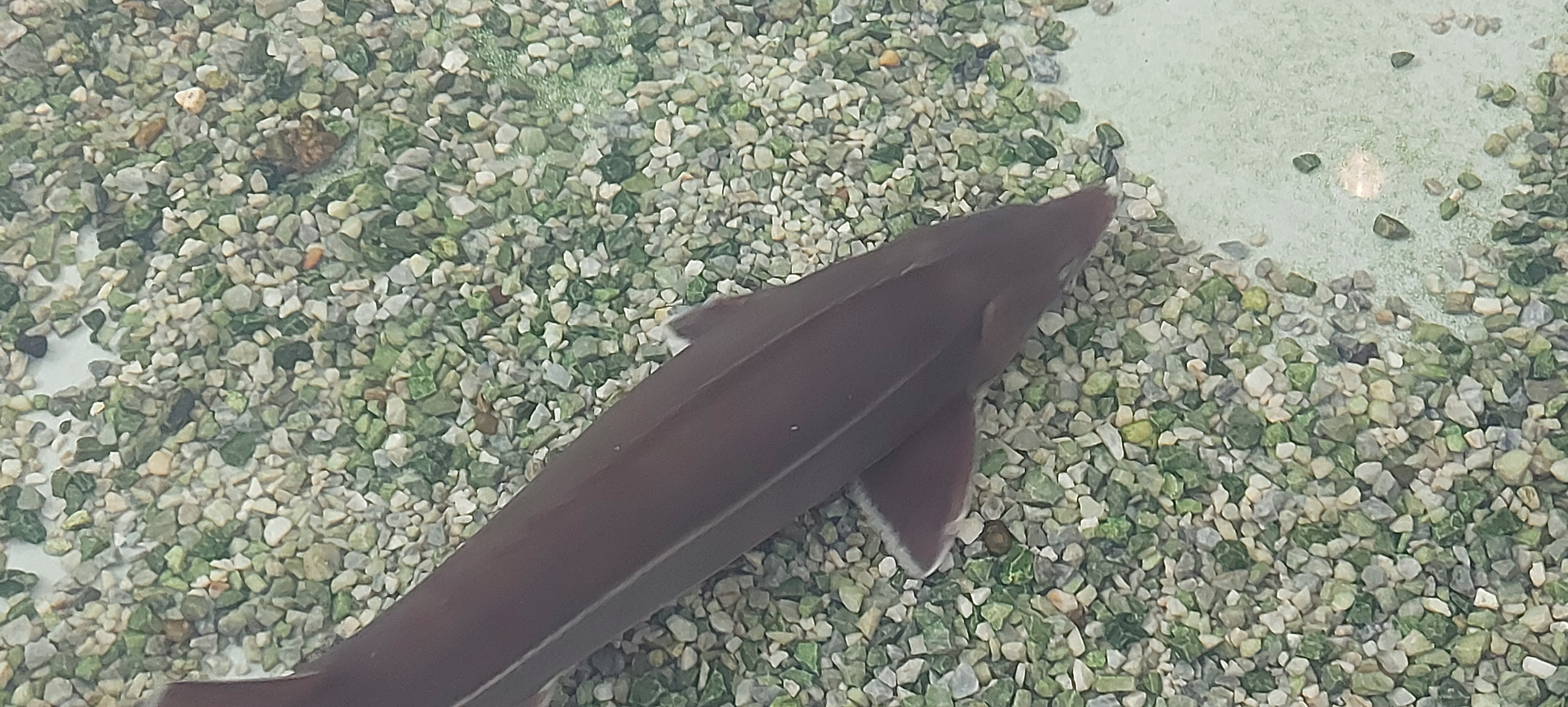
    It is slightly galling to learn that The Philosopher Fish by Richard Adams Carey has won The Bookseller’s Diagram Prize for the oddest book title. As an ecophilosopher who has written about sturgeon during my PhD Literature of Place studies, I felt it timely to publish my mini-treatise.

    When I wrote the following oddness, call it a “research breakthrough,” (excerpt from Chapter Severn, Rivering), to observe sturgeon ‘in the flesh’ seemed like a pipedream. But last year I was surprised to find a small display of youngsters in an indoor pond at the otherwise fabulous Biesbosch Museum near Dordrecht, Netherlands. Despite welfare concerns, I took the opportunity to observe their sublime and ancient movement through water and hoped one day for their return to the wild, unlimited. The island upon which the museum is built was created by digging channels to provide outflow in the process of the vast depoldering project at Noordwaard. Polder construction, along with fishing, was a major reason why sturgeon were extirpated by humans from the region. Now this vast and largely fluministic intervention, the largest of the Dutch Government’s “Room for Rivers” infrastructure policy, has offered a chance for their return to this National Park aside the beavers.

    Note: living beavers at home were whom I had originally intended to visit during a boat trip. But to prevent such human voyeurism is their endearing habit! The boat trip failed to find one though, gratefully, I did see evidence of their wondrous fluministic activities.

    Biesbosch Museum, with its award winning “green roof” architecture and more natural landscaping, is designed by Studio Marco Vermuelen, and the internal exhibition spaces, including displays on the natural/unnatural history of sturgeon, are by Studio Joyce Langezaal. Please find my photos below.

    ~~~

    “The Wye does not end or begin at the mouth. All the way from those springs in the Cambrian hills, evaporating and extracted, it is both part and feeder of the swirling nagorasphere. What is carried in its flow by gravity to this dynamic turbidity in the estuary is cycled by the smallest of beings and turned into a festival for all beings: those that live or visit this place, those that shield here to grow from vulnerable to strong; those who are touched by its protective storm-buffering and surge-quelling. The matter of the basin—the huge lasso of the Wye—is swept here by rains and floods and held in suspension on top of the saltwater, pushed around the peninsula and sucked back towards the oceans by the tides. Time and time again, they mix all of us under the bridge and back until we, and all our junk, are mud banks, sandbanks and longshore drift. Here in the flow that switches east to west and west to east, with the weight and wobble of both the moon and the Earth, the ebb current to seaward and flood current to landward, filling the mouths and the lower reaches of all the rivers that drain here with salt and the anadromous fish at high tides who swim upstream since our Silurian to spawn like king salmon and their parasitic dependents, the ancient sea lampreys, and the catadromous fish at low tides, who swim down the rivers to be unleashed into the great oceans to spawn like the eels, mullet and flatfish flounder.

    ~~~

    European sturgeon, redlist critically endangered anadromous species, ghost to our rivers. But now, once again, curiously visiting our estuaries. Stay with us. Live with us. 

    Bat’Umi, Basel, Fethiye, Toulouse, Reykjavik, Tangier. 

    Way below the plate glass of the cities, deep in the rivers, your unfamiliar body winds upstream under the night lights. I can just make out your huge dead body in silver nitrates, museum plates of iron and steel greys next to all those proud, fading men.

    Your underwater knowing is as old as the triassic cliffs on these Severn Estuary edges, my spectral kin. Like smooth-hounds and thornback rays, flick your strong fossil tail for that exquisite downward force, shimmering from tide to river and back with the burning electrosensitivity of your upturned beak, running along those beautiful lateral lines. 

    Swimming in from the depths of the sea, you stay in Winter to syphon the bottom of the estuary with your soft mouth, tasting for shelled morsels and goby enzymes with your long barbels and electroreceptors. Mine is the quietest of observations; yours is a full more-than-human sensory devotion of self that is the whole river-estuary-marine continuum; an internal blueprint of the movements required to get from where you are now, the bed mud and bristle worms, to the fine river grit at the foothills of the mountains when you are old enough, to where you’ll gather in oxygenated pools to leave your young. Then, to twist through a meander with a freshwater surge, to swim-out each run into salinity, and bend this way and that way to a shallow coastal sea in falling light. Your young ought to be safe here if they reach the estuary, and they will grow well until they are fit for the pelagic, yet to return to their natal rivers to reproduce. Everything about you is revered by me. There’s a glint in your ancient, metallic orange-bronze eye.

    You are a patientist, realised in acute potential—if we humans could remember it’s within us too—primed for imagining the moment of exquisite love in the flow of all life. How patient must you be, waiting for us to clean up our act and destroy those dams. Would you come and stay, then? 

    Your spirit presence is the result of a swim of magnificence, from the misty Gironde, the Garonne and the red wines of the Dordogne, and the Bay of Biscay, to this moment in a future Welsh Wye, a time also threatened with Gaian fury, with flash floods, heat waves and drought. The crowd who came before have all gone, shadows blocked by weirs and finished by bullets and huge gill nets. But you came here curious, tested the water for ripeness. You have sent news back: made signs. And now they also know to be here, pulled by the smell of Welsh hills, the magnetism and internal maps of 400 million years. Ah, sister, to match your devotion! Standing perfectly still, staying present with your strength and intelligence, distraction would be unwelcome; not even to raise an underwater camera. Your hunt is too important.

    Your ichthyolite-ability to swim so elegantly from the ocean through a curtain of silt and into clear green emeralds is for all to know, and fewer ever to notice. You see, unlike me, your electro-centrism helps you navigate complexity without injury. How would the expanse of the English Channel shine as you swim under waves and ghost-whale bellies, steel hulls and oil slicks. How you would rise again without giant, slicing propellor blades.

    How does electricity reflect off of me?

    I am not afraid to tell you, I love you, and all our kin, as I care for this place–a happy place–down on the banks of the River Wye in June. I love the microbiota and the symbiotic relationships that sustain all the lives that exist right now, though the majority I can neither see nor hear. But I want you here too. Fluministic love means more than they think. It’s not a uniquely selfish act, but specific for this place linked in flows to all places, and little to do with the brain’s reward centres—though there is that. My life is an expression of your way in the flow, you as part of larger flows, that are part of the flows of life that distinguish planet Earth from all else yet known.

    Flow runs into itself and all matter, even in death. This is the truth continuum.

    Sturgeon, you and the things that creep in and out of the water beside us, the things that never enter the water, the things that never climb trees, share everything through drifts in the nagorasphere. It is felt by evoking our patient imagination—you have it, like the salmon and the eels. This is a process too. Being a fluminist is a process, because we are all creatures of process not objects nor even subjects. All are one verb through time and space.

    Palermo, Arkhangelsk, Prague, Odesa, Galway, Paris, Lisbon. 

    Chepstow, Ross-on-Wye, Monmouth, Hereford, Hay-on-Wye, Builth Wells. 

    Stay with us. Live with us. 

    I write about you so that others may choose to protect your interests in this constant dynamism, to remember that flow exists between every life, even in death, true beauty to celebrate and protect. This place is held close, and this ocean, this estuary, this river—and back again—you, the bristle worms, and the benthic deeps. We declare these waters sacred. In our kindship, we share hope for a unified love of the exquisite nature of natural moments, everything joined at the hip bone and berry, undivided, and for the continued liberty of life and the living. It is, in a way, our small act of resistance.  

    ~~~

    Here in the estuary, a KBA (Key Biodiversity Area of international importance), a SAC (Special Are of conservation), there are five main rivers who open their mouths to salt, with little pills or streams to create a softening in the juncture between land and water. This is a body of land in dissolution, where aquatic beings have adapted to the storm surges, or cling to the banks of mud, where some hang in the water column rushing along with the tides at 1.5 metres per second, and some ripple against and with the tides. Some move in and over the shore, some shelter with the carbon sequestering eel grasses, fly high with the South Westerlies, the strong prevailing winds that snag an outgoing tide in sentient antagonism. For you and me, orange-red signs for danger but for many, a brown hatchery, a brown nursery, fat for winter storage; sanctuary deep inside a maelstrom. 

    Tiny soft pink-white bodies form dark crystalline reefs on rocky substrate, or on top of years of the devotion of their own ancestors, like cities on top of cities, under the tides and in between. We—the catch of the land—are filtered by millions of these honeycomb worms (Sabellaria alveolata), quartz and mica, forams (shelled algae), shell bits, polystyrene and plastics, cemented by their tiny bodily secretions into large biogenic reefs that provide stability for their feeding and reproducing, and shelter for more beings like Brittle Stars and Beadlet Anemones.

    Cobbles to gravels to clean sands, muddy sands and muds, here holds restlessly 7% of Britains madflats and sandflats, a tenth of all that is supposed to be lawfully protected. Ragworms, Catworms, Sludge-worms, burrowers, burrowers, burrowers. Baltic Clams, Laver Spires Shells, Mud Shrimps, Sand Digger Shrimps, Speckled Sea Lice, free living Bristle Worms, Peppery Furrow Shells. Some are suspended, some are globs and slivers of benthic biofilm on mud banks; long, pennate bodied algaes, seasonal algae diatoms, tube-dwelling diatoms, epipelic diatoms residing at the kiss between water and sediment – all silicon cyclers on a gradient out to the sea, like living glass. 

    Black Goby hunt through the Dwarf Eel Grass and Seawrack beds also harbouring Nilsson’s Pipefish—at home with low salinity—sequestering carbon and grazed by wild ducks like the chestnut Widgeon, sociable birds with their noisy whistles and growls. Straggling, motley Great Pipefish, slender Snake Pipefish, Straight-nosed pipefish surge in with the storms. With the heads of seahorses and the bodies of snakes, pipefish males rear their young in marsupial-like pouches to be freed into the tide and out to sea.

    Saltmarsh Glassworts, Common Reeds, Sea Barley, rare Bulbous Foxtail dwell and stabilise the ephemeral into thriving, brackish feeding and nesting grounds for waterbirds. Pills—little streams leaking land close into the estuary—and human-dug back-breaking ditches bring life to the hinterland where Water Voles plop, Common Toads croak and Little Egrets, Grass Snakes and Otters hunt. Knots, Oystercatchers, Curlew roost in crevices of rock and mussel scars foraging Barnacles, Limpets, and Winkles as well wading for their worms and clams. 

    Common Goby, Sand Smelt ~ these beauties stay in the deep heart of the brown to spawn. Bass and Cod are opportunists, they’ll swim in and out of the estuary to find food and seek shelter to grow. Whiting eat Brown Shrimp, shimmering silver Bristling or Sprats eat microscopic copepods who eat anything they can find, flat Dab eat the rotting dead, along with young Shore Crabs. So many babies wash through here, but they’ll move upstream to safer waters, or back out to sea. 

    Tundra and Bewick Swans, Shelducks and Norther Pintails, Ringed Plovers, Eurasian Curlews, Dunlins, Redshanks, Turnstones, Lesser Black-Backed Gulls, Grey Herons, Goosanders, resident, passing through, topping up, gracing, dying. An incredible place for wading birds, named by human conservationists as a global RAMSAR site of feathery significance, this is a place only recently given back to the elegant re-introduced Avocets and uncommon Common Cranes (Grus grus), but a place worth life itself to avian kin, where all length beaks find all depths in the mud and the shingle to find what is eternally desired, the wiggling, creeping proteins and lipids and carbohydrates caked into these living shores of abundance; a place of sanctuary for them all, a passing plane, a global meeting point on major air routes from Sub Saharan Africa to the Arctic. This is a place of Earth’s Body Bio-Continuum worthy of great reverence and the highest protection, of Praximund.

    And back to the Wye’s Mouth, overseen by Old Man heron and his spindly legs, between tyre distribution centre and firing range, between two banks of slippery mud. Here hosts the lampreys, salmonids, twaite and allis shad, and the ghosts of the sturgeon, all ready to rise north on a big swell of brackish, to heave their lithe fragile bodies against the weight of flowing freshwater, to find sanctuary upstream to spawn sticky on shattered till below the rare yellow mayfly. As tough as the ocean is, the toughest is yet to come. This is a place where the animal must endure a race against gravity, and spates, pathogens, and human scorn, and banks lined with khaki and fish hooks, to get to the sanctuary – the mythological place in their ancient minds nestled in the foothills of old, worn mountains, of transparent water and scattered sunlight, a clear little crack in a shallow rocky bed, some one-hundred miles or more inland.”

    🌀

    ~~~

  • Ethights, diatoms: a circular, silicanian route to justice.

    (PhD “Rivering” by me, extract from Chapter Shine).

    The Fluminscent River, pen and ink by Ginny Battson

    River LiFE in-sees, and it is symial. Look again at gold to read how bacteria and river sediments commune. Or just feel the diatom-slip, your bare feet on silica-films under the water, films coating the bed of a healthy river. 

    Diatoms— I love them—despite their smell turning my stomach. They are spectacular bionts, kwelical frustule forms of silica life. They only last a few days, yet they are just a little older than Homo as a family; a living array of opal-quartz jewels, minute glassy beings in a plethora of single-cell shapes around a nucleus, asexually reproducing every damn day. They eat the sun (photosynthetic beings converting energy to sugars)—and busily account for 40% of the oceans’ primary productivity. And they are busy fixing atmospheric nitrogen too—the kind of nitrogen that a lightning strike generates out of thin air. And they have a urea cycle like animals not plants! They are abundant in all water and watery places, but they love brightness, as do I. Some diatoms have become dinotoms, temporary or more permanent endosymbionts within other little beings called flagellates. They are so new to this symbiosis that they have retained their vital genetic character, although their silica skeleton has been gifted to their holobionts.

    Continents constantly weather, silica falling through LiFE expressed in bones, connective tissue, in cascades of forms washed through deltas and estuaries, flushing off—or shaken off—continental shelves, and into the pelagic deeps to form a siliceous ooze. Trillions of diatom skeletons form layers of diatomaceous earth (we use it for cat litter and toothpaste), pressurised again to form diatomite, quartz and shimmering opal, ready to be sub-ducted into magma and ejected back up to form new volcanic continental crust. All is connected. What is time? Ha! Silica-rich igneous rocks become the mountains once more, via orogenesis and its vast, slow collision of continents. Exposed to the night stars after millions of years in hiding, silica is raw again to the elements, and down comes the snow and the rain…we walk upon moments, swim amongst fractions. Silica is the second most abundant element in Earth’s crust after oxygen, and cyclically bio-essential. We would not be here if it were not for the rivers that carry it.

    ~~~

    If ever there were more a complex and dynamic system to present before a one-brain judge, or even an AI system of some future AI-driven court room design, it would be River. Offer rivers new and relevant names, even deities made of silica. Personify and perceive ancestral spirit. Relay stories, as we have, always. But in an adversarial human court of law—rivers, river life, river halos of water and life, aquifers, mountains, forests, species, farmed animals, humans, parasites, bacteria…viruses…the silica-carbon geochemical cycle, geology, magnetism, gravity, the Sun, the Moon, relatedness, process, love: nature? Right against Right, where do we find room for all the lawyers? Who dares to separate again, and then speak on behalf of the separated? Courts are human constructs. Do we really need more of those battle lines? Anthropocene could do with its own kind of weathering, eventually to be sub-ducted under more meaningful crusts, melted into magma.

    There will be always be problems and resolutions, flow and resistance, between multiple forces of nature. They are natural. Please don’t get me wrong. Between humans, Rights are a legitimate route to criminal justice from a place of severe injustice—sometimes the only route. That is, at least until extreme individualism, hierarchies, and pathocracies are slung into the distant past, and Ethics of Care become the norm. Humans are able to express their own pasts, but also the present and futures. At the same time, they can find commonality among diversity, given the will. Empathy for quieter, stymied voices should mean amplification, and we can take care to really listen, especially in defining and preventing pain and suffering. 

    All clans require rules, and criminality is real (diatoms help to forensically track it). But criminality is so often charged by cycles of unnecessary trauma, especially in early childhood. The current inequitable fugue of detachment, fuelling such trauma and planetary destruction helps no-one in the end. Even so, Universal Rights—concrete Rights descended on all like ash from the fires of the powerful—cannot surely articulate uniqueness of relatedness and experience. This is where my deep sense of soul finds justice, in the minutiae/grandeur of relatedness, the silica-enriched connective tissue, and why Ethics of Care (Gilligan) rings so true for me. They mean diverse sensitive responses to diverse experiences of diverse beings and kinships (nurture or nature). They mean circles, not polar opposites.

    This means case by case

    This means panels of advisors, thoughtful and considerate of childhoods, relationships, places and times; yet guilt, nor rehabilitating forms of punishment, are not forgotten.

    Perhaps a less arguable legal declaration is one that ensures all humans have access to those Ethics of Care, learning and sharing the real wisdom of relationship, living place, and safe place in an ever moving world. Call them Ethights. Roundtable Ethights. We don’t need adversarial systems. Even against increasing forces of destruction, I ask we be less aggressive about our responses. We don’t need the culture of testosterone fuelled warring terms like “battle,” or a “fight” in court, or even the assertion of enforcement before the utterance of kinship, mentorship, and responsibility. Look instead to the symbiotic ways of nature, and the silica cycle, of which we are all part – those ethights.  

    It won’t be easy. Nothing good comes easy, not even love. But in this way, like the removal of river-damming concrete (also silica-derived), conflict tends to give way to connection. Read the sedimentary varves, the layers upon layers in the swirls of a beautiful river pebble, to glimpse seasonal pasts and otherwise volatile futures. Look at the bone beds of catastrophe, or slick anoxic mudstones made under pressure, black without bioturbation, without LiFE. I think we can do better. 

    ETHIGHTS ~ eeth-ites, or ˈiːθaɪt (IPA transcription) ~ legal declarations that ensure access to Ethics of Care (Gilligan) as a route to justice from human actions, for both organic and inorganic causes.

    ~~~

  • Kwelics of place, including bodies.

    Kwelics of place, including bodies.

    Sheep bone, photo by me

    Extract of Rivering, Fluminism as Literature (PhD).

    Like sedimentary rock traps bodies to become fossils, bodies of water contain the nucleotides of all who live within, or have recently lived. Same with air. They recount a story of genetic diversity or its demise. We just need the right tools to find them, unless we are so tiny that we do not need tools. Imagine the world of the tiny!

    ~~~

    In life, organic bodies move in balance with microbial symbionts, not least expressed in the mammalian gut brain axis, reproduction, and systems of immunity. That is until the pathogens overcome, or death comes by any other means and all is subsumed. Those same bacteria that supplied us with our happy thoughts now overwhelm our spectacular mass of structured carbon. But they are still helping us, regardless, like all our crucial scavengers and detrivores—including a writhing mass of blowfly larvae—to mix down into the ground. And from there, critically, they aid us to reassemble at the confluences with new, exciting life forms. The laws of thermal dynamics apply to these flows, and heat is released (imagine all that resistance), and, yes, smell. But death begets life.

    Like rivers, animate life embodies moving places, and vice versa—everything moves and is moved—though it remains a question of endurance under geo-thermal and atmospheric forces, as to when the moving processes of decay will begin, and how much resistance to that decay there will be. Once more, opportunities for diversity are bountiful.

    ~~~

    In perfect flow with the floloca, stable isotopes of the distinct recipe of the Stowe water oozes from the hill. They are probably still traceable in those ol’bones of the Brights, laid feet to the east, the last forms of a human body to decompose. In hardwood coffins buried deep in the 19th century, and at this latitude and altitude, they are, most likely, still clinging on to the peacefulness of St Michael’s. And they could still tell us a story or two. As forensic anthropologist, Sue Black, writes

    “As water percolates through various geological formations, it will take up isotope ratios of elements specific to that location and when we ingest it, its signature will be transferred into the chemical make-up of all our tissues.” p39

    These are our watermarks, long after death.

    “So we could, in theory, look at the remains of an individual and, from the isotopic signature in the otic capsule and first molar, discover where in the world their mother was living when she was pregnant with them and the nature of her diet. We could then analyse the remainder of the adult teeth to establish where the deceased person had grown up, and then the rest of their bones to determine where they had lived for the past fifteen years or so. Finally, we could use their hair and nails to locate where they spent the last years or months of their life.”

    The same it is for all life, regardless of variations in genetic make-up.

    Watermarks.

    ~~~

    Fluminists and crime writers find forensics fascinating. We care in the superlative detail and the tools that solve puzzles and seek justice. We observe, photograph, collect, sort. We imagine, philosophise, assemble, sketch. To test, to annotate, to review. And then we share the signs and the traces that we find in the flows, and we tell the stories of the dead ancestors and the extirpated, bringing their aliveness to us again, proven in the small things.

    We acknowledge that life, and also death, always leave their marks, whether our human sensibilities are able to perceive them or not. Our cultures, inheritance, status and styles can be read by scalpel and litmus. So, too, our fears and early traumas, given away by our scars and our deepest secrets. Identities matter, and the unions matter (think DNA), and places really do matter. But also the bullets, the knives, the overdoses, the radiation, drugs, pesticides, carcinogens, plastic toxicities, the abuses and greed, and the chemistries and the violences of the Anthropocene. There is a bright forensic light able to be shone upon our human failings, to illuminate the wanton release of poison into the flow.

    Extraction to waste. Dominance and hegemony. Of soil, water, air, life, even rock. How vulnerable have we made life be? Diatoms in lungs, pollen under nails, heavy metals (lead, mercury, gold), and isotopes swapped in and out of place, tattoos through each other, and of place, and of the many confluences between all living beings and all things; evidence, proof, yes, but they are also memoirs. Lives are honoured by the seeking of truth to their ends. Minerals, food, and water are embodied from the ground in which they emerge, like records of the journey. So it is in the trace of all living things, and the rocks and rivers, the great migrations and colliding continents. To the end of time. We are space dust, even in the gold nanoparticles from rivers we accidentally ingest to metabolise in our livers and spleens.

    The word forensics is rooted in latin for forums, open arenas within Roman cities that hosted all kinds of civic events drawing a crowd. Criminal trials tended to attract more interest than civil disputes, as they do to this day, and the more infamous the individuals involved (like Caraticus), the louder the rabble. Presentation of both crime and evidence, and sometimes baseless character assassinations, were brought by advocates who argued for the few privileged citizens permitted to have their cases heard before magistrates or consuls. These courts would pop up with temporary wooden benches (the seats of the adjudicators) between market day, say, and official games. The system gradually grew more formal, and upon the destruction of the Republic, all-powerful Emperor Augustus himself became judge, juror, and vicarious executioner in cases that suited. What better way to be rid of your enemies, or follow the growing grievances of your political foe to ward off insurrection.


    So forgive me if I set all the politics aside for a moment. I’ve created another word to describe these fundamental traces of exchange within the nagorasphere, crime or no, and will leave the honourable science of forensics to criminology and the courts.

    ~~~

    “Culture” descends to us from the Indo-European root *kwel-, which essentially means to “turn, revolve, move round” but also (or by way of extension) “sojourn, dwell.” A secondary connotation of the root is “far”, that it is about some sort of turning in space and time. The original sense speaks to a turning of seasons, of cyclical planting and cultivating, which log ically dictates where and how communities come together and live.” Jason Renshaw (2021)

    ~
    Kwel ~ PIE for “turn, revolve, move around.” To dwell for a while, to spin in and out, like a wheel.
    with suffix ic/s, as in forensic/s “like” or “of”, and more definitive than “ous”.
    ~


    Both forensics and kwelics (kwɛlɪks IPA transcription), in a strong sense, seek justice. Widespread awareness of our watermarks, and more, may plunge us deeper into the nature of nature, its signals, alerts, language, and art. We may better understand the consequences of our interactions—our confluences— on Earth, even from Space. And we may seek to find peace in them, and plenty more life; an extraordinary loving thing to do. This is our entropic lottery of new becoming, kwelical cycles of the entire nagorasphere, with potential all the way to the end of time. I don’t know about you, but I find this comforting.

    ~~~~