https://twitter.com/ginbat/status/1108320647665647616
“The love for all living creatures is the most noble attribute of (hu)man(ity).”
~ Charles Darwin
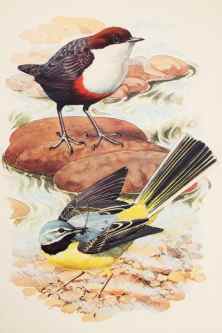
The path rolled out in front of me like the lolling tongue of a happy dog. My strides were photon pulses upwards from a gloomy darkness that had haunted me for an age. Elm trees stood as watchmen, and I passed beneath conscious we were akin, so far, all survivors of disease.
After I received my good scan result, taking a chance on a tramp across town to glimpse a dipper at Blackweir seemed a necessity for me. I was still weak, racked by my last chemo and the scanxiety of waiting, but their existence is a particular delight to me, a history, a longing, and a deep love. I have seen these little beauties hunting before near the weir, and I was more than willing to take the risk. I looked forward to sharing a moment in time and the light, as if we pulled on the very same string.
I arrived on the western bank of the River Taff and scoured the rocks downstream for that bright white chest in familiar bobbing motion. No joy, so I crossed the suspension footbridge, pausing briefly to scan a seemingly empty river. I could feel a synchronised bounce in the structure, brought on by a few of us who crossed at the same time. I grinned at all the strangers who passed; we were all alive. They must have thought me mad.
At the end, turning right, beyond where the old dock feeder canal slopes off from beneath the weir, there’s a woodland reserve stretching south to the Secret Garden Cafe. City runners and walkers bolt through on earthy paths, yet life thrives here through all the seasons. Where the trees reach the river bank, the roots are laid bare by flood, and scrubby understory launches a daily chattering of birds to flight. I perched among them on some old log stitched with mycelium, a spot where I could look across to the opposite bank and wait.
There! How could I have been so lucky? I saw him straight away, his white tummy stark against the shadowy union of water, debris and undergrowth. Down he plunged beneath the sibilant flow. I held my breath, waiting for him to pop up like a cork, and he did.
And then, a sense of release pulsed through my veins beyond all reason; an oxytocin rush, more, the deepest possible love for this little dipping river bird and for life itself. The sun shone on my face and things hardly felt real. So I stretched out my arm and rubbed my skin. Sure enough, this was real, and the dipper, despite all humanity, was full of alive-ness.
To add praise to healing, a grey wagtail flit’a-tail just above the dipper to catch a gnat; such elegance and skill in the air. To watch these two river birds in the flow of life together was a clear moment of being. I was present, sharing their life and their light. Below water and above, they moved with devotion in their own evolution, and it humbled me. In this moment, all the gloom seemed totally worthwhile.
After trauma, during illness, life’s losses and struggles, to feel, at least for a while, that we are all connected by alive-ness is a celebration. There is suffering in all species, and there is release. Whether noble or not, loving is the fabric of life. And we all pull on that same string.
And there are others existing by the grace of this very moment in time, this light, whom we must surely love, or learn to love. All of us, survivors. All of us, alive…
~~~~~~~~~~~~
In this piece of prose, I am expressing myself at a juncture in life, a collision of complex matters that are important to me right now, and causing me much emotional pain ~ love, Earth crisis, cancer.
I hope to explore the idea that some ambivalence, far from being malign in relationships (with humans, non humans, self and in our work ~ protecting the biosphere and machines), must be embraced as part of the process (fundamentally, I am a process philosopher). There would be a point where rejection and change is wise ~ letting go ~ but no relationship will ever be perfect.
Love, for instance, comes with a certain degree of hurt. It’s just the way things are. To reject love on the basis that it can cause any pain is unwise. To love is an ‘acceptance and commitment,’ taking the rough with the smooth. There is a tension between duty and true love and yet, to this day, duty is still celebrated as the honourable thing, much to love’s sacrifice and emotional wounds. Perfection is unattainable, but I also acknowledge there is a time to let go, and that has also happened in my life.
In the case of cancer, the body is well or not, sometimes in between. One might die, especially without help. But with help, one might not. An acceptance of the ambivalence is to live life each day regardless, acceptance brings darkness and light (light one might never expect).
As to Earth and the biosphere, and the crises upon all, that is my passion, to advocate for the love of life as an active ethic (Fluminism). Sometimes this passion causes me deep pain, sometimes joy. Any passion pursued is going to bring failure and success. And others who share my concerns will understand just how hard it can be. It doesn’t mean we simply give up at the first fall, nor the second. Nor third.
And the machines? There is good in some technology and bad in others. We don’t need to reject all machines, we can be ambivalent to a certain extent. But there are machines that save lives (CT Scanner), and there are others that take them (cars, roads, pollution). We need to make a choice as to which ones to accept and which to reject.
Sometimes, it is hard to accept the ambivalence ~ the good and bad in all things ~ including within my self, because the bad causes so much emotional pain. But I will try. Cancer has, at least, taught me that.
~~~~~~~~~
“Love, in relation to ambivalence, has its own vicissitudes. Our recognition that these are inevitable – and indeed an internal part of love – allows them to seem less a reason to give up. And, of course, the same point applies in our sense of those we love.”
John Armstrong, Conditions of Love; The philosophy of intimacy.
~~~~~~~~
Clipped in, I drive home. Snow dusts itself around the windscreen-wipers and a low sun feels to be piercing. I am in pain. The return home from the cancer centre is a little complicated, no direct bus route and a bit too far for me to ride a bike. Especially in the snow.
I’m thinking of love here in my machine ~ those spiral stairs that go up and come down in our one, material timeline of life, orienting our sense of place and worth in the commonality of life. The steering wheel turns almost by itself to the left and I can see without the piercing. I feel a huge sense of relief.
There’s no bannister on this spiral stairway of love, and steadying oneself that way is impossible. Light is more important, the darkest downstairs to the brightest up on top. One has to use the eyes to negotiate, and it isn’t easy when emerging into brightness, as is the ability to be ambivalent; love, with all its illumination, good and bad. To accept the revelations of and to oneself, the hurt wrapped up inside the other, that comes at you sometimes in silence, and leaps from you as anger. Yet it is in the fuel of ambivalence where love remains constant, and not to be thrown away at the first fall. Nor the second, nor third. Like what we do for this Earth, and having cancer or not.
Am I to be ambivalent about the scan I just lay down so still for? I will try. The results may be good or bad, yet both are part of the same self. What I have to be is present. And my presence is needed here on Earth, countering the forces of the machines. Presence in love too.
My one material timeline needs presence to serve ambivalence. No good hiding, no good denying. Just as love is not all good, but good and bad. People you love hurt you. You hurt them. Even silence can do it. Or shelving, prioritising. Duty-bound-pain in caring for others, like the Earth.
The weight is huge, but we cannot give up on it at the first fall, nor the second, nor third. Because that is the love that will survive, despite the blinding pain or the scans.
Because it is like the metal that spins around as one lays inside the machine, being told by that machine to lay still, to hold one’s breath and breathe out again. Iodine floods the body and I feel it warm around my neck and in the groin; brain blood and sex. And then it is time to drive home and wait at the lights, thinking of a spiral stairway ten thousand steps high, with no grip, just a line going deep into my arm, tube pinned around my thumb and index finger, and the whir of the parts going around me fast.
I can see them through a slit, those metal bits, with my open eyes, whilst laying powerless, pin-sharp still. The green and red lights on the plastic cover tell me to hold my breath, or breathe. Isn’t that what life is? They have little pacmen printed, with mouths shut and open. Red. Green. And there is also a machine voice, “Hold your breath”. “Breathe normally”.
So back to the right with the steering wheel, and I pull the visor down. Changing gear for more power, and I observe the others in the city, tight in their machines and on this dying planet, and all the pain. And the beams of light are low into the soul. This drive home is hard. I’m just so tired.
A red light, and I stop breathing to wait for the flashing amber, and then to green. I look around at all the other lovers. Mouths open, shut. Everything held in suspension here until the lights change, whilst the planet tries to breathe.
My arm stings, as do my eyes, but what warmth there is in that sunlight. I arrive home. Downstairs, back where the pacman is quiet, I’m down to the darkness. Years of struggle pushed back down into the downstairs. And just when I am just so tired, I climb two flights of stairs, cancer or not ~ ambivalent.
To my love, to the Earth that is hitting back at the machines, good and bad, and those busted DNA chains of my own body that multiplied to a relentless green light, and could once more proliferate in invisible turmoil ~ and my stinging arm, and eyes ~ I do wait, in that cold snow dust, or the brightest light, or the pitch black, trying for ambivalence. And events of this Earth Crisis go on, over which I feel seemingly powerless. Until my arm stops stinging, and my eyes rest, I must leave all in the hands of my radiologist, Earth’s own fierce rebellion, and my earnest love ten thousand spiral steps high.
~~~~~~~~~~~
Some may find no need for explanations, as art is a reciprocation of free feeling. But just in case anyone is curious, here are my notes.
~~~~~~~~~~~
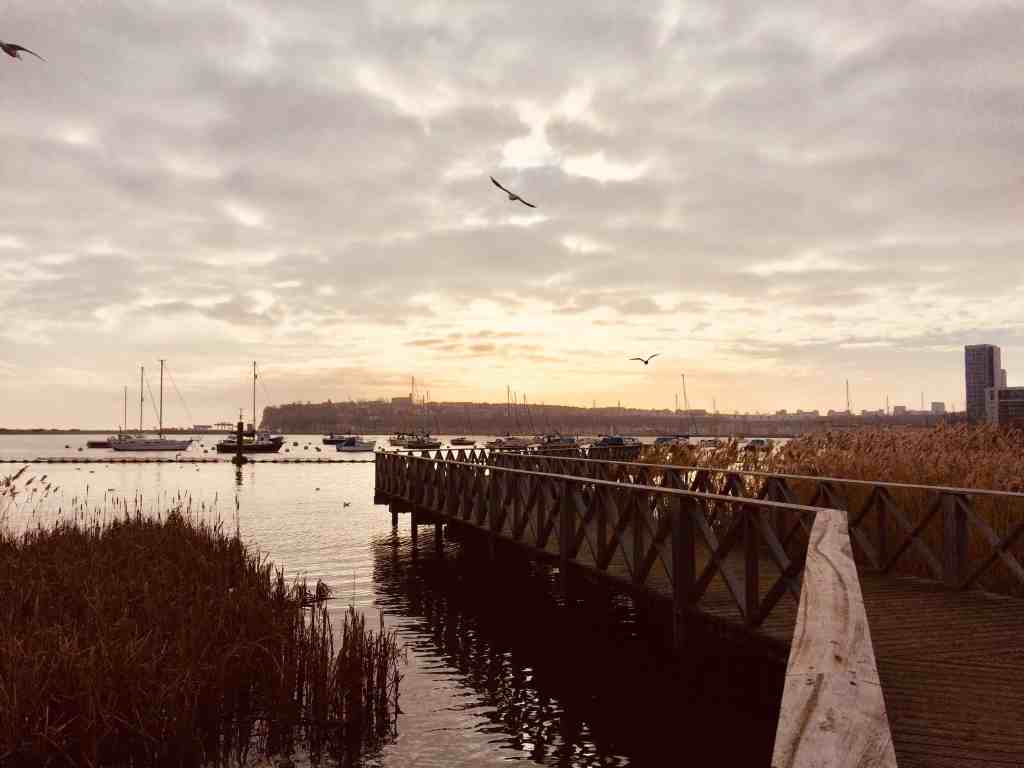
Cardiff Bay rolled out in front of me, gold foil under an open sky. The light hummed a deep serene as I walked out on to the boardwalk. I wanted to commune with wild birds. Black-headed gulls preened and feather-shook to forge water diamonds in the early evening glow some distance away. I leaned over the hand rail and a mute swan gazed up in full expectation of food.
Built sturdily for the likes of me in my chemo-altered state of compromise, I was grateful for the access. I was grateful to be alive. Perhaps, to even glimpse a fish or two. On reaching the end of the boardwalk, my trainers bridged slits between the boards and I looked down into a wet, darkness. A thought consumed me… I was only half there, as were the wildlife, floating above the ghosts of a once vibrant natural harbour; a marshy, estuarine floloca.
Like all places, the Bay is layer upon layer of history, ghosts. Ancient Silurian tribal peoples once lived here, then the Romans came with a trading post, fort and vicus. Some 1,600 years of Welsh kingdoms and Christian missions later, the larger part of the City of Cardiff (and, later, Barry just up the coast), grew brick by brick, dock by dock upon the pouring outwards into the world of iron ore and coal from the South Wales Valleys. Pollution almost killed the rivers. Key fuel to the Industrial Revolution, these now irretrievable ores played a huge role in shaping the Anthropocene and the ugliest effects upon our one, shared biosphere.
The Bay was also a place where life poured in, human life, to find work for the industrial shippers, traders and masters. Named Butetown and Tiger Bay, the port community had a wild reputation for violence and vice. But the reality was an early exemplar of successful multi-cultural diversity in Britain, with over fifty migrant communities from all over the world making it their home.
During the 20th Century, waves of globalisation opened up new and cheaper trade routes for the exploitation of primary materials and Tiger Bay began to decay. Docks and canals were filled in. Community suffered. In the 1980s, Conservatives seized an opportunity for Thatcherite growth and property-led investment schemes, under the guise of the “Urban Development Programme”. Recovering mudflats for wading birds were deemed ugly, along with flotsam and jetsam washed up at high tides. A large concrete barrage completed in 1999 upon Royal Assent and at a cost of £220 million prevented two rivers, the Taff and the Ely, from draining freely into the sea. A 500 acre freshwater lake was created. The political Left relented, and the lakeside was opened up to the market, a vast construction site (ongoing), and ‘rebranded’ Cardiff Bay. Tenements were bulldozed, gentrification happened, and little-to-no payment was made to the resident population who had suffered years of neglect. Bring on the yachts with lock gates and gasoil. It was a successful coup by neoliberal powers, then by developers. And, after The Financial Crisis, the banks.
Meanwhile, the boardwalk pokes out into the edge of a designated wetland zone of just some 10 acres within the Bay itself; a tiny local attempt at mitigating economic re-development of a down-beaten dockland and the submerging of estuarine mudflats. Sediments are now brought only by the rivers, rather than washed in and out by the huge tides of the Severn estuary. Some bacteria evident in the Bay emit methane, as often is the case from nutrient rich freshwater lakes. The lake is shallow, and small rises in temperature will mean it emits a disproportional amount into the atmosphere. *
Sluice gates that smell of washing detergent are operated by people in control towers, calculations made by software based on live updates of river flow data. There’s a difficult concrete fish pass for salmonids and eels, monitored by cameras, and rubbish flows down the rivers, especially in spate. About 450 tonnes of it is removed from the Bay per year, but not all can be recovered. No doubt, chemicals and plastics have bled deep into food webs. There are beauties there, surviving and exchanging, to be utterly admired, but 10 acres is almost nothing compared to 500, and insignificant compared to pre-industrial marsh and delta. Sadly, there seems no body nor organisation campaigning to change this, though change it must. **
There are things wrong with our memories and forms of what land and sea ought to be. The modern human ideal cuts me like a slow, blunt knife. It’s the lack of humility, a deranged narcissism, that somehow we know better than any other species, or any other evolved community. Strange, as we call ourselves human, from latin humus earth, from the PIE root dheghom ~ earth or earthly. There’s nothing particularly earthly about what has happened at the mouths of the rivers Ely and Taff.
Perhaps, I should be more forgiving, laying blame instead on layers of human ecoagnosy (Albrecht); an unwittingness or ignorance running deep between life spans. But somewhere, and sometime, watchmen and women who intimately knew what was being lost, must have accepted the loss, by force or for the shine of a coin. Their eyes will have witnessed the waders fly in autumn and never return, the eels swim away and never come back, and absorbed the absence of the beat of the tides and the bounty of brackish spawning grounds.
The boardwalk remains as an offering to me and my kind, an anthropogenic stage, to watch and be watched. Part of its purpose is to keep us separate, we from the other. We are enabled to view without disturbing, and they can live without disturbance. But a hungry swan is still following me for crumbs, and the tufted ducks are avoiding me, way off in the distance. Adjacent water is shallow, warm and clotted with rubbish and rotting bread crusts. Behaviours have changed, in more than just the birds.
At night, the Bay is saturated by light. It bleaches from nearby street lights, high rise flats and a looming five star hotel. Diesel boats and yachts flush through each day, spreading particulates and noise. The water is eutrophic, too heavy in nutrients washed down the rivers from the broken sewers and fields of the lands to the North. It’s mechanically oxygenated at great expense, though the rivers have been improving slowly. Yet, still, life struggles. There’s toxic blue-green algae now, and a heavy burden of invasive zebra mussels. No human is allowed to swim in the water. Dogs are not recommended to swim. But the wildlife here are expected to stay and live well.
Roads, marinas, carparks and high-rise apartment blocks of high-rent paying “air people” as Raban described, are boundaries to all that is real Earth ~ flourishing cycles of nature and life of which we are a part; the generosity in the spirit of symbiosis within the nagorasphere. The Bay isn’t coherent. It’s not a bio-community. There are no longer diverse tides, of sea, dockers nor wildlife. Life exists, yes, but only on the edge. Life needs itself to be in the middle.
The boardwalk is a safe place for people of all abilities to gaze and take photos, without getting stranded, muddy and wet. We employ a few but not all of our senses. We can see afar, feel the weather and hear distant sounds. But an immersive experience, it is not. It’s a place where couples on holiday can stroll of a beautiful evening, retire to the chain restaurants that line Mermaid Key and spend their money.
They are taming us. We are being tamed. Yet, somehow, we still feel gratitude. It’s free, after all. On the boardwalk, we float above the lake made for us. We float above the ghosts; layers of ghosts.
Immersion of all the senses is good. It’s connecting. When we open up the senses there are also risks. But like love, the risk is always worth it. The bio-community must now come first. Bring the ghosts of those buried layers back to healthy life. Bring in the diversity, so we may stand among them, inside them, and they inside us; a mutualistic exchange in the nagorasphere.
My boardwalk ended, and I returned to solid ground ~ a manscaped plaza set before a ridgeline of expensive realty. I imagined, instead, a life here that would have preserved the cultural mix of wild Tiger Bay and Butetown, with an ecological integrity and low carbon living. I imagined immense diversity; fluministic awildians of all species living a good life. I won’t give up hope it will still happen, with a will and a way ~ a welcome to the Symbiocene (Albrecht), here in the Bay.
~~~~~~~~~~~~~
* Methane being an even more potent greenhouse gas than carbon dioxide.
**Cardiff Bay Development Corporation hosts a new RSPB cafe, revenue raising, no doubt, but I am aware of no campaign by the bird charity to increase the wetlands area. There is some pride, it seems, of erecting a designer-tower for swifts, but it’s another man-made structure made of man-made steel set in man-made concrete; a homogenous, cultural import from elsewhere.

Observe a European magpie, Pica pica, balancing on a perch in the wind. She’s a whirl of black and white feather-tempest, a stunning aves with a glint in each onyx eye. If sunbeams infuse among her barbules, purple-blue-green iridescence radiates out as a thing to behold.
I live in a small attic flat on a hill in the city. There’s a big balcony and a view over slate rooves to a wide southern sky. From here, I watch all my rooftop birds as masters of their medium ~ the craft of flight in the dynamics of the toposphere. Yet they are so easily coaxed here in urbania.
I feed them. I put little water bowls out for them. And there are hidy spots between pots for them to forage and take cover in storms. I’m under no illusion ~ they come for the opportunities. But the bird-love I have for all my high fliers is unconditional. It’s a kind of peace.
Bound a little at the moment by chemotherapy, I am five out of six rounds completed, tired and in some pain. So much is still uncertain about the cancer cells that may or may not remain, yet my gratitude extends to the magpies who visit my eagle’s eyrie every day. They bring me both smiles and daily stories, something I cherish very much in life.
Magpie ~ a strange name. The ‘pie’ stems from the proto indo-european for sharp or pointed, pikros, pike ~ pie refers to the pointy beak. Tradition followed that other black and white bird species were also named ‘pied’. And the ‘mag’? Medieval Margaret gave monikor to all their squawks and chirrups, poor woman. Magpies can be shrill and jarring to our ears. No doubt, they are sweet comfort to other magpies, and that’s what really matters.
I treasure the spirit of Maggie. She bounces along the balcony rail like a toy spring, and with a waltzy rythym to her tail-flicks and neck twists. She strikes poses of classic avian alertness. And when she swoops low over other birds at feeding time, her avumbras are used like strikes to disorient and temper her rivals (clever corvid).
Magpies are feisty, yes ~ unpaired birds seem eternally unsettled. I once filmed them fighting; a long bout of pure angst and indignation. Taking it in turns, they stand on each other’s legs to immobilise and strike. It’s exhausting even to watch. They are also natural and voracious predators of baby songbirds and eggs. It’s all part of nature, of course, and it is us who have stepped out of the sustainable patterns of interconnected flow.
Perhaps, a magpie’s recorded self observance in mirrors, like ourselves, gives rise to a folly; the reflected self image as superior being. Perhaps, if the Earth had less mirrors.
Imagine if they were taken away, their sounds and characters just a memory. In my favorite little copse, or out here on the balcony, I’d grieve their gift to the biophony. And I’d be angry at the injustice of their forced and cruel absence. Yet it happens often in Britain. And I’ve felt these very real emotions on numerous occasions.
I’ve thought for a while now that Pica persecution speaks more of our own intelligence vanity. We recognise ourselves in them, and for some this is just too much of a threat. For my part, they are loved. It seems to me, their defining presence represents survival; adaptation to city, farm or wild. I admire them as witty opportunists. With their dapper blacks and soft, pure whites, my hope for their existence extends way into the future; a time where I do imagine, one day, they may just take over the world.
~~~~~~~~
“Perhaps it was Maggie, perhaps not. In solitary moments magpies [Pica hudsonia] will perch on a branch and mutter soft soliloquies of whines and squeals and chatterings, oblivious to what goes on around them. It is one of those things, I suppose, intelligence now and then does, must in fact now and then do, must think, must play, must imagine, must talk to itself. … What, finally, intelligence could be for: finding your way back.” ~ Stanley Crawford, A Garlic Testament: Seasons on a Small New Mexico Farm (1992).
~~~~~~~~
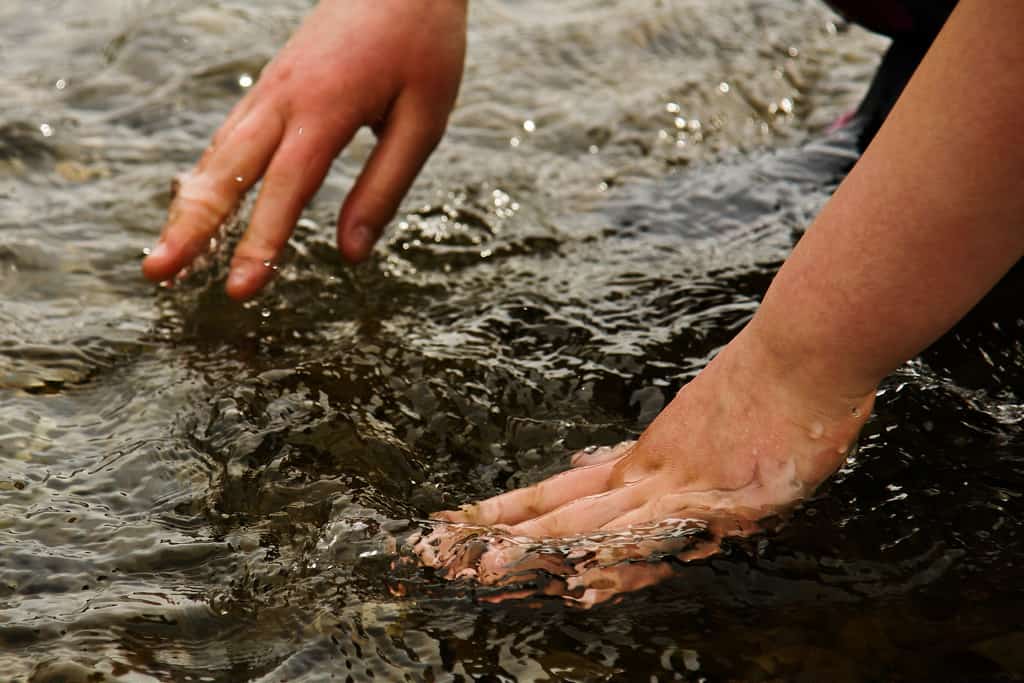
https://twitter.com/ginbat/status/1069163916402544640
https://twitter.com/ginbat/status/1069163918029922304
https://twitter.com/ginbat/status/1069164494222446593
https://twitter.com/ginbat/status/1069171276374261760
~~~~~~~~~~~~~~
See also GUT BACTERIA AND CHEMO.

Otter spraint stained the smooth rock with a redness I’d not seen before. A translucent fish scale and tiny bones glowed in the shade beneath wintry stems crouching over the river’s edge. I’d been there a long while before noticing it.
My intent was not to think about treatment. Nor cancer. Nor my complicated life, in general. I just wanted to ‘fly-wheel,’ drift. Have some me-time. I didn’t even want to think.
Chemotherapy makes my skin sensitive. Finding myself alone, I braved it without a hat, the air whispering around my exposed ears. My rock-like bald head was shown to full sun and gulls cast avumbra over my vulnerability. I thought briefly of the death of poor, bald Aeschylus, by lammergeyer; hit by a tortoise dropped from talons at a great height. How sibylline for a thinker to be mistaken for a strike stone. I shuffled on my axis and continued observing the river.
So much for the fly-wheel.
On first arriving at the river, a pair of dippers had flitted to a stop on a shingle bank, and splashed beneath the ripples looking for food. Joy! I pondered what it would feel like to be a dipper submerged. Dippers exploit the physics of tiny air bubbles in protective sheens trapped around their barbuled feathers. It’s why they don’t drown, but drift back up to the surface to live and hunt again. Feathers also evolved from scales, like fish. Birds, fish, tortoises. Me. I looked at the back of my hand, and imagined bubbles shimmering there in the midday sun.
After searching for a place to sit among the flood debris, wrangled organic and human detritus, I felt distressed again. How did we ever let this happen? Eventually, I found a dry boulder to perch upon, life flows absorbing me as originally intended. This is my sanguimund; a visceral feeling of community belonging. And time lost all traction.
Me-time; so invaluable. Should we call it this? I don’t think so. It is simply living, which encompasses the passing of time and exchange within the nagorasphere. Time is not so pressing in comparison to living.
We need to think of breaths, not seconds.
(Cancer brings this kind of thought to you.)
How could we block out the possibility that, at an atomic level, merging with others might bring the biosphere into us, and us into it? More, with such coherence in a universe (or multi-universes) of unlimited complexity? There is no external environment, just as there is no definitive self. Inhale the faint breath of a dipper, absorb the odorous otter scent, feel the temperature drop when a gull casts a shadow over your bald head. They, literally, shape you.
The Scottish philosopher, David Hume, wrote that introspection does not reveal the presence of an enduring self; instead, a selection of fleeting perceptions. Our sense of self is, at best, partial. But we are reflexives among reflexives. At least Hume reintroduced the idea to Western thought of no singular self. For me, the ethos is not simply a renewed sense of a singular logos, nor a spiritual unity of mind. It is more than that ~ a constant interchanging with matter as mind/body/spirit, with other life forms at a material level (atomic, and in the nagorasphere). This exchange must be ethical to equate immanence, beauty. Everything meaningful is in the positivity of the best exchanges. All else fails, even in death. That’s why fluminism counts. It is love, at the very deepest.
I found a little fallen oak leaf and dipped it in the mustelid poo. I smelled it carefully, just to be sure. The whiff of jasmine tea made it a certainty. Otter! This was the first time I’d found signs along the lumbering River Taff through the City of Cardiff. I have observed otters playing in the River Ely just to the West, and hungrily hunting in the wilds of the Wye much further to the North. But this was just spraint. It was there; to be exchanged, melded into the symbiotic nature of nature. It brought to me another moment of self, the vision of a quick little being oscillating over the rocks at dawn. I could feel the wet on my fur, like the bubbles on my skin. She was me and I was her. Next time, she’ll sense me, perhaps, in a similar way.
Bearing witness to these wraith-like apparitions, I connected to her as I did with the dippers. Then, from somewhere other, otter spied me, took a breath and quickly melted into memory. So I put on my hat and walked home slowly, with neither introspect nor extrospect clearly defined. As it should not be! Because the experience is LIFE, immense and shared.
~~~~~~~~~~~~~
“Then they set out along the blacktop in the gunmetal light, shuffling through the ash, each the other’s world entire.”
― Cormac McCarthy, The Road
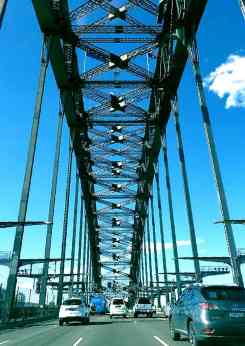
Humans have been blazing trails for millennia. Our early ancestors followed the tracks of large migratory mammals who easily forged routes through the thickets of the wild. Then came the more orderly block pavias of early civilizations to resist the wear of the wooden wheel. The Romans made the roads straight and long, weapons of empire. Then, eventually, came the blacktops, McAdam’s sealed and tarred roads that we have come to expect today. Engineered to a T, with a hard surface of asphalt and aggregates mined from tar sands and quarried from glacial deposits, they are designed for the traction of rubber tyres spinning at speed. They exist for the motor car and transport lorry and perceived as a human right. They shape our streets, our broader habitations, our income, our shopping habit, family structures, schooling; the way we eat, live; the way we love.
Roads allow us self-willed freedom to travel, as far as the land will take us; as long as we have the money, and we’re not stuck in traffic. We even celebrate conquests over water and wetlands by epic concrete and steel bridges and gravity-defying tunnels. Roads are so deeply entwined with our modern sense of ‘progress’, that we light many of them up at night like theatre stages. We pour millions of tons of salt on them in colder climes and spend billions on regular maintenance. Keeping the roads open, whatever the weather, has become societal anxiety.
Emergency services rely on them. Tax and insurance thrive off them. Stumbling across non-paved roads seems novel; terrifying to some. Imagined destinations are only a part of the story; the road trip is as much in our psyche as the endpoint. Families can disperse widely, then be brought together again with just a tank full of fuel. Jobs seem plentiful when the radius of potential is widened by four wheels and an internal combustion engine. Employers can rent huge car fleets at discount, whilst fuel levies raise cash to build even more roads. New roads have become a symbol of economic pride and anything less a mark of underdevelopment.
Stop. Just stop.
Given all we now need to do to reconcile our place within nature, to exit the Anthropocene and enter the Symbiocene, it’s beyond time to re-evaluate roads and their place in our modern psyche.
Roads are one of the worst forms of human chauvinism, exclusively for human purpose, and only certain groups of humans at that, even when transporting livestock. They may as well be tall border walls to wild animals. Any attempt to cross is a death wish, known or unbeknown. I want to make their profusion a thing of the past, the end of the road for roads; McCarthy’s critique of the symbolic American dream dying a death.
Cars and lorries, even buses, kill and injure people and wildlife both along and perpendicular to the route. Particulates suffocate others, causing respiratory disease and death. CO2 emissions from journeys contribute to climate chaos and all the pain and suffering that stems from that. Even the heat stored by the darkness of the tar eventually rises into the atmosphere. CO2 and other gases, metals and compounds are pumped out in construction and maintenance, concrete supports, in vehicular steel and plastics manufacturing and maintenance, in fuel refining and logistics. Plastic, metal and rubber erosion pollutes. The industry causes all kinds of mayhem. And those nightly stage lights drain huge quantities of energy from our national grid, even with newer technologies. Light pollution disrupts wildlife flows in all kinds of ways. So does noise. The disturbance is rife. Harm also comes from erosion, the chemicals and salts, the leaked oil that pollutes the run-off and poisons the adjacent land and watercourses. More, by the litter, flying out of car windows and doors, blowing into those same hammered water courses, feeding plastic to the rivers that lead to the oceans.
Roads are human chauvinism to the extreme. Catching a bus or driving an EV does nothing to prevent so many of these harms. The planners, the engineers and contractors surely can’t know fully what they do. If they do know, it is for the expedience of modernity, the discount of life for the sake of a wage. I want them to, at least, stop and think. Roads are the flesh wounds of symbiotic terrafirma. They gash the soul of soils and then smother them to lifelessness. They fragment and divide ecological communities, including rivers in spate, trapping species onto millions of mini-biological islands in a sea of human development, shrinking wild genetic pools over time and causing conflict, competitive stress and poor immunity.
Salmon, bison, grey whales, red bats, monarch butterflies and arctic terns. Just a few existent vestigial species of migration, borne of the need to move great distances. Their dynamism is also the material embodiment of flow between places, linking the essence of life in one location to another, and back again. The nagorasphere is fizzing with exchange along these routes, and ecological niches multiply across space-time. Even dung and urine enrich, and with the loss of large herbivores and predators, this is particularly on a steep decline. Such sky-land-water disturbances can mean opportunities for species laying in wait along the way. Migration routes can mean more life, not less. The act of moving in nature should be ecologically fluministic.
Humans cheat the natural rules of terra-transit, by getting from A to B not as we were born to do, but by using roads and vehicles as quickly as cheetahs with the stamina of pronghorn antelopes. * Instead of creating ecological unity between social groups and different places, as the bison and the zebra do, we destroy it, flatten everything in the path of our industrial-laden vehicles, divorcing ourselves from the natural pace of bipedal movement. Speed is a thrill, an adrenaline rush. We race each other easily, we compete on luxury. We are seduced through design and marketing to buy into those organic curves, sparkling colours, exciting sounds and plush new-leather smells. Economic and social status is tied to the success or failure of the newest car advert. They are designed to bewitch.
Despite well-known migrations of the wildebeest, zebra, bison, caribou and antelope, terrestrial animals are less likely to migrate large distances. It takes big energy on slow pounding feet for forward momentum through gravity. It’s tough and needs flexi-tendons, fat reserves, power and durability. Other animals, it seems, understand entropy even more than we do. Movement through air and water, despite the friction, is more efficient over distance, the locomotive aided by favourable winds and currents. Bipedal humans, with their flat plantigrade use of feet, are relatively slow at moving across distances, but we have been so clever as to replicate a four-limbed, friction-reducing, rolling method of movement – the motor vehicle. Clever is not the same as wise.
We’ve disrupted the floloca by lacerating interconnectedness and by bringing disturbances along with the linear passage; hunters to the wolf, loggers to the redwoods, gas-garchs to the prairie to frack and spew poison. And then, to transport the aggregates, the asphalt, the ore and even more cars. Roads are made to make new roads. It’s nothing less than a globalized atrocity, the antithesis of feminism.
More still ~ highway robbery. Roads have brought massive social and personal pain to many indigenous and rural people, through exposure to new markets and social pressures, land theft and forced resettlement. Any economic benefits from infrastructure projects have been iniquitous and unfairly distributed. These tarred intrusions are the long, bony fingers of plutocracies, gouging and exposing floloca to abuse, exploitation, and submission to the power. This extends, literally, to roads for extracting road tar.
Ecologists refrain from being totally frank about their destructive nature. They call them ‘linear infrastructure intrusions’, hard, human lines carved through soft ecosystems, including highways, power lines, railway lines, pipelines, firebreaks, bridges, walls and fences. I’d like to call them ‘occasiones ad mortem’, opportunities for death. Because, really, that’s all they are. Each time we go on a road trip, we are taking our chances, along with those of many other beings, human or non-human. Even our ambulances and fire engines are not immune from crashing and causing harm. That’s why they ring those ear-splitting alarms, to lessen the chances. It’s all about risk. Why do we do this?
McCarthy chose a road as a symbol, the American highway, the bastion of the Fordist dream represented as a dystopian nightmare. Cars, lorries, vans, each driven by a single person in an idealized state of self-determination, rumble along the black tops, heating the atmosphere, igniting fires and creating the ash that falls like burned snow. So where’s the utopian dream, the bringing together of human and ecological community?
Now is the time, I contend, to let the main roads rot. Let the verges spread out to re-connect community and encourage us all to really step up in transit-creativity. Gather together. Look at the maps. Decide which roads we can do without. Do it in phases. But do it. Put our heads together in collective ambition. Demand from the city planners that any new or re-development needs to be designed around public space, footpaths and cycle routes. Rural villages can become whole villages again, not commuter satellites to towns and cities. We can still have systems for emergencies, a framework of narrow electric monorails that will take us swiftly, smoothly and safely to hospitals and care facilities. Historical linear streets can be redesigned with organic walking and cycle ways, gardens and wild corridors. We can still use disability scooters. Herald an era of localism, an era of clean air for our children, for living, work, food growing and leisure time. It’s a new ethology for a kinnage dweller.
And for when we really need to travel a distance, we can build unsealed, habitat-connecting permeable routes, with hemp concrete mesh and native grasses, that aid ecology not hinder. We can ride electric bicycles on them, and use light trams, with eco-bridges for perpendicular, ecological connectivity. We can use cable cars with beautiful views, and water balanced rail with feeder lakes full of aquatic life, and other methods low on technological complexity, high in pleasure and life.
Stop the bloodletting, the pain brought to bear so severely upon life. Mend the scars. It is nothing short of mutiny. Let us be wise again like our animal kin, and arrive at the end of the road, soon.
~~~~~~~~~~
*We use large trains too, on huge tracts of land poisoned with pesticides and cleared of vegetation on purpose to keep lines clear (another blog, perhaps).
I also wish to add this tweet and link to the blog. Plastics, rubbers, metals and other chemical contaminants in road dust, particularly around traffic lights (& junctions). Children are often most vulnerable to breathing and swallowing this dust as their mouths and noses are nearer the ground. Inner city demographics means that certain minority groups are hit hardest.
https://twitter.com/seasonalight/status/1192931906918240257?s=20

29 October 2018
Dear Ginny Battson
Thank you for your email of 10 October to the Cabinet Secretary for Education in relation to the ecoliteracy within the curriculum. I have been asked to reply on behalf of the Cabinet Secretary.
The Welsh Government is committed to supporting our young people to develop the knowledge and skills they need to become active, ethical and informed citizens of Wales and the world; which includes in the current curriculum engaging with topics delivered through Education for Sustainable Development and Global Citizenship (ESDGC). Through ESDCG learners explore the links between society, economy and environment and our own lives and those of people throughout the world. It considers the needs and rights of both present and future generations, the relationships between power, resources and human rights, the local and global implications of everything we do and the actions that individuals and organisations can take in response to local and global issues.
ESDGC in Welsh schools is delivered through a cross curriculum approach and can be embedded in a wide range of subjects, such as Science, Geography and Personal and Social Education (PSE). This gives schools the freedom to deliver ESDGC using methods and resources that best meets the needs and interests of their learners. For example, schools may choose to make pupils responsible for attending the school vegetable garden, composting and recycling. This encourages pupils to take responsibility for their actions within the school environment and consider the sustainability of local and global food supplies and the methods used in food production.
In their most recent review on progress of ESDGC in schools, 2014, Estyn found that the majority of the schools visited had effective plans for developing and delivering ESDGC. Almost all schools taught aspects of ESDGC effectively through a variety of subjects.
We are currently developing a new curriculum in Wales, taking forward the recommendations of Successful Futures, an independent, fundamental, review of Curriculum and Assessment Arrangements by Professor Graham Donaldson. This proposes a broad and balanced curriculum from 3 – 16, delivered through six Areas of Learning and Experience (AoLE):
• Expressive Arts;
• Health and well-being;
• Humanities;
• Languages, literacy and communication;
• Mathematics and numeracy; and
• Science and technology.
The development of the new curriculum is being taken forward by teachers and practitioners
through a network of Pioneer Schools in partnership with Welsh Government, regional consortia, Estyn, Qualifications Wales, Higher Education, business and other key partners
and international experts.
One of the four key purposes at the heart of the new curriculum is to support children and young people to become ethical, informed citizens of Wales and the world. This should be evident throughout each of the AoLEs.
Successful Futures has challenged us to re-think our approach to the curriculum; it makes it clear that a high degree of prescription and detail at a national level inhibits “the flow and progression in children and young people’s learning and progression”. As such, we need to ensure that the new curriculum does not provide a comprehensive list of detailed content which would quickly become complicated and overcrowded. The curriculum must also allow professionals the flexibility to choose the specific content which meets the needs of their learners in their specific context. Likewise, this flexibility should allow professionals the autonomy to consider issues such as ecoliteracy to meet the needs of their learners.
Throughout the process we are testing with practitioners to ensure the right balance between flexibility at school level and clarity at national level. The draft curriculum will be available for wider engagement in April 2019. The final publication in January 2020 will include exemplars to support teachers. The new curriculum will then be phased in from September 2022, starting with nursery through to Year 7 and will roll out
year-on-year until 2026.
Further information about the development of the new curriculum can also be found on the Welsh Government website and via the Curriculum for Wales blog.
Yours sincerely
Anisa Khan
Curriculum Division
 Seasonalight
You must be logged in to post a comment.