“Cease being intimidated by the argument that a right action is impossible because it does not yield maximum profits, or that a wrong action is to be condoned because it pays.” Aldo Leopold, A Sand County Almanac
So much fury is coming our way, those of us who bear the burden of understanding extreme capitalism, and the vast global inequity it perpetuates, is fuelling Earth Crisis. The more we shine the light, the more profound the insecurity of those who benefit from it. From the alt-right to the eco-modernists, we are the object of increasing anger.
I want to re-visit the proto Indo-European bher ~ to carry, to bear.
We carry a weight of understanding, wading upstream through a mud-river-torrent of climate volatility, scrambling up mountains of human debris from the hurricanes to come.
I offer bhera as the strength to deliver this specific value-shift to post-growth, post-capitalist, equitable, just, ecological civilization.
Suffix mon (PIE) and we are the becoming of the carrying of this weight, this duty. We are the bearers of this news.
The collective, Bheramon.
United, we can help each other in the face of hostility.
This week, thousands of people marched the streets of London, calling for a second referendum on the British breakup with the European Union. Simultaneously, and perhaps connected in many ways, hundreds also marched in Lancashire to protest Cuadrilian fracking. And a group called Extinction Rebellion are planning active civil disruption, beginning at the end of the month, in the face of political inaction and apathy towards the climate crisis.
On Twitter, at least, I am registering a shift in the general zeitgeist ~ notice taken, at last, by a greater crowd beyond the long converted. More retweets, more mentions, more vocal response, especially after the latest IPCC report publication, to a rapidly changing climate and relentless depauperation of wildlife (so often ignored by a lack of interdisciplinary focus). Even more intensely, there’s a rise in exchange of articles and research on steady state/de-growth economies. Campaigners seem energised by this. A good thing!
But I’ve got to be honest with you. I am not detecting much of the same enthusiasm in the shopping malls of Cardiff, or on a packed A48 dual carriageway at 4pm on a Friday afternoon. Importantly, neither am I seeing it echoing out from halls of power. All this takes time, when we have no time left.
I’ve been calling for ‘radical’ over these past few years but, instead, people seem to prefer the idea of being a rebel. A call to arms? Perhaps. Radicals are maybe too extreme for the British. We have a good, solid history of rebelling against monarchs (it’s Bonfire night soon), but not a culture of anything too much in the ‘extreme’. God forbid.
The problem is that rebellions may ultimately shift power structures, but I am not sure they attend to deep-seated human misadventures in values. And it’s at this earthy level – the deep roots of human values – where change in behaviour will liberate the biosphere, not apprehend it. A true radical shift still lies in the way we coach our young (and old). Slide us up the competance hierarchy from sub-man to unconscious competance in ‘living the good life’ mutually, along with all other species. A R-evolution. And soon.
Are there ways to rebel that are radical?
Here’s an idea ~ let’s adopt a system of responsibility over rights.
Legal rights are generally upheld as good. Yet time and time again, they are flouted. Governments tend to change the concept of rights to suite their agendas. Consistency is lost everytime there’s a switch in power. Rights are temporary social constructs, devised by nation states (the UN is a collective of Nation States), to impose order among the human population. They can be treatised and then rejected, voted in and out. They can be good or not so good, proclaimed as a brand of justice handed down by powerful people, who are largely in train with capitalist ideals and infrastructures. They are not necessarily liberatively just, enduring nor bioregional. And, importantly, at best, they cloak only one species from the elements ~ homo sapiens.
This is the thing; rights are quintessentially anthropocentric.
Non-human life needs liberating from human dominion, not co-opting into our systems of Law, Property and Capital.
But responsibilities are just the other side of the same coin, no?
Not if you think that all species/genera have equal responsibility to the floloca to which they relate. The basic rules of play exist in a natural order that ensures complexity, diversity and evolution. Humans are too busy simply relating to one another and not all species. We are NOT thinking ourselves of and to our symbiotic relationship with all other life. This is our immaturity.
Take land. The UN asserts through various international legal treaties the human right to secure tenure (individual or collective). Humans, therefore, are granted a right to determine what other species are allowed to cross or reside upon that land, down to the microbiome. A scrap of freedom hurled to us from on high makes us ‘feel’ empowered, right? What about the empowerment of all these other species on this shared planet? They still do not have a ‘say’, and it is ridiculous they should even need one.
Regardless, nation states bank roll their way through these seemingly basic human ‘rights’, even in the UK, where English Compulsory Purchase Orders facilitate HS2 and a political obsession with 20th century economic growth means 20km of ecological vandalism in Wales ~ M4 extension proposals.
Potentially useful legislation such as the Wales Future Generations Act are ignored, rights instead argued ‘for the greater economic good’ of a nation.
But remember, the greater good (wrong or right), is for the human population only.
Some, already embedded in the culture of legislation as the route to enlightenment, wish to enforce the Rights of Nature by legally framing wild populations, animals, nay entire mountains, rivers and mountains, as either persons or entities with single identity. These identities can then protected against other humans who want to exploit them. They are supposed to deter, but we know how this usually works. An infringement is made purposefully and then tested through the courts. This is an expensive process, and if you have enough funds, you can generally guarantee a win by appealing until you break the financial strength of the opposition. It’s a lawyer’s game, with cryptic language and a copper-bottom fee structure. Asserting rights for us or our wild communities just means a fight in court, at great expense, and against fundamentally capitalist levers channelled through 300 years of common law.
Quite frankly, I can’t see this as radical in any way. I can’t even see a funding pot as radical. Nothing fundamentally changes beyond the idea that the ‘playing field’ is somewhat levelled. But it’s still a ‘playing field’, a game, which doesn’t include the key witnesses in need. Intensely political appointments, clever lawyers smoothly cultivated from a certain educated class (the way of the neoliberal University), judge bias… there’s no real change here.
Truer meaning comes from nurturing a depth of timeless responsibility. I’m going to try to claim this back off the right-wingers.
Both ordinated rights from on high and impulsive freedoms mirror the strict parent and a rebellious teen. The whole thing lacks maturity. This has been hijacked by the ‘Right’ in the political sphere, where regulation is seen as a bind on the ‘self,’ weaponised by the left to infringe upon the freedoms of all and particularly restricting on the financially ambitious.
But a libertarian nature of responsibility is not confined to the ultra-conservatives at all in Western political theory. As well as full-on libertarian anarchy, there is Bookchin’s Communalism; a form of social ecology, whereby smaller bioregions form smaller democratic face-to-face forums, which then co-operate under a greater administrative federation in order to maintain peace. And it is here where my own persuasions lay right now, with a little bit extra ~ the acceptance of the ethic of fluminism underpinning all decision making.
An ecoliterate population mentors its descendants in the carrying a shared load, this charge being the active proliferation of an abundant and diverse biosphere. Humans are psychologically evolved to act through innate moralities, a heady blend of rationale and emotion. They are of course shaped by culture and experience and closer attachment generally means higher moral imperative.
This is why fluminism needs to be at the heart of communalism, because as humans become more emotionally aware and physically immersed in symbiotic processes, and attached to all beings devoted to those processes, mutual love brings our ‘being’ close to the same process, the same purpose. And with it, wellbeing. The interconnections bristle.
Self respect, individually and collectively, embraces the weight of fluministic obligation, and finds the joy in devotion. To proliferate the flow of life (as a fluminist), means the rewards are great and mutualistic between all species, and in multiple directions. Block the flows at the collective’s peril. Block the flows for generations and we humans take the majority of known living systems with us into oblivion.
Legal rights generally prescribe things, not explain in depth the understanding why. It may be easy to sell to the young under a banner, “Freedom!” but it might as well read “Entitlement!” But life involves a toughness too, extending oneself beyond comfort zones, realising we are not so entitled because there is a limit to freedom when it begins to harm others. Making the effort to contribute to community (including non-human), despite all our personal issues and problems is an act beyond entitlement. It is self respect and respect of community. Love comes back in droves, whilst responsibility and truth come together ~ the reality of a functioning biosphere.
A court of law is full tricks and traps, an adversarial system designed to be fairly hostile, and Nation states do generally uphold capitalist or wealth accumulating ideals through it. Instead, via a system of responsibility and co-operation, we may go back to humble ways of living in and as part of nature. The closeness of community means that rogue behaviours are more quickly spotted and curtailed by local consensus. Morality is also about visibility. Further, we can take the strain when others are unable, an ethic of care that doesn’t necessarily require us to know all the individuals concerned intimately, but close enough knowing all are interconnected in our one biosphere.
Indigenous law generally tends towards “take only what you need and leave the rest,” as do the birds, the trees, and most other species. Produce food, clothes, tools and shelters that are crafted well the first time, and are easily prepared and repaired. Create methods of ‘harvest’ that respect each ‘world’ of being. And instead of framing nature as external ‘resource’, something separate to use, form close relationships with these ‘worlds’ as kin, organic and even the inorganic. Kinship being “we of them”, not the other way around. To make them human brethren is simply more of the same Anthropocentrism.
Therein lies responsibility to them.
In this way, the law is a living thing, a dasein-daily, which can be taught and improved down through generations and within planetary limits. And without having to pay lawyers to translate. Let us now adopt our own kind of indigenous or adopted endemism way of being. Without full cultural appropriation, we can freely adopt these basic key tenets without seeking the consent of anyone. No lawyers, no politically appointed judges, no politicians/police-itians. In doing so we are being truly radical, rebelling against the current paradigm and not simply playing the same game.
I’ll end by posting a wiki link to information about an indigenous Andean ethic called Ayni. I wish I knew about this years ago. There are other resources available on this ancient tribal way of life, and plenty of NGOs seem to be involved in protecting the people and their culture, particularly of the Q’eros community (a living form of communalism) to varying degrees of sucess. The wiki entry, none-the-less, seems to be a good introduction.
In summary, we can love, be mutualistic, learn, know and remember, work and preserve life ~ form our own bioregional forms of Ayni. We can adopt, once again, communal lands and waters, with no separation between what is human and non-human. We can reciprocate/extend mutualism, but with love, towards each other and all other life. We can look out especially for the vulnerable and sick.
And quite beautifully, as the people of Q’eros have said, we can lift each other and all life ‘up’ to equal height.
Green Space: Light which has a dominant wavelength of roughly 495–570 nm permeating a void. How could such a phrase be used so frequently, so poorly, to represent complex places of varied natural living process?
The universe is full of space. If life-relations are broken-dead, then all you have is space.
Such banality fails to articulate the interconnectedness of life, fails to inspire us to engage and participate in the power of interconnected living systems, anywhere.
It’s OK to be less generalist when talking about public places. Ornamental “parks” and “gardens” are where humans curate all, but when it comes to free and wild processes, be distinct, honour them with a name.
So in keeping with my work on Kinnages, I offer an alternative word, Kinnaria, to describe the koinonia or kin-gathering in the nagorasphere, where all is exchangeable in between those human harder edges. And for all people.
Kin (family) aria (originally ‘ary’ ~ contributing to, for the purpose of).
Kinnaria ~ for the purpose of kindom.
In the best of times, these too are interconnected. See them on a map, better, experienced in loops around your towns and cities; better still, weaving through and around our kinnages.
Life’s flow of the microbiome, breath, the spores, cells, fluids, chemical signals, speech, song. So many directions. Complexity. Diversity. The Nagorasphere.
These sacred, rich places are where our own species act less as stewards but community-willed participants alongside all kin in that unique locale in this universe; climate, orientation, wetness, microbes, nanobes, land swell, soils.
Here, we see nature as a community, affecting the viscera (symnexia), the deepest possible respect for natural processes (praximund), and a fundamental requisite of fluminism. Here, all life finds leverage, traction, devotion.
We realise our immanence in these places, as may all species who wish to freely be there.
My daughter also came up with something beautiful and simple.
Credit: WYLD ~ coined by Gracie-Anne Battson.
Addendum
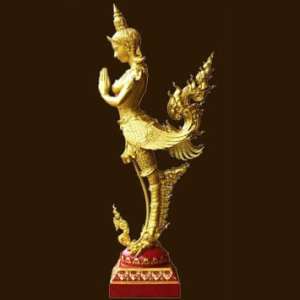
In Burmese mythology, four of the Buddha’s past animal lives are “kinnara”. The symbol of the Karenni people is the kinnara and the kinnari, half bird half human, and symbolic of true love.
Thank you for the invite via Twitter to write to you further on egalitarian ecoliteracy.
Now the latest IPCC report has been published, still erring on the conservative side yet relentless in its call for urgent action, I hope beyond measure you will advocate providing ALL Welsh children and adult learners with the ecological systems and environmental knowledge/settings they truly require.
Equipping each and everyone for the rapid changes now, and the volatile future science predicts ahead of us, is the best gift we can bestow and a collective necessity in Wales under the WFG and Environment Acts.
And more. It’s our generational responsibility.
Here is my appeal, written for the Wildlife Trusts blog back in 2015, more urgent now than ever.
I ask you to consider setting things in motion to introduce this transformational pedagogy. We will need to mentor the mentors.
I look forward to hearing your response.
Yours very sincerely
Ginny Battson
(Previously Brecon & Radnor, now Cardiff West)
Today, I transfer my website to one powered by green energy and with no adverts. Please follow this link and you will be very welcome! Thank you so much for your continued support. With fluministic love, Ginny x
“These people have learned not from books, but in the fields, in the wood, on the river bank. Their teachers have been the birds themselves, when they sang to them, the sun when it left a glow of crimson behind it at setting, the very trees, and wild herbs.” —Anton Chekhov, A Day in the Country.
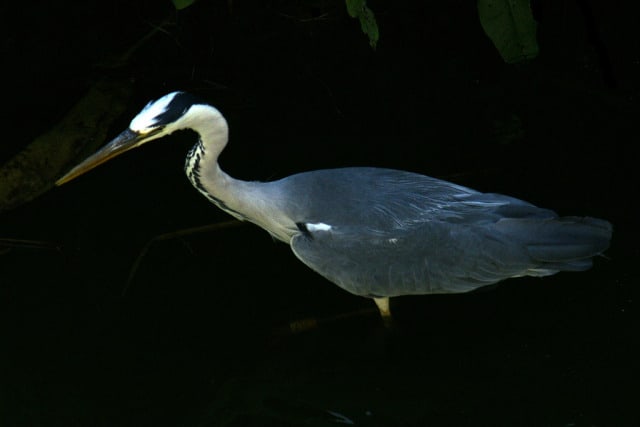
I have been watching old man heron on the Glamorgan Canal, of late. And a dainty little egret at Llandaff Weir. Their organic curves and soft feathers lull me into their lives. I long to communicate with them, if only by brief mutual gaze.
I try to imagine being Ardean; hollow-bone legs feeling the bite of cold in the shallows, and my neck long and lythe. I extend my wings and feel a sharp lift from a northerly breeze, whilst peering deep, with one eye, into a shadow I cast. If there is a silver flash in the black, I will tuck-in my wings, slowly extend my neck until my bill is stock-still for the kill.
A heron’s life may at first seem pragmatic, embracing hunting with a quiet determined grip. Lauded by old masters of our economic system founded on the protestant work ethic, pragmatism is the hard work upon only what is known, the empirical only, a practical boundary to action. That is, until, something better comes along. But from where does this ‘better’ come from? And then we have to shift. Are we ready?
Pragmatism. I hear it from many science-oriented souls. This or that goal is to be achieved only by what is known to them, rather than by what could be. Such a limiting view of what it means to be alive.
Look again at heron and little egret. They are searching, looking for something better in the deep flow of life. Today, I will overestimate heron and little egret. And here’s why.
They aim high for their catch. Always. And higher still. This is not rooted in pragmatism, but in patience as beyond-perspective.
“If we take man as he really is, we make him worse. But if we overestimate him … we promote him to what he really can be. So we have to be idealists, in a way — because then we wind up as the true, the real realists.”
In the rain below the weir, little egret finds her own pattern in the chaos. She’s perfect. Her white chest feathers ripple to the volatile air whilst she prowls around, looking for a meal. She’s a carnivore of the shallows, of molluscs, small fry and rock-borne insect life. In the lee of this cacophany of liquid weight, she’s light on her stilt-legs across rocks and recovering foamy streamers flowing south. Heron has his skills. But she is quicker. I rapture in adaptations ~ they require imagination and foresight.
This way, that way. The flow of the water. The ruffle of a breeze. Slip-rocks, and deep pools.
She has her own beat as time whirls around her. I am captivated by her simple strategy. In order to catch fresh food, her patience is dynamic. She uses her bill to its fullest, all the senses available to her right now through to the beak-end and its alignment to potential or actual prey. It is her knowing of body to perfection. It is her niche and she lives it, dasein-daily. (Heidegger)
“From a sensory ecology perspective a bird is best characterized as “a bill guided by an eye.” (GR Martin 2017).
At the weir, there’s a dialectic underway. There’s cacophony and whisper, the smash of a river rolling over man-made edifice and then, little streams pulsing through rocks to shingle hemlines around willow islands. There are plastic sheets and childrens cars and balls and other city objects tangled in the wash-through. Tweavelets weave monofilaments of polymers as well as duff. We leave our marks in anti-fluministic ways. And yet little egret is fluministic in her devotion. Her binocular eyes are wide open, and key is alignment to a potential, the beak and beyond, like a snooker player staring down a fine-crafted cue to an imaginary, glinting ball ready for a pocket.
She is patient. Patience is a verb. It is not incapacity. It is not nothing. Neither is it death. It is keeping the opposite alive. Senses are alert to the main chance not yet happened, deep in the flows ahead. The process of patience requires imagining ~ the vision of seeing in advance the potential and most efficient main chance in space and time. Imagine all the little fishes…
In the slowness of the canal, there are potential fish in the shallows old man heron can skewer with his face-spear. But he has to remember and imagine what he is looking for. He has to find the best spot to find the right fish. He’s devoted to it. Watch him! This is his dasein-daily, a primal nature of ‘being’, simultaneously engaging with this world. After a while, it’s time to move on and he seeks to fly upstream to a better spot (with such elegance). How do better things come, were it not for this vision inside his head for a better spot, and a compulsion to fly there, freely? He imagines what he is looking for ~ all the little fishes ~ then goes to find them. It is an essential part of his act of patience in survival.
Patience is not simply the ability to wait. One has to be observant, present. It requires memory and imagination. It requires beyond-perspective. There are multiple things going on. Patience can even be endurance, a painful dasein-daily, for a richer state of being in the longer run (pati – latin, to suffer). If we are never tested, how do we know ourselves fully? Right now, heron and little egret own a deliberate sense of expansive perspective on the scale of things in life. Hunting fish is patientism- what I do now has consequences – I am fed and the fish is dead. The efforts may pay off in results, a full belly. But I am also patient in observation, presence and hunger; a virtue, but with great reward (given abundance due to me). Heron and little egret are applying themselves, in duty and with hope, within and without, to the ever dynamic flow of interconnected life.
So, no thank you. In being always pragmatic is to always compromise (in consequence and in virtue). To always compromise is to lower expectations. Sometimes, compromise is no where near enough. One needs to raise the game to beyond-perspective. Like the heron and little egret.
That patience is beyond-perspective.
That patience is not waiting idly, but putting phenomena into beyond-perspective.
That beyond-perspective becomes a state of daily-dasein.
Potential obstacles can be the instrument of action (the bill, the beak).
That heron is patient in stealth.
That little egret is patient in dynamism. She adapts to her own beat.
That humans may learn from ardean patientism.
Humans may learn from ardean patientism ~ be ready to the fullest in the river, to strike for that main chance. Look for better, fuller, abundant places to be present. Aim for a great deal more than the limitations of pragmatism. Even in the smallest of things.
Pope Gregory the Great expressed patience as the guardian of all virtues. We might consider that in our anxiety to complete goals, we forget about this valuable point of view. Ecologism, fluminism, cultivation of love in space/time means the integral beyond-perspective required in being patient. Think big.
The dialectic is there too, yes, setting out to save what we continue to destroy, because we are a society of reaction and not of considered response. We can change this too, by being patientist. Realise that accute ardean potential within us all, primed for imagining the moment of exquisite action in the flow of all life. Patientism.
(dissertation extract, in continuing the ideal of co-operation, symbiosis and mutualism into, and of, language)
6.0 Language of Flow: Fluminism, Introducing Spring Theory.
6.1 The Need for Neologisms.
Two particular yet simple words, love and ecology, are my inspiration in the creation of my own neologisms ~ fluminism, and then sanguimund and praximund, the latter two as constituent parts of the former.
As to both words, love and ecology, as lexicons combined, they are complementary. One word is a positive emotion and the other a rational science. Like life itself, it is the combination of both affect and rationale which our brains assimilate as moral constructs and in the choices we make every day. The word fluminism brings them both together, and from it flows an ethic by which we may choose to live.
As part of my research into the meaning of these words, I have investigated the philoso- phy of language. What are words in relation to reality, experience, meaning or truth? How does a word (or two), become an action? Wittgenstein and Searle said human ex- perience and language are structurally linked. Words are integrally part of experience. Searle once quoted early French philosopher, La Rochefoucauld, famed for his acidic aphorisms:
‘There are some people who would never have fallen in love, if they had not heard there was such a thing.’
I’m not so convinced. If one is blind and mute, does love never come? Culture does in- fluence experience, there’s no doubt, and language is also a part of culture. Like all, love and meaning are both ‘nature and nurture’, with no separation.
I do not think language between any living species makes this world. Rather, all are a part of the same world and interconnected. As a form of life, neither is language some- thing separate (Wittgenstein). I do not see language as transparent either, as Russell suggested. We are not transparent because of our ability to communicate in words, far
from it! There will always be hidden depths where unique identities and consciousness are concerned and there is beauty in this complexity.
In Wittgenstein’s later work, then Austin and Searle, a distinction between meaning and intention via utterances began to emerge as a focus. Objectifying, naming, categorising, taxonomising; these are functional to us, how we humans interpret life, or as Searle put it, the systems of representation we bring to bear upon things. Words are neural con- cepts, but they do not singularly define language. Once formed, there is a kind of clo- sure of an openness, as Hilary Lawson asserts in response to Rorty and Derrida’s works on relativism, in that they crystalise into a headline, or as he describes… ‘language clos- ing the world into things.’ Lawson’s video art movement demonstrates the openness side, which I interpret (ironically), as a state of inquiry without resolution. Words may only attempt closure in collective meaning, by officiates of companies that publish dic- tionaries or taxonomists working on genetic data sets. Words, like species themselves, have a certain porosity about them, in nuance and imperfection of full meaning, again a beautiful thing in itself.
Yes, by grouping words together, we can be more or less certain about clarity of mean- ing, and all is related to intent and consequence, even the obsurd. A poem may be delib- erately open. But a key to a map must indicate, at least, some closure on what the words mean. They may also seem closed in our own unique minds and verbal expressions.
If I write or say the word, “table,” and you read or hear me, you’ll probably envision your own idea of what a table is. My idea of a table will be transformed by your own memories and experiences. It may create a feeling. I can’t help but feel (feel, being key), that feelings and emotions have been set aside in the analytics of language. My grandmother’s table had a certain smell, of bees wax and lino and the word table makes me think of toast for breakfast in her kitchen. Your idea of table might make you feel very different. The word, “dog” may mean pure, unconditional love to me. But to oth- ers, it may instill fear.
In psychology, particularly in Acceptance and Commitment Therapy 84, this may be re- ferred as cognitive fusion, where words come preloaded with meaning and effect be- haviour. Sometimes these feelings are invalid in relevance to our states of being in the present. They can be distressing or deceiving. But by understanding the brain is plastic and neural connections can be either thickened or thinned, behavioural therapies, such as action and commitment or cognitive behaviour can help shift either the meaning of words or the feelings that arise from them.
Each person, therefore, holds language both uniquely and in common; a dialectic. The same word swapped into the mouths of others transforms. It is a kind of flow of under- lying meanings and feelings. I cannot agree with Lawson, therefore, that words are clo- sure. Words are, instead, like magnets, attracting, repelling, fusing and defusing emo- tions from each person and their life trajectory. There is evolution, and over time, the culture and meaning of a word can inherently change beyond recognition. Language is a living thing and connects us, like mycelium networks in the woodland floor, in multiple, dynamic patterns. It can also be something to which we devote for the good of the bios- phere. We can approach language as fluminists.
Making the interconnections is what is most meaningful. Language is connectivity, rela- tionship, whether it be verbal, body movement, chemical or electrical. When it is for good, not bad, then it may then be argued as a flow of love. In unison with my ethic, fluminism, I perceive language, like music, as flow. It is a living thing (the dead neither speak nor read).
Art and artistic expression, musical pauses, or the hidden meanings beneath the subsur- face of poetry can keep to the idea of openness (Lawson) or mystery. But I think, with affect, all is never completely closed.
Together, the words love and ecology create something compelling, larger than the sum of each word. It goes to the root of what I understand. In creating neologisms, the poten- tial is even greater. They are like linguistic finger posts, in that they convey hope in the focusing of minds to a new or previously overlooked idea. I create the word fluminism from my own deep understanding of love and ecology as interconnected life flow, but I pass it on to others and hope for boundless contributions to intent, meaning and conse- quences.
6.2 Introducing Spring Theory
Neologisms are not only ‘speech acts’ (Austin, Searle. 85), in declarations, but also loaded in potential, like compression springs. A word is formed, deliberated, received, where- upon as the ‘other’ is attracted and jumps on it, meaning springs forth in different direc- tions each time, or by chance, the same. Different interpretations are ‘felt’ (affected), because each have lived different lives. Before long, we are realised (Weir) within our own understanding, and living as fluminists by simply ‘being,’ as in the existence of the universe. I would like to call this ‘Spring Theory’.
Heaven knows there are enough theories. But in physics, string theory is where point- like particles are replaced by one-dimensional objects called strings. It describes these strings propagating through space-time, interacting with each other. Flow. In fluministic Spring Theory, I wish to plant seeds of ideas, evoke imagination and hope. 86
~~~~~~~~~~~~~~~~~
84. Hayes, SC et al. Action and Commitment Therapy 2nd Ed. Guilford Press, New York. (2012) p 20
85. Searle, J. Speech Acts: An Essay in the Philosophy of Language. Cambridge University Press: Cam- bridge. (1969)
(Dissertation extract, in continuing the ideal of co-operation, symbiosis and mutualism into, and of, language.)
6.0 Language of Flow: Fluminism, Introducing Spring Theory.
6.1 The Need for Neologisms.
Two particular yet simple words, love and ecology, are my inspiration in the creation of my own neologisms ~ fluminism, and then sanguimund and praximund, the latter two as constituent parts of the former.
As to both words, love and ecology, as lexicons combined, they are complementary. One word is a positive emotion and the other a rational science. Like life itself, it is the combination of both affect and rationale which our brains assimilate as moral constructs and in the choices we make every day. The word fluminism brings them both together, and from it flows an ethic by which we may choose to live.
As part of my research into the meaning of these words, I have investigated the philosophy of language. What are words in relation to reality, experience, meaning or truth? How does a word (or two), become an action? Wittgenstein and Searle said human experience and language are structurally linked. Words are integrally part of experience. Searle once quoted early French philosopher, La Rochefoucauld, famed for his acidic aphorisms:
‘There are some people who would never have fallen in love, if they had not heard there was such a thing.’
I’m not so convinced. If one is blind and mute, does love never come? Culture does influence experience, there’s no doubt, and language is also a part of culture. Like all, love and meaning are both ‘nature and nurture’, with no separation.
I do not think language between any living species makes this world. Rather, all are a part of the same world and interconnected. As a form of life, neither is language some- thing separate (Wittgenstein). I do not see language as transparent either, as Russell suggested. We are not transparent because of our ability to communicate in words, far from it! There will always be hidden depths where unique identities and consciousness are concerned and there is beauty in this complexity.
In Wittgenstein’s later work, then Austin and Searle, a distinction between meaning and intention via utterances began to emerge as a focus. Objectifying, naming, categorising, taxonomising; these are functional to us, how we humans interpret life, or as Searle put it, the systems of representation we bring to bear upon things. Words are neural con- cepts, but they do not singularly define language. Once formed, there is a kind of closure of an openness, as Hilary Lawson asserts in response to Rorty and Derrida’s works on relativism, in that they crystalise into a headline, or as he describes… ‘language closing the world into things.’ Lawson’s video art movement demonstrates the openness side, which I interpret (ironically), as a state of inquiry without resolution. Words may only attempt closure in collective meaning, by officiates of companies that publish dictionaries or taxonomists working on genetic data sets. Words, like species themselves, have a certain porosity about them, in nuance and imperfection of full meaning, again a beautiful thing in itself.
Yes, by grouping words together, we can be more or less certain about clarity of meaning, and all is related to intent and consequence, even the absurd. A poem may be deliberately open. But a key to a map must indicate, at least, some closure on what the words mean. They may also seem closed in our own unique minds and verbal expressions.
If I write or say the word, “table,” and you read or hear me, you’ll probably envision your own idea of what a table is. My idea of a table will be transformed by your own memories and experiences. It may create a feeling. I can’t help but feel (feel, being key), that feelings and emotions have been set aside in the analytics of language. My grandmother’s table had a certain smell, of bees wax and lino and the word table makes me think of toast for breakfast in her kitchen. Your idea of table might make you feel very different. The word, “dog” may mean pure, unconditional love to me. But to others, it may instil fear.
In psychology, particularly in Acceptance and Commitment Therapy 84, this may be referred as cognitive fusion, where words come preloaded with meaning and effect be- haviour. Sometimes these feelings are invalid in relevance to our states of being in the present. They can be distressing or deceiving. But by understanding the brain is plastic and neural connections can be either thickened or thinned, behavioural therapies, such as action and commitment or cognitive behaviour can help shift either the meaning of words or the feelings that arise from them.
Each person, therefore, holds language both uniquely and in common; a dialectic. The same word swapped into the mouths of others transforms. It is a kind of flow of under- lying meanings and feelings. I cannot agree with Lawson, therefore, that words are clo- sure. Words are, instead, like magnets, attracting, repelling, fusing and defusing emotions from each person and their life trajectory. There is evolution, and over time, the culture and meaning of a word can inherently change beyond recognition. Language is a living thing and connects us, like mycelium networks in the woodland floor, in multiple, dynamic patterns. It can also be something to which we devote for the good of the biosphere. We can approach language as fluminists.
Making the interconnections is what is most meaningful. Language is connectivity, relationship, whether it be verbal, body movement, chemical or electrical. When it is for good, not bad, then it may then be argued as a flow of love. In unison with my ethic, fluminism, I perceive language, like music, as flow. It is a living thing (the dead neither speak nor read).
Art and artistic expression, musical pauses, or the hidden meanings beneath the subsurface of poetry can keep to the idea of openness (Lawson) or mystery. But I think, with affect, all is never completely closed.
Together, the words love and ecology create something compelling, larger than the sum of each word. It goes to the root of what I understand. In creating neologisms, the potential is even greater. They are like linguistic finger posts, in that they convey hope in the focusing of minds to a new or previously overlooked idea. I create the word fluminism from my own deep understanding of love and ecology as interconnected life flow, but I pass it on to others and hope for boundless contributions to intent, meaning and consequences.
6.2 Introducing Spring Theory
Neologisms are not only ‘speech acts’ (Austin, Searle. 85), in declarations, but also loaded in potential, like compression springs. A word is formed, deliberated, received, where- upon as the ‘other’ is attracted and jumps on it, meaning springs forth in different directions each time, or by chance, the same. Different interpretations are ‘felt’ (affected), because each have lived different lives. Before long, we are realised (Weir) within our own understanding, and living as fluminists by simply ‘being,’ as in the existence of the universe. I would like to call this ‘Spring Theory’.
Heaven knows there are enough theories. But in physics, string theory is where point- like particles are replaced by one-dimensional objects called strings. It describes these strings propagating through space-time, interacting with each other. Flow. In fluministic Spring Theory, I wish to plant seeds of ideas, evoke imagination and hope. 86
~~~~~~~~~~~~~~~~~
84. Hayes, SC et al. Action and Commitment Therapy 2nd Ed. Guilford Press, New York. (2012) p 20
85. Searle, J. Speech Acts: An Essay in the Philosophy of Language. Cambridge University Press: Cam- bridge. (1969)
I have decided to publish my complete Masters dissertation on environmental ethics here, the culmination of years of research and thought. But it’s just the beginning…



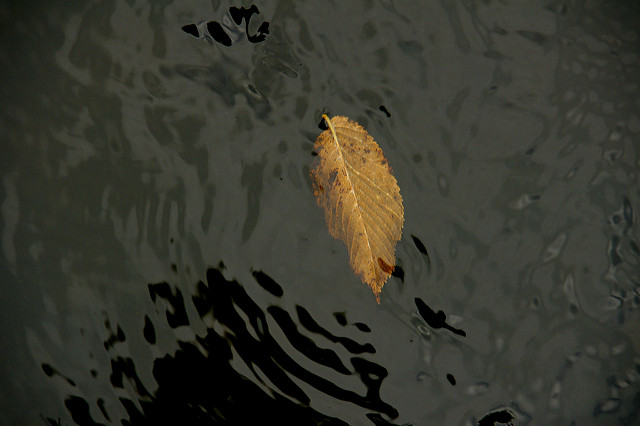
 Seasonalight
You must be logged in to post a comment.