I think it’s time we looked at time scales in terms of ‘doing’. The reality is the need for immediate change. Today. That everyone is not participating today is complex, but there’s real truth in urgency.
The use of the word ’emergency’ has been severely compromised. I have read on Twitter a defense of using the phrase ‘long emergency.’ A long emergency is about as useful as a flying brick, a nonviable dialectic – AN OXYMORON. People need to understand the urgency, in mitigation and adaptation.
Western techno-industrial values, competition, fear, consequential life-styles and the general global devaluation of life for markets, that lead to habitat loss, emissions, poverty, racism, failing democracy, dictatorship, xenophobia, North-South divides, nationalism ~ please feel free to add more ~ are failing all living beings.
What we have are emerging urgencies, and we’d do well to articulate and address them.
One such Emergent Urgent is to spread the news that the globalized financial sector is not going to save lives. We must create a local, bioregional flow of support for one another and all life. We have to stop giving up our power, and giving Power excuses to wait or knock back decisions into the laps of our children and grandchildren.
Compassionate and immediate transitions are possible. COVID19 shows that immediacy is necessary, and can happen street to street. Successful countries have acted immediately and, in good part, compassionately. The same it is now on action to slow the Climate Bomb.
This is not apart from the moral imagination required in creating new/ancient world orders based on the ethics of care (in the natural sense), though we do need more. Lots more.
We already have a pool of understanding between us on some of the key changes forquired in all aspects of society, enough to begin (it’s already begun). But too many are holding on to the natural capitalist ethic, the ‘ecomodern’, and new billionaire colonialism; perpetuation of capitalist failure ~ dominantly white, eurocentric and male. It’s harmful.
The response to the climate, ecological and human empathy/imagination crises (Earth Crisis), is The Emergent Urgent.
The nature of nature, is where blooms transform to seed. It’s not an ugly process, far from it. It’s life-process. Does it begin with the egg of the solitary bee who pollinated this flower?
It’s not a catastrophe, but a sacred process. Look further to ecological death, and life. It’s love. We may look at our own bodies in the same way. Don’t fret about flowers ‘going over’. They are beautiful.
~~~~~~
Anxiety grips me again, during just a handful of days this time. Matter builds as crystals from the process of evaporation, and all the little thoughts become sharp and transparent.
I have been observing my balcony flowers going ‘over,’ their delicate petals beginning to wither and curl, as if kissed by poison. As the draw of their shapes and colours fade, it would be easy to cut them off to keep things in check. The beauty, or love, is ever more enduring than the colour or scent of the blooming flower. The work of the bee or the fly has set in motion deep changes within ancient organs that sustain life. Nothing is going over, moreover, everything is beginning.
The fertilized seeds are beginning to swell, the baha sucked back through the veins of each petal, and up from the roots, to grow new seeds. This flow, this transfer of love in the form of metabolites from flower to ovary, is for-newal.
When a flower is cut dead for the sake of what we humans deem tidy, or aesthetic, or out of place, what worth are we assigning to the plant and seed? Or the bee and her egg? Life is growing inside, at first shy, but then erupting to ripe moments of genetic and evolutionary potential.
Black Lives Matter. Three black women founded this now global movement. Two identify as queer, and one has worked for a long time in the field of domestic abuse. Alicia Garza, Patrisse Cullors, Opal Tometi. Remember their names.
Like bees, all three have set in motion a beautiful but painful blooming, of instilling the will of justice and love inside so many more. Ripe seeds of empathy are broadcast widely. With sunlight, good soils and pure water, these efforts are growing into powerful new relationships in the face of many wrongs.
Every black life matters. The oppression endured over this last 400 years has forged survivors like diamonds. Their lives materially and spiritually matter to us all. George Floyd and hundreds, thousands, millions, of black lives have been cut dead, stolen from their loved ones and buried deep. Millions have lived in fear, incarcerated, and disenfranchised.
I want to acknowledge that pain, and my white British ancestral role in its coming. It must now leave, as it should never have been. It’s a personal and public struggle in which we all need to be willing and able to participate, from bee to seed.
I’ll end with Professor Cornel West’s words said in public discussion this last few days, still raw from the death of Breonna Taylor, a medical carer herself, who was shot to death by a militant police force, in what was supposed to be safe sanctuary ~ home.
“We can’t bring her back, but the memory will empower all to keep fighting.”
There are more than 48,000 species of them around the globe, some yet undiscovered by humans, and all of them, bar one that we know of, are predators. They are hugely diverse, reflect all spectrums of light, and are individually character-full.
I am being lured into their web of life.
Araneae are air-breathing invertebrates, with eight legs, fangs to inject venom, and spinnerets that extrude silk. Silk is a protein fibre, and used to create food traps, nests, egg coverings, and air transport systems. Imagine if we, through our own bodily secretions, could produce all these things: fishing lines, bed linen, baby blankets, and parachutes. There are at least 7 types of silk-making glands, and all spiders have at least three. Some silks are stronger than steel for their weight. Spiders are an essential group of living beings (predators are essential), who may live deep in caves we humans will never visit, and float as high as the clouds when ballooning across continents. They have their own microbial symbioses, most of which we still have little idea. Some spiders are crucial for distributing fungal spores. In rainforests all around Earth, some larger spiders rely on narrow-mouthed frog species for survival, and in utter reciprocity.
They can fish, fly, cave and row. The largest family jump. Some can sing, dance, and vibrate.
The diving bell spiders live in bubbles underwater for most of their lives.
My booted foot was once challenged, briefly, by a female Sydney funnel-web spider, the males being the most venomous in the world, and, in my view, both most fearfully angry. And unforgettable.
But the vast majority of spiders are harmless to humans. Most are solitary, though some are social. Some females cannibalize their male mates. Some males offer gifts in the hope of sparing their own lives. Some even fake them. Some mothers offer up their own dead bodies as food for their offspring.
Spiders have been evolving for some 300 million years, and are powerful, intricate and exquisitely adapted. Their relevant-stimuli (emotional responses to you and I) are basic, understudied, yet apparent. And they do feel pain.
I want to credit these rainbow warriors with a special kind of wisdom. Spider Wisdom, more spider than Spiderman. To have such wisdom is to be fiercely beautiful amongst all other life ~ to be spennowan.
I have to be honest with you, friends. I’m not feeling particularly optimistic. An utterly inept and dangerous government is one thing, but that anyone might still support it is now utterly beyond me. Couple this with a lack of British publisher support for ecophilosophy, as it is deemed not to be saleable on the market, and I have fallen into a hole.
We are into the realms of a new kind of popular, selfish ineptitude, and disregard for the value of life. Let’s see how these so-called ‘leaders’ and their ilk fare, when idolatry capitalism eventually crashes into dust, leaving a trail of loss, bloodshed and heartache never seen before in the history of mankind.
Climate and nature loss, including rapid soil depletion and ocean harm, and subsequent human migration/refugees, will travel through us all in ‘shocks.’ This immoral government, and ones to follow, are just about the worst you could pick to deal with any of it, fanning the flame of ‘self’.
But the following just happened, and I feel even more pessimistic. Sorry.
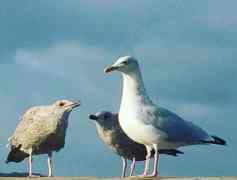
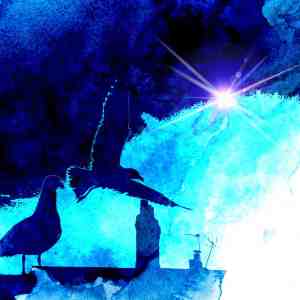
I posted to my local mutual aid facebook group, set up in hopeful generosity to help others due to COVID19. I asked, on behalf of the nesting birds all around us right now, could people think twice about setting off fireworks. A full display had taken place right next to my neighbours’ home late the other night ~ my neighbours being lesser black backed gulls among the chimney pots. Along with many other birds at this time of year, they have been devoted to incubating eggs and keeping chicks warm. It has been a privilege to observe their utter devotion. During the recent high and chilling winds, any abandonment would be fatal.
But my post has been deleted after a row broke out between locals, when some asserted the ‘right’ for humans to enjoy fireworks to mark life events, verses many more who find all kinds of reasons to be unsettled and frightened, of loud, abrupt, un-notifiable, explosions in the community. Some think it’s a trivial matter to risk and kill birds ~ abject cruelty. They even appealed to the emotion of empathy to justify this ‘right’, suggesting it was a demonstration of grief!
They have completely detached from biological reality. Covid19 itself came from an utter disregard for nature!
When wild lives are disturbed or terrorized, their relatively benign co-evolved viruses begin to shed, jumping species and reproducing in our poorly adapted immune systems. Avian bird flu is yet another virus easily flushed out of birds, and into us. The answer is never to destroy wildlife, but to live in peace and symbiosis, and therefore in strength.
Biological reality is that all are connected. Our life-on-Earth system is like a complex circulatory system. Cut it deep, and we will all bleed out. Everyone deserves to understand this, and develop a new outlook.
We need to think beyond ourselves, and value all life for its own sake. If we do not find a way of teaching everyone the importance of this fact, and publishing ideas and ideals to reach this end, the suffering will be unspeakable. There may or may not be a lag between events and suffering, depending on how wealthy ‘we’ are ~ equity and justice are so pivotal to outcomes.
But more events will come.
~~~~~~
Audio, including a more optimistic introduction – a chick has been born! I was also distracted by, as usual, all the activity on my roof terrace. I thought it would be fun to post, regardless. x
From my rooftop terrace on a hill in the city of Cardiff, in a vague state of suspended covi-disbelief you’ll recognize, I face due South into the eye of the midday sun. A man-jumble of roof, balustrade and wall contains what would otherwise be a 180 degree arc-view from East to West. The sky is none-the-less enormous, and I love it. Each day, I observe the clouds as if they are hastily evolving species, manifesting the effects of water and sky-physics, and stealing creature-ly shapes, every once in a while, stored deep in my imagination
Everything seems in tension, between closed and open, the constraints of the streets, confinement and grief within homes, yet pinned down by the freedoms of the sky. Stitching it all together, between roofs and clouds like needles and silk threads, are the city birds. They occupy their own levels, sometimes overlapping, and to see them interact has been, so much, my corona-consolation.
It is their intrinsic worth that sings the sweetest. Our deadly human pandemic** has liberated their song by silencing most of the dirty noise of vans and cars. They are bright and loud and confident. Right now, Bard Blackbird, perched on the end of our roof ridge, belts out beauty as if he is making up for a century of submission.
“My birds”, I call them. Forgive me. I feel to have almost become one of them. I relate to them all in my own state of birdetal being.*
The regulars who stop by most up here on my balcony are the adaptable and the generalists. Pigeons, with their glittering necks, have made this their day-time home, pairing and caressing with utter devotion before returning for the night somewhere safe where they roost. There are also the maggies (magpies) and the jack jacks (jackdaws), who are the real dancers, and the preening gulls who are dedicated, with true equality, in raising their young and to the mastery of flight. There is a satin crow I call Jet, who talks to me sometimes, and a pair of collared, cooing doves who are building their nest three chimney pots down. I’ve even had a little grey wagtail visit in winter, but she is very special ~ my beautiful, elegant river bird, completely out of place.
Below, in our neighbouring terrace gardens, there are year-round sparrows who cheep and chime nearly all of the time. And there are robins, one I call Rufus Ragnar, who rises from pruned shrub islands to sing whenever Bard takes a break. There are more garden birds I can’t see from up here, but I hear them. And they all fall silent when the sparrow hawk strikes.
High above, there are the ones who never pause. Highfalutin herring gulls, the Jonathans, cast the best shadows over me on a sunny day. Victoria Park jack jacks who flock like a clock to lime trees by the Taff a quarter to sunset every evening. There are the starlings who dash about, shining in splinters of luminescence, and the herons who flap in lazy zigzags, high up and unexpected. Few are the mallards, who cannot fly without telling us all well in advance they are coming. There are new and curious red kites circling; and the peregrines, supreme and terror-flying. We all stand stock still when they are about.
Life. It’s all here among the rooftops and chimneys. No compromise. The main events, have no doubt, are love and loss, youth and aging. And we are all joy, bitterness and reflection. Sometimes, my pigeons sit quietly next to me, on top of the poorly whitewashed roof terrace wall, three floors up, taking in the same, wide view with thoughts of matters much, much further away than we can ever truly reach.
The Goldfinches ~ Carduelis carduelis
Goldfinch by me
The birds I least expect to see in number over a city, especially in Summer when more return from Spanish migration, are the goldfinches.
In the ‘wild’, their long finch beaks are so perfect for the delicate extraction of difficult seeds to forage; the Senecio family (groundsels and ragworts), thickset thistles, and the Dipsacus fullonum (the teasels). Yet they thrive here mainly because of the fine, beautiful black niger seed sold in garden centres and pet shops, poured into feeders and dangled around small terrace gardens and on patios for them to enjoy. As they fly over the rooftops from one feeder to another, they remind me of nursery school children released into playgrounds at break time, chirping with the unfettered emotions of liberation. Their sounds and sight lift me up too, especially since I am currently ‘shielded’ and confined to my flat.
The collective noun for goldfinches, as The Lost Words elegantly reminds, is a charm. Collective nouns arose from the feathers (quills) and inks of early medieval French and English hunters, mostly by the ruling classes, or those that documented their elite colloquialisms in celebration of their elite pursuits. Our Eurasian relationship with goldfinches is as historically complex. Not only were they hunted, but captured, traded and kept confined as pets, at least since Pliny the Elder wrote about this strange human obsession, just after the death of Jesus Christ.
“The smallest of birds, the goldfinches, perform their leader’s orders, not only with their song, but by using their feet and beak instead of hands.” Pliny the Elder, Natural History.***
Deep inside our pre-frontal cortexes combined with cultural memory and emotional response, we are somehow wired in what constitutes beauty. These birds are certainly a dash of colour with their blood red faces, black and white stripes and yellow brushstrokes painted along their wings. But this doesn’t explain the cultural need to covet and possess. Perhaps we may look to their celebration in aesthetics, as many iconic artists have tethered goldfinch imagery, in paint, to wood and canvas.
Many of these images are rooted in Christian religious symbolism. One of the greatest artistic masterpieces of the Italian Renaissance is, it is said, Raphael’s Madonna Del Cardellino, The Madonna of the Goldfinch painted 1505-6. The bird is cradled by the child, John The Baptist, and in the presence of Mary and her child Jesus. It is the depiction of the boy’s crucifixion as a prophecy that came to pass, as was John’s life and death. Legend has it, as Jesus died on the cross at Golgotha, a goldfinch flew down to his Crown of Thorns to remove them from his injured scalp, and was splashed with a drop of His blood. The idea of any goldfinch bearing witness of the crucifixion is utterly within reason, as they were once numerous in and around the City of Jerusalem. Not so much now in 2020, as they have been hunted, trapped and sold as pets continuously for over 2000 years, and their habitat smashed for human development.
Sixteen to seventeen centuries on, during the Golden Age of Dutch painting, goldfinches appeared once more in images such as Gerrit Dou, Young Girl at the Window, 1662. Fabritius’s painting, completed just a couple of years later, is surely one of the most famous, even more since Donna Tartt wrote her novel ‘The Goldfinch’ and won 2014’s Pulitzer Prize. The book was never about goldfinches. This is a sophisticated story of a boy who rescued (stole) Fabritius’s painting from a gallery in New York, after surviving a terrorist explosion. The burden of this secret is carried through the trials and tribulations of his life.
“Sometimes we want what we want even if we know it’s going to kill us.”
Theo, the boy, hid and prized the painting, perhaps in a symbolic processing of his mother’s death. She had died from the bomb blast, just like the real and violent end that came to the painter himself. Fabritius was caught in the explosion of the Delft gunpowder magazine in1654, which killed at least 100 people and destroyed a large part of the city, including his studio and many of his paintings. The Goldfinch survived all, and is perceived as something of a resurrection.
Art historian, Linda Stone-Ferrier contends that, in the Netherlands, both real goldfinches and painted ones were found commonly in and near windows, as a symbol of neighbourly social exchange. For its time, Fabritius’s Goldfinch must have been hugely novel in its life-size and three dimensionality; a trompe l’oeil, fooling the eye into believing it reality ~ perhaps, installed near a window as a trick to lure the good will of passers-by.
But with my Fluminescent sensibilities, I see the photos of the painting and feel pain. The golden chain glints hard and sharp, tethering a tragic bird, otherwise born to fly free, to its wall-mounted, closed, tin box of seed. This is yet another disembodiment, that the bird cannot ever forage for him/herself, the whole scene being fixed for hundreds more years in some nightmare painterly incarceration.
In his Guardian article 2014, Caspar Henderson writes of the modern painter ATM, and the mythical murals he painted around London ~ the birds of his childhood ~ one being a goldfinch.
“Typically between two and three metres high, and depicted with their subtle natural markings, they seem like giant projections from the collective memory of places now hidden beneath the roar of the city.”
Again, I feel an intense isolation, the bird painted away from his/her ecological flows. It’s a giant ghost, out of scale, captive to the wall, street, and city, waiting upon the spell of the human gaze for a life they cannot ever truly live. The mural reminds me of when I see wildflowers named with chalk on a pavement. I crave for so much more, for the flowers themselves, and for human passers- by; arrows to show the species that sustain them, and those they sustain. The real beauty of nature, I contend, is in the direction and dynamism of all the arrows.
ATM has said he was inspired by the early prints of John Gould, tending to show, at least, a favourite flower or perch in composition. But once again, these are aesthetically appealing to the human eye, and in danger of being only extrinsically valued by us and, therefore, the only lives worth saving. Nature is so much more. Species in isolation are trompe l’oeil tethered by golden chains.
My goldfinches live seemingly vibrant and free lives, with their flights of excitement, overheard and overhead, several times each day. But really they are here only at our behest. Niger seeds, native to Ethiopia and Malawi, are commercially grown in huge quantities in India and Africa, and traded to Europe in the bird seed markets. They resemble sunflower seeds in shape, but are smaller in size. They are encased in a thick, seed coat, and can be stored for up to a year. Before they are exported, they are sterilized by intense heat to prevent germination, and to kill off any other seeds in the mix.
Do we want our birds simply as trompe l’oeils, feeding on seeds blasted by heat in India and shipped here for distribution and profit, while the goldfinch’s true seeds of delight are languishing brown under the damp spray of pesticides or the latest Weed-Burner-Killer-Wand-Butane-Gas-Blowtorch, marketed for the sake of what is deemed beautifully tidy by Dekton or GoSystem on Ebay or Amazon (sometimes the same places you’ll find niger seeds for sale).
So much energy, capital, and dependence upon markets is nurtured, whereas our own groundsels, thistles and teasels are classed as ‘weeds,’ and purged for the sake of a false idea of what beauty truly is ~ clipped, manicured and tidy. How compulsive are we, as a species, to want to force and possess beauty, regardless. These beings are part of the flows of all life (Fluminism), the interconnections (the arrows), being the most worthy of protection.
I want goldfinches to be all the things we Eurasians have historically not allowed them to be. Heedless of religious symbolism and childhood myth, I want them to sound their excitement released from 2000 years of chains. They may be a mirror to the image of ourselves, in that we too need to feel those infinite connections impressing within and without us. Neither do they need our trickery, our trompe l’oeils.
They want to be real, foraging for their natural, local seeds pollinated in resilient ecological flows with plenty of cover against predation. Fluminism is the love that provides it all.
~~~~~~~
*In deference to the wonderful work by Irigaray and Marder “Through Vegetal Being” published by Columbia, 2016.
** Latin pan- “all” + dēmos “people”.
*** Rackham, Jones, & Eichholz, Book 10 translated 1938.
Horns honk along the major streets in the cities of Minnesota. Signs are waved by shouty blonde-bleached women draped in the Stars and Stripes. MAGA white men in blue and red baseball caps, wave their high velocity rifles, like long, skinny phalluses, yelling that Dr Fauci be sacked.
In Denver, the nurses step out into the road, almost naked compared. Their basic PPE greens are like shoots from an ancient woodland floor ~ they appear vulnerable, but are, instead, a sturdy green resilience. They voice the number of deaths over and over again, blocking the Trump-cultists threatening to bulldoze the woods from the safety of inside their shiny 8 cylinder Chevrolet Silverados. It connects across space-time with the beauty of Ieshia Evans smiling in the face of a cirque of armored men in Baton Rouge.
America today; at least, the America that is attracting today’s headlines.
Evidence emerges, the self-righteous have been whipped up by extreme libertarians, gun rights and racism drenched through their fake army fatigues. Thousands have joined Facebook groups in just 24 hours. Flash protests and speeches are organized to undermine any sense of common clinical sense. WHO and China, now Town Hall, blamed for their current lifestyle. Everyone blamed, apart from themselves.
It’s all happened before in 1918, as Tim Mak explains so well on Twitter. The Land of the “me, myself and I” pop up to condemn their fellow Americans yet to be infected. They contend these human sacrifices are acceptable, for the sake of so-called freedom; a gas-guzzling, zero-maternity leave America built on the ethos of harsh frontier work and brutal slavery.
Whatever the outcome (outright civil war or a fade to nothing), time is burnt through like oxygen in a fire, time squandered that otherwise would yield deep changes forquired for the good of all life on Earth. Fear-strings are pulled by a tiny majority that pinch tight around the ill-informed and brainwashed, and time is vaporizing in front of our eyes. Markets crash, oil prices plummet to minus. White people feeling fear, not love. Now they are raging. A selfish and self-righteous zombie mob.
Whether we like it or not, America is both effecting and affecting the global state, a state that is already supremely vulnerable.
The “Extremis” don’t have the heart, nor head. In COVID-19, burning fossil fuels, particulates or in roads, they blind themselves to the many who will suffer a second wave; disease, droughts, conflicts, migrations, or the multiple, violent hurricanes yet again about to hit the Atlantic basin. They’ve forgotten the real meaning of Liberty.
Neither do they have the imagination for wilder lives other than as trophies, nor for what it must be like to be enslaved or industrially farmed. They have no clue for the microbiotic symbiosis that, with an undisturbed peace, serve so well as to give life not take it.
I feel a seismic frustration that deep-change is pinned against a concrete border wall, threatened by bail-outs of billionaires with you, me and the nations already drowning in criminally enforced debt and capital-austerity. I fear a charge on GDP will be unleashed to make up for lockdowns, the likes of which we have never seen before, with more lives thrown against the wall for the sake of money. I am frustrated that individualism sets all adrift from the reality of interconnected life, pinched tight by those fear-strings, fed my media and corporate oligarchs.
I’m going to call this feeling my Frustopianism.Frustropia is a good world possible, but delayed. The Frustration (verb) is that life everywhere could be so very different.
~~~
But, as a Patientist, I need to be ever more watchful and imaginative. The great Joanna Macy’s “Great Turning” cannot end here.
Change is of the utmost importance for the good of all life. It is a prerequisite, a forquisite, for evolutionary adaptation and survival. In biology, tropism is the suffix given to a process of turning, the processes from deep within DNA from generation to generation that effect change. It’s often, though not exclusively, attributed to vegetative processes.
Heliotropism is a process whereby a plant responds to the stimulus of sunlight by turning and growing towards the Sun. Selenotropism is the motion of plants in response to the direction of the moon.
I want to block the zombie mob, the Trump-cults with their 8 cylinders and their phallic guns. I stand with the nurses in green, the carers, the caring and the cared-for, turning ALL to the symbiotic relationships between all living beings that aid life not destroy it. I call it symbiotropism.
Symbiotropism ~ a mass turning towards symbiogenesis, like looking at the light of the Sun and the Moon and growing towards them ~ the love, the Baha and our global, diverse and beautiful moral community called Life on Earth.
Cherishism is an ecopolitical alternative to anthropocentrism for Life on Earth and future generations.
Cherishism is not limited to, nor bound by, what I say. The following is the basis for further discussion. This is paramount. All need to feel empowered and local human and teresapien diversity embraced and expressed politically through each bioregion.
Fluminism the interconnected narrative of universe, flow to and from all dimensions, a powerful form of love.
Floloca perceiving ‘place as flowing’, not simply as human, but conscious imagination along the dynamic matrix of life and death, and at a spectrum of scales.
Hubrigenesisthe evolutionary aftermath of the biospheric violence of the Anthropocene.
Kinnage a new kind of human/non-human community living. Where nature and fluminism is paramount, ourselves being just a part of the whole.
Kinnaria wild places in and around cities, urban areas and kinnages. To replace ‘Green Space,’ with awildian love and meaning.
Locacede to withdraw from a place, to directly decolonise humans from an ecological system. A replacement for ‘decolonization.’
Nagorasphere the phenomenon of ‘exchange’ in nature, as a significant part of the biosphere.
Teresapiena positive word to use instead of ‘non-human.’
Transilience Gap biodiversity declines and climate changes may require more radical solutions before many people are ‘ready’ to take the risk. There is a gap or a deficit.
Traumundi the trauma of the collective living Earth caused by climate and ecological shock.
Vitanance being right in itself, stemming from diversity, proliferation and of the complexity of all life. As opposed to human dominion being wrong.
Welldoing Dasein daily acts towards wellbeing for the good of all life.
~~~~
Aims
The aim of Cherishism is human universal care for living beings ~ Vitanance ~ and the end of Traumundi.
All beings, bionts or symlings, depending on their diverse needs, and in interconnected flows (Fluminism), including in the nagorasphere, are cared for in the best ways possible.
~~~~
Why
Socialism and ecosocialism, as words with meaning, are founded on a lack of intimacy. The origins of the word social are mere physical relationships between humans such as marriage and allies, stemming from PIE “sekw” ~ to follow. There is a general fear of using any terms that amount to love in its spectrum of emotional forms, expressions and intimacy of care. I want to end that fear, directly or indirectly cultivated largely by men such as Smith, Marx, Bookchin, Kovel and Löwy. The Earth’s biosphere and all its interconnected lifeforms require of us to bring cherishing central to daily life.
As in ecosocialism, Cherishism is NOT any form of capitalist system, a machine that has been the fuel and energy for the suffocating fires of social exclusion, inequality and biospheric degradation through anthropocentric globalisation and imperialism/colonialism. Neither is it commodified emotion or acts in cash value. There should be no North/South divide. Equity and justice are intrinsic.
Integral functioning
Cherishism offers use and exchange value, but critically and centrally, ‘gift’ value, through human skill and relationship, as in the ways of nature. It is a system of generosity, compassion, creativity, love and meaning.
Each human community within any given floloca does have the ability to exchange non-living elements with others, also to include seeds (though they are between life and death), but only produced in natural excess to the needs of their own floloca.
Wellbeing is the consequence, and ultimate value, choice remaining essential to provide personal and collective empowerment. In this way, every living being (all life) is fundamentally of worth. Critically, human children are nurtured with great love, because we know that distress in childhood has immense negative consequences throughout life. Distress and fear, generally, is the root of so much ecological damage through fierce competition. Now is the time to end that regime and bring in a new, loving way of life.
Technological knowledge, research and development, energy, and creativity is centred on caring. Thus, health (human or otherwise), and communications is where skill-vestment is a cultural premium and widely celebrated.
There are no cities as we understand them now, but Kinnages and wilder Kinnarias, adaptable to changing climate and fore-wilding. This is an effort to close the Transiliance Gap and lessen the impact of hubrigenesis in the Anthropocene towards the Symbiocene. Land is commons, not limited to humans but small zones of privacy are afforded to all. Locacede and space efficiency is valued, rather than expansive development.
Fluminescent food (eg permaculature), is ultimately a collective good, grown locally in public and private spaces and local to all. Pollution (land, air, water), is one of the most serious crimes.
Cherishism has elements of green anarchy and mutual aid, in that personal and collective Responsibility is the Right, not Right in itself, and localism is key. At the root, all life is of worth via the protection of life-promoting existence (Praximund). True liberty is fore-established, in that it is limited to the point just before causing harm to others.
Freedom of movement is natural, though cultivating and nurturing a sense of adopted endemism is a natural consequence of Cherishism. As in some indigenous cultures, all people (and wildlife) are welcome to a central whare rūnanga-like meeting place called a Cherish of their own ecological design with permaculture-like grounds. This is a place of beauty and knowledge exchange on best fluministic practice. It is a place of information, support and love. Its mere existence is educational and caring, whilst acting like pioneer seed nurseries, fore-newing life systems in local communities/flolocas. Communal meals are common.
Most community activity is shaped by voluntary altruism since economic fears have been minimised by the devaluation of currency and the housing market (monetary transactions are rare to none). Everyone has a home. Everyone has access to basic life-sustaining needs, such as good organic fresh food, and forces for good (nature). Everyone has access to care. Communal living and shared housing are the norm (yet privacy is still afforded/designed for all).
Democracy is re-shaped for each human specialism to be able to elect people onto working ethics panels from all other specialisms in any given kinnage, kinnaria or floloca.
Cherishism is likened to a healthy flowing river full of life-love, joining the global ocean of existence. Each tributary that joins to create the river is vital.
~~~~
Tributary One ~ Moral worth
Every living being is of moral worth afforded by fundamental protection of their function in bioregional flolocas, save for NEED not want. Abundance and diversity are fundamental, and the processes that lead to both must be guarded well (Praximund – laws).
Plant or animal life scientifically and ethically judged as needed as opposed to wanted by humans, therefore killed, will be agreed with the advice of local Cherishers (who understand local ecologies), and are not conflicted in any way.
Tributary Two ~ Wellbeing and Welldoing
ONE HEALTH is standard (human and ecological wellbeing are symbiotic and inseparable). Wellbeing is accessible to all, free at the point of contact. Health professionals and support workers are critical carers (for humans and teresapiens), so we look after them. Healthy organic food and clean water are key, so we look after those workers too. Children are allocated most attention in sustained nurturing and compassion. Welldoing is the act of nurturing wellbeing, and is itself a form of wellbeing. Fit bodies, fit minds. Strong connections in flows. We are all part of nature.
Anyone who demonstrates their creativity and skills promote wellbeing for all life is valued. Arts, design, music and culture are celebrated and supported, enriching human life and accounting for healthy ecologies/flolocas.
Carers and facilitators of basic life function are cherished.
Tributary Three ~ Shared Best Understanding
Ecoliteracy, Earth systems, and fluminism (all processes to proliferate ecological abundance and diversity, whilst flourishing) are taught freely to every human, and from a young age.
Teachers and childcarers are critical carers, so we look after them.
Best science is crucial, freely available after peer review, and must be supported. Evidence-base is a necessity, though ethics applied to consider the direction in terms of planetary wellbeing.
Indigenous understanding will be of equal standing, but volunteered not appropriated. All efforts are channelled towards the overall aims of Cherishism.
Tributary Four ~ Free, Elected Ethics Panels
Ethics panels have an elected, public, democratic role, and open, transparent training (see teachers), is provided to those appointed from all sectors to guide and enlighten, like a jury when introduced to the court system.
Each member from each general sector in human life can only serve for one term to be agreed by all, with key attention given to the needs of the floloca, children, the vulnerable and elderly, and domestic animals, in space and time.
One member of the panel is elected to represent the whole panel in bioregional meetings, and so on to global level.
Annually and at times of need, digital conferences are held to convene all bioregions in global matters and actions advised at a local level.
~~~~
In Summary
As an ecopolitico system, Cherishism provides foundational care for all, with an emphasis on caring for the carers, children and flolocas. It is structural love. Although all have a responsibility to life/love/flows (fluminism), greater social respect is given to those beings that are ‘sacred centres’ for what they do as in all nature, and NOT how much money or property they earn. Rewards are intrinsic and experiential.
Housing, food, water and heat/cooling and clothing are provided not simply as ‘basic’ things, but comfortable, equitable,beautiful (locally) and ecological. Emphasis is never on collective funds, but collective ability to care, NURTURE KINSHIP, to participate in positive ways to share best understanding (science and/or indigenous, arts, beauty), in order for all life to flourish.
No financial markets exist. No financial housing/land market exists. No political parties exist, though political education is widely accessible and progress debated. Resilience is found instead within deep, meaningful and loving relationships.
Licenses for land use with flolocas must pass through all local ethics committees, with the advice of the Cherishers. Public places such as schools, libraries, hospitals and care homes are classed ‘Cherished.’ The ‘Cherish’ (aka communal gathering places where Cherishers are also based), exist in all flolocas and kinnages, and are crucial sacred centres.
Monetary bonds in materials such as minerals and metals, etc, do exist, but only in supporting extra critical (ONE-HEALTH) health care and compassionate science and communication. Bioregions in the global south will, therefore, benefit greatly, but activity must be ecologically fore-storative by all those who benefit and agreed by local ethics panels.
Global institutions such as the World Bank and the IMF dissolve from staging posts for markets to collaborative, compassionate shared platforms and portals for knowledge (science, ethics and indigenous understanding), and overseers of peace. Other beneficial life preserving institutions remain like CITES and WHO, etc.
We all deserve love and security. And so do all fellow living beings/symlings.
For humans, there needs to be a basic provision of good food, warmth, clothes and shelter, or land to grow things and thrive. We could begin by universal basic income and dedicating a “true” commons of land toward all species.
For teresapien life, place, interconnectedness and peace.
In time, we may compassionately end markets as we know them today and adopt an all-nature commons and a gift economy at large. Life should not be a race to be the smartest, cutest, fastest or richest. The only true resistance is to reject this, to embrace compassion, realise a daily ethic of care and make it structural.
Let us put love back into the meaning of everything we do.
Cherishism; where cherishment is no longer an obsolete word, and in all aspects of life.


 I have to be honest with you, friends. I’m not feeling particularly optimistic. An utterly inept and dangerous government is one thing, but that anyone might still support it is now utterly beyond me. Couple this with a lack of British publisher support for ecophilosophy, as it is deemed not to be saleable on the market, and I have fallen into a hole.



 Seasonalight
You must be logged in to post a comment.