Blog

  • Bed Bound

    6819583331_1368f46ffa_b


    Staring through the window at the patterns of the branches in the trees across the road. I see an Egyptian king’s head and an auroch stood just behind him. When the wind blows, the auroch’s nose nuzzles the king’s neck. And this I watch hour upon hour, with an unrelenting tightness in my solar plexus. I feel like I’m endlessly falling.

    Sleepless night turns to day, day turns to sleepless night, and the ghostly king and bovine continue their interplay long after heavy blood-red curtains are drawn. I turn to my screen glowing like a rectangular moon. Have to switch it off. There are people there. More pain. Love. Crisis. Pain.

    The emotion is visceral, enveloping my whole being. Vulnerabilities. Large, terrifying memories and hollow hopelessness. Loss. My head like lead and my taught lungs sucking air as if through tiny straws. Everything takes effort. Lifting a mug to drink mint saps me to my core.

    Fear. Here it comes again, building. Terror. Wide eyes. Adrenaline has me shaking, gripping the covers with a crooked hand, like my own grandmother. Tremors through my right side, rippling through my leg. The limbic residues have me retching. There’s a porcelain bowl nearby. A pure shiny white bowl. An old brown towel. Tissues. Lorazepam.

    The tremors subside to a very low altitude. No movement. Stillness. Just weight. Tears without crying.

    Next to my reading glasses, a clutch of rainbow pencils await my simple colouring. Half finished birds and geckos. A splendid unicorn.

    My family sigh. They try to stay positive. My hand is held occasionally. Ben, my dog, pads in concerned and then retreats. Daisy cat wants to be close to my neck, all the time, like an auroch.

    All things shall pass. But I’m a burden. Therein, anxiety rises again.

  • Rainer Maria Rilke on Living the Questions

    5523943092_d90265fca1_o“I beg you, to have patience with everything unresolved in your heart and to try to love the questions themselves as if they were locked rooms or books written in a very foreign language. Don’t search for the answers, which could not be given to you now, because you would not be able to live them. And the point is to live everything. Live the questions now. Perhaps then, someday far in the future, you will gradually, without even noticing it, live your way into the answer.”

  • Call of the Mountains and Leopold’s Grades of Recreation

    6950082188_0241a95d91_z

    At its finest moments climbing allows me to step out of ordinary existence into something extraordinary, stripping me of my sense of self-importance.

    Doug Scott, climber.

    I used to climb often when younger, and paraglided too (was even a junior instructor.) I loved the mountains. Still do, but in a slightly different kind of way. Always appreciating the non-human lives I encountered, my priorities were not as focused as they are now.

    In my eager twenties, I read multiple climbing books on crystal peaks and life-changing events, tragic deaths and sumptuous photographic essays. I was gripped.

    Having grown up among soft, green mounds of North Herefordshire, I found the novelty of steep sided cliffs, snow capped peaks in Winter and rushing waterfalls enchanting. Mountains compel many who aspire to test themselves in some way. They push up high into the atmosphere and weather down at a creeping timescale, but sometimes with an instant energy that can surprise. They roll across horizons and nestle between Nations. Summits and ridges pierce volatile skies with newish geology and bafflingly fragile ecologies.

    At first, me and my climbing partner (now husband), would head off to small crags and outcrops in the Lower Wye Valley, not too far from home in the Welsh Borders. We’d top-rope short routes, or embrace only two or three pitches at most, abseil down and do it all again.

    Then on to North Wales and the fabulous Snowdonia National Park, rucsac stuffed with plastic-backed crag guides and new, colourful, expensive kit each season. We’d tackle bigger routes and a little bit of loose rock, whilst living on credit. It didn’t matter ~  I’d hear the raven’s call above the route and feel pretty gnarly. I’d enjoy the friendly banter with others on descents, and finish the day in a crowded post-climb cafe, with giant mugs of piping hot tea and slabs of cake. This felt like community.

    And then, as income improved, we travelled further, to the jagged precipitousness of the Scottish Highlands and luminescent snow. Time to be a little more scared, feeling a little more alive too. Give me those huge skies, golden eagles, and I can breathe. Scrambling across dangerous scree and surviving tumultuous changes in weather, I loved the challenges. It was a long way to travel, but we did it anyway, even if the weather curtailed the climbing. A river walk would do, or a foray around a loch.

    The Alps; overshadowed by the dead writers of climbing books who dominated them in the Twentieth Century. I never enjoyed climbing in the Alps and did very little. Death felt closer. I snowboarded, just on safer pistes, and with an exuberance for a while, alpine choughs perched on restaurant railings at altitude. But the novelty wore off. The last time I went to the Chamonix Valley, I was sickened by the smog.

    Himalayas, the Majesty! And the corpses. I’ll admit, they called my name for a while, but I never succumbed. I prefer to dream of them. Julie Tullis’ ‘Clouds on Both Sides’  is still one of my favourite reads. She perished on her descent of K2. Maybe one day I’ll go, but it won’t be for the climbing.

    Just to be in the mountains requires many to undergo a fair journey from homes and workplaces. Most drive, as we did. The Road Trip. When the compulsion to be free in the wild comes every weekend, that’s a lot of mileage. It takes gallons of fuel and a gloomy gas cloud of emissions.

    Travelling back and forth to wilder places, whatever motivation, surely accounts for a fraction of emissions as compared to industry, energy production, air travel and haulage. Modern, intensive, agriculture is far worse for the Earth’s atmosphere. But now, with a visceral understanding about the consequences of climate change, I choose to change my ways, to be more selective about when and where I travel, why and at what cost, including to the planet.

    I can’t feel guilty about my contribution to emissions in the past, because I knew no better. But now I have little excuse, so need to be mindful.

    If these special places are so important to us, why don’t we move closer to them? A change of home and work would see us commit to local economies and, importantly, to community. Some schools in rural Scotland, for example, are crying out for more pupils, otherwise they are threatened with closure. The wild becomes as accessible as one’s own backyard. Walking/cycling distances become the norm, instead of weekend faraways.

    Carparks and roads, themselves soil-sealing, fragment habitat networks here in the UK. Wild animals are no longer able to roam and breed as they once did, with genetic consequences too. Where there are carparks near reserves and National Parks, we have large human footfall, of course. Problems of erosion, wildlife disturbance ensue. And to top it all off, there’s particulate air pollution and even more carbon emissions contributing to climate change.

    Maybe all these things are a consequence of an unhealthily large human population, with more leisure time than our ancestors, fuelled, in part, by outdoor lifestyle .com PR and advertising. I wish trains were not so heinously expensive, though railways also slice through sensitive habitats and are saturated with herbicides each year. And short-haul flights are, of course, hideous in terms of emissions.

    Aldo Leopold had some extremely pertinent things to say about outdoor recreation in Sand Country Almanac published all the way back in 1949. I’m reading this book for the second time in my life, for Masters studies, an iconic work viewed as founding the modern Environmental Ethics movement. I am reminded just what a diverse, enriching book of knowledge, observation and judgement it is. It was so ahead of its time, and in many aspects of ecology, responsibility and political conscience towards non-human life and the land.

    So many of the recent wildlife campaigns emerging from Conservation NGOs are prescient in the book. Examples include using highways verges as wildflower and pollinator reserves, the vitality of farming set-aside, trees as the staple of slope stability and rainwater absorbency, predator re-introduction and the positive effect upon trophic cascades.

    But Leopold’s thoughts on recreation compel me too, and aren’t as widely discussed.

    Everyone’s perceptions on making long trips to wilder places could be justified on the basis of free will, self growth, even enlightenment. So how do we begin to unravel the ethical problems that arise from simply going where and when we please?

    “Like ions shot from the sun, the weekenders radiate from every town, generating heat and friction as they go.” (p165)

    Human mechanisation has spread its wings, leaving behind the acrid smell of hot metal and burnt oil in its wake. Wild mountains and lakes become the destinations, National Parks, Coasts and Nature Reserves are posters on travel shop walls or memes on nature NGOs’ Twitter feeds. Flocks of people flow from city to country and back again in some strange ritual or weekly migration.

    Leopold asserts all who seek recreation in the great outdoors are actually hunters, though we might be searching for very different things. He writes of overfed duck hunters, pillars of society, shooting at easy targets, like the wealthy shoot grouse and quail here in the UK. Trips to the moors from the City are common place. Are they harvesting “meat from God” or from the fires of heather burn and dessicated ecologies? There are also the inveterate collectors, legal and illegal ~ of dead ‘trophy’ wildlife, insect specimens, fossils and birds’ eggs. There are also Munros, photographs, graded rock climbs and first ascents. Kayakers and canoeists collect river names. Botanists collect plant taxa.

    Leopold points to the ethical differences in our pursuits by looking at consequences of each action. If a person visiting the ‘wild’ enhances it, or at least, leaves little mark, then there’s a ‘higher’ calling for it, some spiritual advancement perhaps. Whereas, those that simply seek to strip, abuse or radically alter are culpable. If we are only to “possess, invade, appropriate” for enjoyment, then the value for life and land that we do not connect with becomes worthless. This is still a highly relevant point when it comes to the relentless extrinsic, or human utility, messages in support of conservation and protection, and has since been challenged and debated further within the academic field of Environmental Ethics.

    A hatchery release of trout or salmon into the river, for instance, may result in drawing more fly fishermen and poachers alike, and not necessarily in the best interests/welfare/survival rates of the fish. The same can be said for what Leopold describes as “artificialized deer” for shoots and the overgrazing of forests, or the predators, raptors and mammals killed for the sake of intensively reared game birds like pheasant.

    There are more indirect trophies, of course, like the photograph ~ my personal ‘sin’.

    “The camera is one of the few innocuous parasites on nature.” (p 171)

    I can see why Leopold refers, he’s looking to highlight a higher accord or purpose of our communing with nature. To enhance and enrich our perception and connection with non-human life.

    “to promote perception is the only truly creative part of recreational engineering.” (p173)

    But now we understand that even with a photograph, there are more costs to the environment in terms of materials mined, energy used to manufacture, transport, package, retail and maintain. Add the digital platforms to which we now subscribe and mainframe ‘clouds’ ~ that’s a great deal of energy consumption.

    There are other trophies of ‘perception’ ~ a memory or some peace and quiet can be deemed a golden chalice. And we have the ‘dark skies movement’ and star gazing, a connection beyond the Earth and out into a lofty Universe. And there are more subtle, complex ones like solitude, wild experience, meditation and mindfulness. There are also trophies of ‘empiricism’ , such as the scientific specimen, data and methodology learned in the field. The bringing together of hearts and minds. Some wish to leave an indelible mark. A cairn stone is a symbol of our presence, a trophy left in situ, to underscore we’ve achieved something somewhere in the wild.

    And all the while, the rarer the wild life and smaller the place, the greater the demand. Erosion and disturbance follows. Outdoor recreation is our human interaction for pleasure and wellbeing, not for the intrinsic value of the outdoors itself. The outdoors exists, whether we are present or not. More to the point, individual non-human lives constitute much of the great outdoors, and herein is where I separate from Leopold’s holistic Land Ethic (the whole greater than the worth of individuals). But ecological understanding certainly adds depth to our perceptions. There’s no intellectual competition here (which can be expensive), to pay for qualifications or professional associations, but lore to be gleaned from observation and immersive reflection upon nature’s interconnectedness.

    Leopold goes on to describe the type of recreation which is more akin to consumerism. He is a man of his time, and refers to the outdoor ‘sporting-goods dealer.’

    “…gadgets fill the pockets, they dangle from neck and belt.” (180)

    Gunshops, fishing tackle and bait now joined by the colourful nylons and plastics of hiking, climbing, paragliding and watersports. No doubt, there has been an explosion in the sales of gadgets, including GPS. But we can’t continue to just buy we want. The planet needs us to look at what we need first, and maybe things purchased second-hand and recycled (except for items needed new for safety reasons, such as climbing ropes). I understand there are jobs to fill, GDP expectations to ramp up the ante. Recent Welsh Government statistics reveal just how economically dependent we seem to have become on outdoor activities. £481m pours into the Welsh economy from the sector, providing over 8000 jobs. But the drive to promote Growth and accumulated wealth is damaging our very life support system. The planet can no longer ‘afford’ to focus on GDP alone.

    The importance of our psychological and physical reconnection with nature is multifold, there’s no denying. I’m also a huge fan of the British tradition of rights of way and public open spaces too, having lived in the US where there is generally no tradition outside of National Parks.

    But I think it’s worth establishing exactly why we make these longer trips, and what we consume to travel, stay and return. Let’s hope we can choose Leopold’s higher ‘grades of recreation’ as motivation, at least, and inflict less attrition upon living beings of the wild already under pressure. To strip ourselves of a little extra importance, perhaps. For I think there is now a greater need.

    254085_2040654690203_3957596_n


    Me at Symonds Yat, 1990s. ~~~~~~~~~~~~~~~~~~~~~~~~~~~~~~~~~
  • Who Knows ~ A poem for Ginny, by Elizabeth Rimmer


    There are people who know the world
    in specifics – not gull, but black-backed,
    (lesser and greater), black-headed,
    common, glaucous and herring.

    There are people who know the woods –
    not trees, but oak, willow, hazel,
    aspen, and lime, and not oak
    but sessile or pedunculate.

    There are people who learn the names,
    the Latin, the genus, the cultivar,
    making lists for countries and years,
    and the life-list with all the ticks –
    the bbjs, and the gaps they need to fill.

    And then, there are other people
    whose hands and eyes know everything,
    who taste the wind for salt or coming rain,
    who find the right leaf or root or berry
    for health or flavour, without a word spoken.

    There are people who know their gardens
    like their family, their lawn like their own skin,
    a new bird by the frisson the cat makes,
    even before the stranger’s call
    breaks into the grey still morning.

    And who can tell us which of these
    knows best, knows more, can teach,
    protect or harvest earth and sky
    and water for the common good?

    Or shall we try for both, a lore
    of senses, heart and mind at one,
    where knowledge and compassion
    are held in equal balance, equal trust?

    ~~~~~~~~~~~~~~~~

    Elizabeth Rimmer is Makar for the year 2016, Federation of Writers (Scotland).

    I’m honoured to present her work here, and immensely touched this was written for me. Thank you Elizabeth, for an enduring feeling of joy.

    Elizabeth was born in Liverpool, moving to Scotland in 1977. Her first collection Wherever We Live Now was published in 2011 by Red Squirrel Press. Her second collection The Territory of Rain was published by Red Squirrel Press in September 2015, and officially launched Feb 2016 at the Scottish Poetry Library, Edinburgh.

    Her work has also appeared in Poetry Scotland, Stravaig, Northwords Now, Brittle Star, Gutter, and Drey, and on-line in The Stare’s Nest and Zoomorphic.

    She blogs at www.burnedthumb.co.uk.

  • Ponds

    25760393156_cf893e805f_k.jpg

    I’ve recognised a small sanctuary nearby, after several months of living in a semi-urban area. Thank goodness and I feel relieved. I’ve just returned from this place, and feel rested.

    It’s not a place that takes my breath away. It’s without big vistas and the dynamics of clouds and rivers. Neither is it as vital as the sea. But it’s quiet and verdant, enclosed by a canopy, leaf buds near to bursting. And there’s water; always a draw for me.

    Yesterday, by a railway bridge covered in graffiti, my dog Ben was shot at whilst we were watching dippers nesting by the river. A grown man appeared, out with two small children; a girl, and a boy carrying a bb gun, or something similar. The adult sought not to intercept the boy’s spirited targeting until after several rounds had been fired and ricocheted off the metal fence behind Ben and myself. Thankfully, we were not harmed. I reported the incident to the police this morning.

    I am recovering from a severe spell of anxiety, suicidal thoughts and visions, which descended on me very quickly in January and through much of February after a stressful period. I’m attending lectures on ‘Acceptance and Commitment Therapy’ recommended by the local Mental Health team. But I’m not under the care of any therapist. I’m having to find my own way, because the waiting lists are too long.

    I have a friend with severe depression, suicidal also, in hospital a long way away, about to commence ECT. It’s not been easy, in terms of communication.

    I lost my mother to depression-induced suicide eight years ago, after she checked out of inpatient care, and I suffered PTSD as a consequence of finding her. I myself was later an inpatient for quite a spell, but determinedly not at the same hospital. You might imagine.

    When my Dad was diagnosed with cancer three years later, I went down again, with severe anxiety, genetic fears of following my mother, and only just made it through.

    There are other stresses and strains, which most would recognise. I don’t stand apart from anyone else. We all have our stories. This all seems part of the modern way of life. What a mess.

    But I have the ponds now. They aren’t a cure. They aren’t going to unravel the complexities of life and fix my problems. But they are a retreat, where I can take Ben and sit quietly, feeling every moment without future or past. Today, the sun shone down through the trees with a novel fury. There was a light breeze, and I filled my lungs with fresher air than I ever expected. Ben snoozed among the lesser celandines, buzzing with the first flight of solitary bees this Spring.

    Thank you, whoever protected them, thank you for the ponds.


    ~~~~~~~~~~~~


  • Love

    SONY DSC

    Ginny Battson © 2013


    Love is free, though may cost dearly.

    Love is a plethora of acts, embodied in doing.

    Love is not a statute in law.

    Love is a contract to grieve.

    Love reaches way beyond death.

    Love is not always beatitude.

    Love cannot be bought, sold, traded.

    Love is paradoxical; unbidden turmoil and planned grace.

    Love is not a moral compass.

    Love is woven, generous.

    ~~~~~~~~~~~~~


  • Britain’s native daffodil

    5535348383_0812b151a8_o

    Narcissus pseudo narcissus by Ginny Battson © 2016

    “It had been huddling like an old gray woman
    grabbing her shawl, in an underground house,
    stirring a promise to return.
    Soon its six petals harmonic sense will bring love”.

    (Daffodils by Martin Willitts Jr, Dylan Thomas International Poetry Award – Winning Poem 2014)

    Britain’s native daffodil, Narcissus pseudonarcissus ssp pseudonarcissus, the Lent Lily, is a tribute to the powers of early Spring. She brings light and gentle movement to the stiller, wetter soils, whilst also foretelling of community, gathering in ‘crowds’ as poet William Wordsworth also witnessed.

    The Victorian ‘Language of Flowers’ suggests a daffodil speaks of unrequited love, but I know this not to be true. I feel her generous love, despite other claims. There is a fullness and warmth to it, and I urge others to seek it out, at least once in a lifetime. Relish the glow, with each petal a ray of sun and easy intelligence. Her yellow sparkles will bring you a broad smile.

    Once so common, she now survives only in patchy corners of woods, paddocks and orchards, mostly to the West of Britain. Yet, exquisite in her survival of the ravages of modernity, she charges me with a sense of hope. We are far less without hope.

    There is a ‘crowd’ of native daffodils I know residing in the hillside hamlet where I grew up. Thankfully, there are still wilder corners of the hill spared from modern human drives for uniformity, though I do worry about the local ‘conservation’ group and their tendency for cutting back and burning. Regardless, the daffodils flower in between expensive properties that were once farm workers’ cottages, and hardcore tracks paving the way for Landrovers instead of work horses and carts. I could take you straight to the spot, under young trees, with enough light on a south facing slope, and enough moisture in short, mossy understory. Above a subterranean swell of bulbs and roots, the small, paler blooms glow to greet us. It’s hard not to lay down in the damp, and listen to their seemingly wide open mouths, corona painted a richer yellow than their petals.

    There’s a light breeze flowing through short stalks and grey-green leaves so you’ll have to listen closely….. “love you, love life.”

    I’ve stolen some photos, selfishly hoarding them as a reminder for a darker time, to bring me warmth when most needed. It won’t be the full effect, but enough to tip a balance.

    In exchange, I write this in honour of our native daffodil, so that we may preserve, cherish and encourage her to flourish in golden crowds. I ask you to rage against anyone trying to harm her. Enjoy her conversation. Most of all, accept her love and the love of her kind. And you might wish to return it, for it’s in giving that joy is really to be found.

    For more on UK’s native daffodil, do click through to Kew

    ~~~~~~~~~~~~~~

    ~~~~~~~~~~~~~~


  • Wind, Waves and the Albatross

    SONY DSC
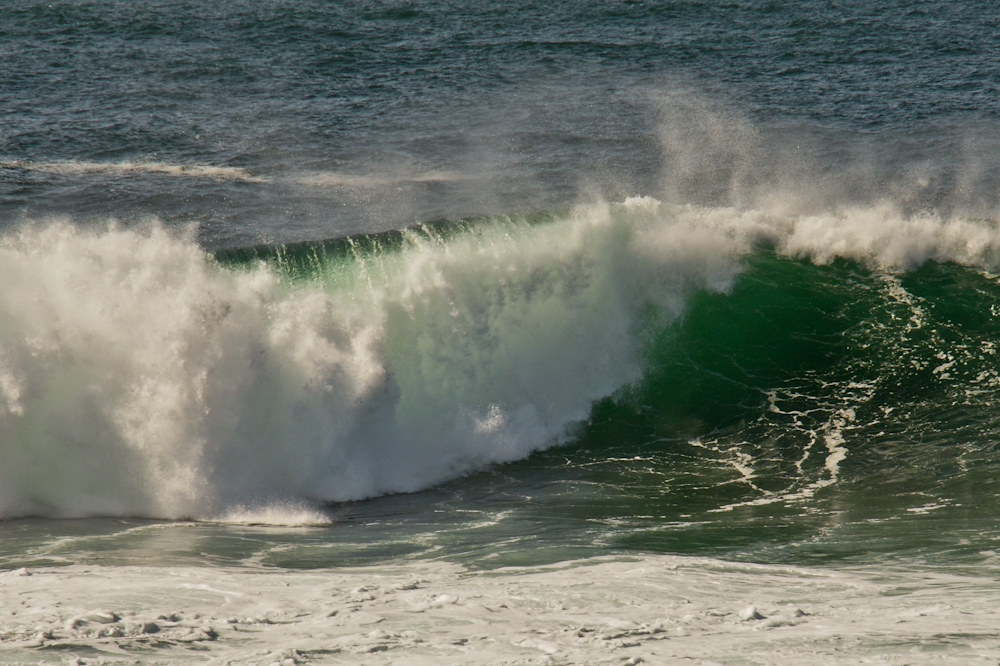
    Wave, Isle of Barra © 2012 Ginny Battson


    Poles are cold and the tropics are hot; continents and oceans absorb the sun’s energy at differing rates. The atmosphere is pulled hither and thither, and winds begin to form and swirl around our magnificent planet. A ripple appears far out in the surface tension of a millpond ocean and energy is rapidly transferred from the sky to water. The ripple becomes a wind wave, a heave of energy travelling across the water until it collides, reflects, rebounds and turns into other forms of energy, like sound. I love the sound of its energy crashing along the coast. It’s affirming; that the world is somehow still functioning in some way, as it has for eons.

    Most waves making landfall are swells that have long since been set free from the winds that generated them. Waves create diverse habitats along coasts; eroding rock, forming cliffs, carving out sea arches, caves and sea stacks. They make beaches by transporting sand and shell particles from deeper down towards the shore, then blowing inland to create dunes and rich machair. At the surface of the oceans, wave action exchanges essential gases too: carbon dioxide into the oceans and oxygen out. We breathe the waves.

    Currents help to mix the layers of water, spreading heat energy and nutrients across the globe, nurturing a plethora of life and trophic levels. Coastal inter-tidal species living in shallow water experience the brunt of the waves directly. To survive, they have evolved to be robust and adaptable. Wave disturbance means a proliferation of species from the surface to depths of 30m or more.

    There’s a particularly exquisite example of inter-connection between wind, waves and animal, however, deserving celebration. In a seemingly fluid interaction, albatrosses can glide 10,000 miles in a single journey and circumnavigate the globe in 46 days without flapping their wings, and by action so efficient it takes less energy than sitting on a nest. Albatrosses are some of the most heavy birds, but also have the largest wingspans in the world, the Wandering Albatross of the Southern and Indian Oceans reaching up to 3.5m.

    These sublime, global navigators exploit the waves and air currents in a type of flight motion called dynamic soaring. By locking their shoulders into position and allowing the muscles to rest, they are able to keep their large wingspan perfectly still for long periods of time. As they glide and naturally lose height, they dip down to soar between the waves where wind speeds are lower. Then they turn sideways into wind, gaining effortless lift into faster airflows and quickly rise to maybe 10 to 15 metres above the water. Once more, they glide down between the waves and repeat the cycle again and again, rising and falling across a pelagic expanse. They can fly faster than the wind’s speed, and around 110 metres along for every 5 metres of height they drop. If they flap their wings, they encounter resistance from the air and quickly tire. If wind speeds drop below 18 kph, they are forced to land on the water or remain stranded at their island breeding sites. In severe storms, winds may be too strong for them to fly, again forcing them to float in rough seas until conditions improve.

    For such incredible beings, they endure many hardships. The tragedy is that they are also extremely vulnerable to unnecessary human threats, not least a fishing technique called long-lining, where a single vessel may use a line extending for 80 miles (130 km) from which can hang as many as 10-20,000 hooks, each baited with a piece of fish or squid. Albatrosses, along with many other seabirds, go for the bait, are hooked and drowned as the lines sink.

    Every year longliners set about three billion hooks, killing an estimated 300,000 seabirds every year, of which 100,000 are albatrosses. (RSPB)

    1280px-Diomedea_exulans_in_flight_-_SE_TasmaniaCredit ~ Creative Commons ~ JJ Harrison. Wandering Albatross (Diomedea exulans) in flight, East of the Tasman Peninsula, Tasmania, Australia.
    Other hazards include ingestion of plastic pollution, disease such as avian cholera, invasive predators at nesting sites, climate change and associated changes in food distribution and increased frequency/magnitude of storms. There are 22 species in the albatross family, of which 17 are globally threatened according to the IUCN Red List. But there is still much we can do to tackle some of these threats and support others who are working for their survival.

    These magnificent birds have evolved over 50 million years, have worth in their own right, and deserve all our efforts, respect and love. We can reduce our purchases of single-use plastic, which escape into our water courses and into the oceans. We can reduce our ‘carbon footprints’ and back campaigns to support clean, renewable energy and keep fossil fuels in the ground. We can support Birdlife International’s worthy campaign RSPB dedicated pages (in conjunction with Birdlife International) to save the albatrosses, working with governments and fisher communities, finding solutions to incidental seabird bycatch and developing alternative methods as mitigation for smaller scale fleets and families.

    ~~~

    With respect:

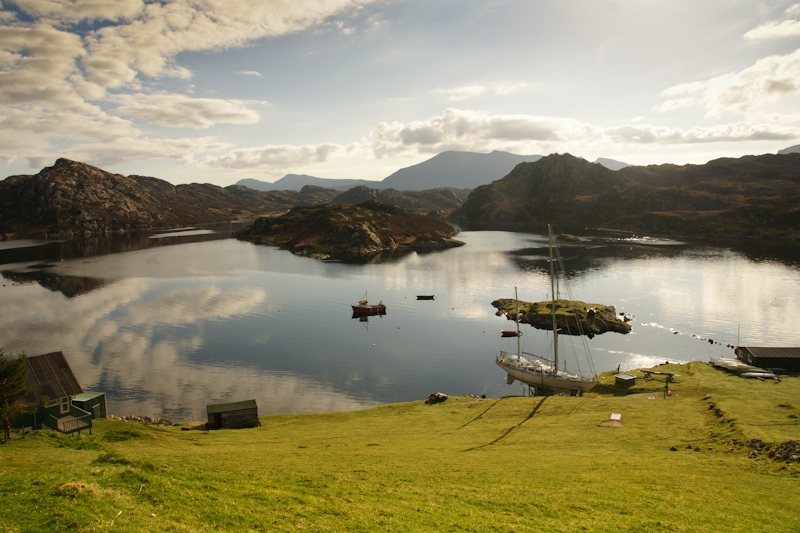
    In 2003-4, adventurers John and Marie Christine Ridgway helped to raise awareness of the plight of the albatross by circumnavigating the globe on their sail boat English Rose VI (photo of her at Ardmore below), with a team of volunteers, concluding with a presentation of a petition to UN FAO headquarters in Rome. There were over 100,000 signatures from 131 countries, a huge achievement before the advent of dedicated online petition websites. For more detail on their astonishing journey, please visit Save the Albatross Voyage 2003-4

    6772377817_b26371979f_bEnglish Rose VI at home, Ardmore, Sutherland © 2012 Ginny Battson


    ~~~

    Finally, for some glorious albatross footage of Albatross in flight by ‘Macgellan’ , please visit YouTube

    ~~~~~~~~~~~~~~~~~~~~~~~~~~~~~~~~~~~~~~

  • Marine life ~ time overdue to protect and defend.

    5691339791_c01097ca5f_bGinny Battson © 2011

    Last weekend’s announcement that 23 new Marine Conservation Zones (MCZ) are to be established around UK seas is a small step towards the full protections we ought to be affording our living oceans and coastal habitats. The sum total of 50 zones now currently designated, however, are still minimal compared to the targets set via the government’s own scientific advice. And then there is the question of enforcement, of course.

    In 2012, the Tory-led coalition with the LibDems, at an apparent cost of £8 million, consulted on on a total of 127 MCZs and 65 “reference areas” that would have provided complete protection from fishing. 100 MCZs and the 65 reference areas were dropped! And I suspect, in large part, due to strident objection from the ‘stakeholder’ fishing lobby.

    Regardless, the MCZs managed individually are not the Marine Reserves that one might imagine. They will still be subject to some of the global human interferences that have led to around a halving of the wildlife in the seas that existed in 1970 (World Wide Fund for Nature and the Zoological Society of London Report). The main caveat granted is that these zones should not be worsened in state, but there’s no absolute legal imperative for them to improve. Yet it’s in the improvements where we’ll see the true recovery so desperately needed.

    Into the mix, we also have to understand a sharp reality ~ species have been in decline for a very long time. Reports can be deceiving in that they so commonly fall prey to shifting baselines syndrome. We underestimate losses that have occurred way before any chosen certain date from which populations are now measured.

    Our UK marine and coastal life has been massively hit by human economic activity such as intensive, industrialised fishing (plus perils of ghost gear), and fish farming. Time is overdue for an increase in fully protected Marine Reserves.

    “What is a marine reserve?
    Marine reserves are a type of MPA that are fully protected from all extractive and potentially damaging activities, such as fishing, dredging, aquaculture and mining. Research, education and some non-extractive leisure activities may be permitted within marine reserves (at managed levels and with mitigation measures in place) where compatible with site protection needs. Marine reserves are sometimes referred to as ‘no-take areas’.” Marine Reserves Coalition 

    Living in New Zealand for a while, I was fortunate to visit some of their pioneering No Take Zones. Interestingly, in the course of my time there, I also met with a couple of marine biologists, who seemed pretty confident their NTZs were realistically too small to be effective in restoring the nation’s sea life. Never-the-less, the results of the protections in force (44 marine reserves in New Zealand’s territorial waters, which are managed by Department of Conservation), are there to be seen, delivering “a wide range of benefits to science, conservation and general management.” B Ballantine.  If the fishing lobby actually gains from protecting these areas, why do so many frequently object? I suspect the answer is more to do with fear of short-term losses than evidence, and this is a terrible shame.

    Also in New Zealand, Māori customary fishing rights have been asserted, with the Ministry of Fisheries together with iwi (tribes) working to create reserves known as mātaitai and taiapure. The iwi manage non-commercial fishing by making by-laws for these reserves which apply to all. Generally, commercial fishing is prohibited within mātaitai. By 2012, 25 mātaitai had been created, covering 32,200 hectares. There are ongoing surveys such as the one conducted by The University of Otago at Akaroa taiapure and Te Whaka a Te Wera mataitai, to measure outcomes and it will be interesting to follow the results.

    Meanwhile, in Wales, after the debacle concerning the public consultation into scallop dredging in the Cardigan Bay Special Area of Conservation, a new consultation with ‘stakeholders’ has been opened up in Wales for 6 SACs and SPAs  (for the purpose of protecting Harbour Porpoise and a ‘number of species of seabirds’). These are again different from MCZs though, according to a legal briefing by Bond Dickinson LLP commercial law form, there are some further plans outlined for offshore waters (more than 12 nautical miles offshore).

    “Under the Wales Bill, marine conservation will be devolved. It will therefore fall to the Welsh government to consider suitable provision of MCZs in their offshore waters as part of their ongoing programme to designate MCZs at the following sites: Celtic Deep, East of Celtic Deep, Mid St George’s Channel, North of Celtic Deep and North St George’s Channel. Before a formal consultation is issued Defra will work closely with local and national stakeholders until Autumn 2016. Defra then intends to select sites for formal consultation in 2017, and anticipates making designations in 2018.”

    In 2013, let us not forget, the Welsh Assembly abandoned MCZ proposals, again, little doubt, because of a strident sector of the fishing lobby. Wales only has one official fully protected Reserve ~ Skomer. It’s not enough.

    According to the Marine Reserves Coalition, in 2010 the 193 countries that are Parties to the Convention on Biological Diversity committed to designating at least 10% of the global marine environment as MPZs (not Reserves, I’ll add), by 2020. Progress is way too slow and it’s unlikely that 10% will be achieved by 2020.

    Professor Callum Roberts, marine conservationist at York University and author of Ocean of Life: How our Seas Are Changing, argues that unless we change policy, all that will be left of our seas would be ‘mud and worms’.

    “We need more zones because the network we have is far from complete….The reality is that despite the 50 MCZs which are now in place, the UK’s rich marine life still has very little protection. That may sound paradoxical, but six years after the Marine Act was passed, MCZs are still paper parks. They have no management at all, so life within them remains unprotected. They will be worse than useless, giving the illusion of protection where none is present. The 65 reference areas, the one bit of the network which was really critical, were dropped and while the UK is giving full protection from fishing to huge areas of our overseas territories in the Atlantic, Indian and Pacific Oceans, we urgently need the same high levels of protection in our home waters.” Prof. C. Roberts.

    It’s high time the public were more aware of this ongoing problem and encouraged to actively engage in fighting for more fully protected marine reserves and recommended linked reference areas with better protections afforded, in the face of vested, short-term economic interests.

    After all, life in the oceans is a vital, non-negotiable part in the maintaining of Earth’s one biosphere. If we abandon it, we abandon ourselves and everything else to boot.

    For more information, please visit www.marinereservescoalition.org. Please do get involved in consultations, or contact your local politicians so they know how important these protections are to you.

  • My early nature connection; home, play and special mentors

    Please find my latest blog as guest writer for key nature website Nearby Wild, an initiative dedicated to celebrating and enhancing local wildlife near to where we live.

    On my own early nature connection and the significance of Mentors