Blog

  • Reply by The Wildlife Trusts (and on behalf of RSPB) to 38 Degrees Petition, courtesy of the Director, The Wildlife Trusts England.

    Formal response to 38 Degrees Petition and my blog post The Act of Pricing Nature

    “Dear Ginny

    Firstly I would like to thank you for your comments about the proposals for a Nature and Wellbeing Act. We are keen to receive feedback and your views get to the heart of issues.

    Secondly, I’d like to explain some of our thinking around the Act and to provide our perspective on the area you have expressed concern about.

    The Wildlife Trusts are committed to the protection and recovery of our natural world for its own sake and for its intrinsic, innate wildness. We have a long tradition of successfully protecting some of the special places, habitats and species in this country for this reason.  But despite the efforts of all those who care about nature, as a society we are still overseeing a continual loss in the extent and quality of our habitats and their wildlife.

    The reasons for this are many – and there are lots of people, such as yourself, who are working hard to try and change this on many fronts. A snapshot of what Wildlife Trusts are currently working on includes beaver reintroduction, re-naturalising rivers, nature education in schools, campaigning for protected areas at sea, land acquisition, habitat restoration, ecotherapy projects, and much more.

    However we believe that one of the most profound reasons for nature’s decline is the inadequate consideration for nature within decision-making processes at all levels of government and in many parts of business. At the moment nature is almost always ‘trumped’ by the language of ‘profit’, ‘growth’ and ‘jobs’ – often overlooking the many ways that it supports us all, including, ultimately, our jobs and economy.

    Recently we have been working with RSPB on a plan to try and tackle some of these fundamental issues in a piece of framework legislation – the Nature and Wellbeing Act – to help create a society that has nature at its heart.

    The Green Paper you refer to in your petition presents the key ideas for this. There are 4 main strands to the paper and the Act:

    Section 1 proposes new cross-departmental Government targets for increasing wildlife populations and habitats to secure the recovery of nature in a generation.

    Section 2 proposes the creation of local ecological networks to increase the resilience of fragmented habitats by reversing the fragmentation that has damaged so many of our landscapes. It embeds a landscape-scale approach in how we make more space available for nature and how we join up and improve existing sites.

    Section 3 proposes providing better standards of access to nature for everyone in all new developments (and existing ones where possible). It includes making more provision for environmental education and ‘caring for nature’ as a core purpose of schooling.

    Section 4 proposes a new Government body to fully integrate nature into government decision-making (this could be an Office for Environmental Responsibility, like the existing Office for Budgetary Responsibility. It would be similar in function to the Climate Change Committee).

    I’ll expand a bit on Section 4 which is the area you have expressed concern about.

    The proposals in Section 4 are about developing methods to measure and monitor the health of nature and ecosystems at a national level so that we can determine whether as a society we are having a positive or negative impact on it, and action can then be taken accordingly.  This isn’t really happening at the moment – and those parts of government which do this type of work are not able to develop or enforce solutions at the scale required to halt the decline of wildlife. This approach could also enable businesses to measure and monitor their impacts on nature and take steps to avoid, mitigate or compensate against negative impacts. There are some forward-thinking businesses who are starting to address their impact on the natural world but again this isn’t happening at the scale required and much more needs to be done.

    Part of the challenge is to make nature’s contribution to society more visible in economic decision-making where it currently loses out so often – so there is an economic dimension to this.  This is where we think the Natural Capital Committee has been playing an important role – in exploring the intellectual and academic frameworks that might be needed to better embed nature at the heart of decision-making both by the public and the private sector. Much more debate is needed in this area, but we support the presence of an independent body like the NCC (an Office for Environmental Responsibility is part of our proposals), to continue the thinking and analysis needed to better inform a wider public debate.

    But, in supporting the existence of the committee and its place in the debate, we never lose sight of the broader holistic value of nature. The vital importance of the contribution that nature makes to our social and emotional wellbeing needs to be recognised much more too, as well as respecting its intrinsic worth. Ultimately, as a society we need to exercise greater accountability for our relationship with nature and we will continue to challenge politicians and others to make decisions which contribute to its health and recovery rather than the opposite.

    I also understand your concerns, that by defining nature as a form of capital there is a risk that nature will somehow be ‘priced’ and that it would ultimately be bought and sold – which would be worse than simply ignoring any type of economic value altogether.  But this is not what we are proposing or would want to see. I would agree entirely with you that it is impossible to place an economic price on all nature. But I can see a benefit in better understanding, measuring and monitoring the national health of nature in England, seeking ways in which to better embed this in decision-making and having a system to make government accountable for this.

    What we are exploring is the best way to do this. I agree that education and eco-literacy is also a big part of what is needed. The Nature and Wellbeing Act is about using legislation to achieve positive change for nature (and people) but an approach like this needs to work alongside people taking action for nature in their own lives too.

    Finally, there are also deeper questions here about the type of society we live in, and how our economy works. This is beyond The Wildlife Trusts’ reach and expertise alone but I hope that for a starting place our contribution could be to help show that a world with more wildlife is possible, that life could be better this way (for wildlife and people) and that over time this could help to reinforce some of the values we need as a society to foster a more sustainable approach to how we live.

    Thank you for reading this far Ginny and I hope that helps explain our position – even if you may not agree with it all. Feedback on the proposals is welcome so thank you for sharing your views.

    I understand this will be published on your blog so for the benefit of anyone else reading this you can find out more on the Nature & Wellbeing Act here including details on how people can get in touch and send us comments on the proposals: www.wildlifetrusts.org/naturewellbeingact.

    Martin Harper from the RSPB has also written a blog on this which you can read here. An I’ve also written a blog outlining some of the thinking behind the Act.

    With best wishes, Steve (responding here on behalf of The Wildlife Trusts and RSPB)”
  • The place in-between

    14977932681_4bb388c2d2_k


    Just to say a little something on religion, as it’s Christmas. I’m an atheist who believes in freedom to believe. I would never pinpoint religion as wrong.

    I study belief, hope as well as existence and truth, and lots of other interesting things as a philosopher. Yet I am more than a little jealous of those with religious faith, whether Pagan, Buddhist, Christian or Muslim, as it would be a very hopeful thing to have in one’s heart.

    There are all kinds of amazing things about world religions, not just the hateful acts reported in the press. There’s a richness and resilience in that diversity. Extremism (differing from radicalism, I would argue), in any form is a problem and so is delusion.

    Delusional behaviour is an unpredictable scourge of our time. Delusional behaviour is not restricted to individual extremists of religious faith. It can hail from civil governments, security analysts, corporate board members and even police departments too, it seems.

    Most religious texts are peaceful, inclusive, tolerant. But we need to remember they were written pretty early on in human pastoral history during significant times of unrest and brutality. Tradition and reverence to founding prophets means these scripts tend not to be updated. But if these founding ‘fathers and mothers’ (mostly fathers), lived today, they might have adapted their work.

    If there’s one section of religious text taken out of context in order to set one group against another, there’ll be three more which bring them back together. Cultures and dominant groups within those cultures (hierarchies of power) tend to corrupt religions by skewing and interpreting these ancient scriptures to fit their own world view. This often will be proven by going back to the original text.

    Philosophy is not religion, however, and began in response to theistic or polytheistic dominance. Early philosophers did not accept the status quo and they asked ‘who are we and what is nature’ if we/it is not deemed by God or the gods? There was a bravery in this act of defiance towards theocracies. Radical, I would argue. It has spurred all kinds of amazing human endeavours in philosophy and the sciences.

    But to be an extreme scientific materialist is as misguided as being an extreme theistic idealist. One excludes the other across an inflexible void. Yet it is the void which offers most scope for imagination. And it’s this place in-between where there is room for all creeds and compassionate thought in this beautiful, mystifying and diverse world.

    Let’s cherish it.

  • Guest Blog: Paradise

    Paco Almarcha is an anthropological researcher at the University of Alicante, Spain, specialising in people/animal relationships.

    A brief Twitter exchange on the notion of  ‘paradise’ and I’m glad to host Paco’s latest blogpost and accompanying photos… enjoy, as I do.


    Paradise-1

    Every place is a historical place.

    We can find everywhere changing processes and episodic moments of destruction, living beings which subsist on the death of other ones, joy and pain in a similar range. There are no paradises; but we need them. The notion of paradise involves a (religious) sense of perfection, harmony, peace and happiness and in most of the times it is represented in a natural place, a locus amoenus. Paradise is a place without history, without work, without real people. There are no heavens on earth, but we look for this ideal, sometimes anxiously.

    The idea of a future paradise used to be very useful to avoid a critical opposition to the real state of things or to encourage a strong feeling of union among community. Today it is one of the most powerful tools of tourism marketing. Relaxation, solitude, purity, communion with nature are the main values related to these idealized sites. Paradoxically, tourism usually destroys the values associated with the paradises that are sold (we have a lot of examples here in Spain[1]), so companies have to look for more distant and “exotic” places every time, in an unsustainable form of fulfilling our desires.


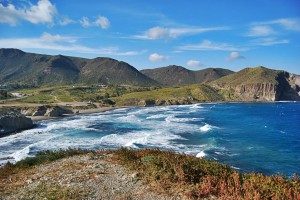
    paradise-3-300x200


    They sell a myth, updated with consumerist elements, but this myth is built on real needs, probably due to a certain way of living that has taken us apart from natural rhythms, from an unhurried contemplation of life or from the pleasure to hear our own thoughts. We seek paradises to regain a lost sense of the value of small things, to find the poetry hidden in the movement of the waves, in the colour of the leaves on the trees or in the flight of birds.

    Finding a heaven realises us and heals us.

    We seek paradises, in short, to fall in love again with the world, despite history.

    And in some strange and magical way, on a few occasions and places, we believe that we have found it.


    paradise-7-300x200


    [1] I live in Alicante, and I can remember the coast 30 or 35 years ago when urbanization was an incipient problem and the fields were full of sparrowhawks. Today I have to be aware that my feelings could be fuelled by the myth of the lost paradise.

    You can follow @PacoAlmarcha on Twitter, please do.

  • "The essential first step in winning the war of the world is comprehension of it."

    “The essential first step in winning the war of the world is comprehension of it. Only system analysis can lay bare the underlying value program, but it is avoided. The sciences do not study values and specialize in domains of self-referential meaning. Journalists report facts, spectacles and impressions, but not the underlying values governing them. Philosophers seldom analyse the ruling value system of the societies within they live from social habit and fear. In the age of instant culture, value-system comprehension does not sell. Together these blocks of normalized avoidance make the value code selecting for all the degenerate trends invisible to us. As in immune system failure, the life host fails to recognise the disorder devouring it.”
    John McMurtry

  • “The essential first step in winning the war of the world is comprehension of it.”

    “The essential first step in winning the war of the world is comprehension of it. Only system analysis can lay bare the underlying value program, but it is avoided. The sciences do not study values and specialize in domains of self-referential meaning. Journalists report facts, spectacles and impressions, but not the underlying values governing them. Philosophers seldom analyse the ruling value system of the societies within they live from social habit and fear. In the age of instant culture, value-system comprehension does not sell. Together these blocks of normalized avoidance make the value code selecting for all the degenerate trends invisible to us. As in immune system failure, the life host fails to recognise the disorder devouring it.”

    John McMurtry

  • Bridging the Gap

    6697825945_8bec8f6406_z Since launching my petition, leading conservationists and sustainability academics have generally either lambasted or ignored me. Rupert Read and Molly Scott Cato rightly describe the problem as the “Natural Capital Controversy”. The assertions in the Nature and Wellbeing Act Green Paper on monetary valuation ARE controversial.   There is a way to bridge the gap, which so few discuss. Pluralistic values are important and just. But monetary valuation of nature is the point upon which to focus, as money in our current economic system is all-pervasive, anti-pluralistic and often incommensurate with key values, not least justice and love. We do not need to monetise nature. Money is THE medium of exchange (trade). Nature should not be exposed to commodification. If we wish to measure it for our own sake too, sure. Pick any other metric except money. Nature for economic growth? No thanks. Ecoliteracy for all, including legislators and business people? Yes please. Please do read my earlier blogs. I emphasise, there are no heavy or rude demands here, simply polite requests. We environmental ethicists are more often than not a compassionate species! It’s in the very nature of what we study. But this issue IS important.

  • Do we really speak ‘money’?

    5066012086_1e441dc0c9_b


    I am told, often, that as conservationists, we must learn to speak the language of governance and commerce, and that monetary valuation of nature is the only way to communicate with politicians and business people. It’s all about the £. The way of the world.

    So, do we really speak ‘money’?

    I ask myself this question not only as a student of environmental ethics, but also as a business person who grew up in a family of business people. And also as a political being, one who believes in justice, equity, compassion and the intrinsic value of life itself.

    When we sell goods, we market through advertising, largely via words, symbols and images. We may educate consumers on the ‘benefits’ of purchasing goods and services via the spoken or written word. We have meetings. We talk. Even in convincing banks to back us, or in tax office inquiries, or in matters of insurance, the key is more the narrative than the projections. People to people. Key persons. Track records. Trust.

    And whether it is a good thing or not, globalisation means the English language is increasingly the key communication across the globe. Just check out Harvard’s the Language of Business blog. It’s all in… English. http://www.dce.harvard.edu/professional/blog

    Yes, we look at the figures, of course. Checks and balances. The figures must add up. But in valuing living beings (wild life) we are quite at liberty to use other currencies to ensure those figures add up.

    The Nature & Wellbeing Act Green Paper, by the way, does not strive for alternative currencies. It strives to value nature, including living beings, by the £. The purpose of money is as medium of exchange. It facilitates commodification. It’s homogeneous. And it rather easily segregates what is common to all, without limits.

    Nature should not be beholden to, or be none of, these things.

    So to Government; here in the UK, the language of Government is English. History as evidence of its beginnings… http://shar.es/13gp0G

    When we vote, we vote on ideals, promises, mandates, track records. Trust. When we petition parliament it’s usually because we agree or disagree, and we argue our cause using language.

    Language is also central to education, which is where we really should be placing all our efforts right now. In education we can change and validate baselines, the world.

    Some say there is no true society without language. It’s what brings us all together. And I’m not going to give up on society.

    Despite any neoliberal obsession with money, the human world is what it is because of language. And that, my friends, is a justifiable, equitable, compassionate and intrinsically valuable thing.

  • Petitions, petitions

    We sign them, but perhaps do not start many.

    Treasure

    But with the support of a handful of friends, I simply want to offer the chance for people to ask the RSPB and Wildlife Trusts whether they would consider dropping Natural Capital and Payments for Ecosystem Services from the Nature and Wellbeing Act Green Paper. I admire both organisations for their dedication to conservation science and education, but think this move to value nature by the £ in a pro-growth economy is a mistake. I know others feel the same. I do hope the organisations will reconsider.

    If you want to sign, please do so here…

    To RSPB & Wildlife Trusts. Please drop NatCap & PES from Nature & Wellbeing Act Green Paper