Author: Ginny Battson

  • Introducing Substrarchitecture (Substrark).

    Click image to visit The Findhorn Foundation and their variety of ecological approaches to housing.

    Architectural Reflections and Symbioethical Philosophy:

    Many years ago *creak*, I began my journey in architecture studies, inspired at the time by the creative spirit at the Centre of Alternative Technology in Machynlleth, Wales.

    My undergraduate thesis, published in 1993, examined Kenneth Frampton’s concept of Critical Regionalism. I concluded that local, shared traditions—rooted in the materials and memories of a place and shaped by its climate and ecology—are invaluable. Modern technologies can then transform this wisdom into creating beautiful, efficient buildings in and around which to live, work, and play. Critical Regionalism stands as a positive resistance to pulp Modernism and the empty symbolism of Post-Modern architecture. I spent time studying the work of Alvar Aalto and Carlo Scarpa, who both offer fascinating examples of these ideas, and I was lucky enough to visit some of their remarkable buildings and grounds in Finland and Italy.

    Eventually, I stepped away from the egotistical and rather ruthless business of architectural CAD duplication that most graduates entered in the early 90s.

    Urbanizations as Places for Life:

    Much later, I came to write about my own neologism, Kinnages, published online by Humans and Nature in 2017. I like to imagine urban areas as vibrant, interconnected places from below the ground up, where flora, fauna, funga (click to sign the FFF petition), and humans alike can flourish together. We know it’s possible to grow food in cities, enjoy both private and shared spaces, and make responsible use of water, renewable energy, and waste in ecological cycles. To create welcoming communities for everyone, human and teresapien, we need to learn the inherent wisdom of a Place, spark creativity, and work together. This means thinking beyond just lowering emissions and planting individual trees as if they are carbon-absorbing street furniture, and stretching our moral imaginations. Kinnages metabolise. Once this way of thinking spreads, the old practice of creating short-lived, human-centred designs for private markets—at the expense of life on Earth—will feel outdated and embarrassing.

    On Fluminism, Symbiosis, and Materials:

    At the heart of this vision is Fluminism.
    If flow and resistance are to embody mutualistic love, the organic and inorganic processes of Nature within and without any retrofit or new development brief must enable LiFE to thrive.

    T H R I V E !

    LiFE, buildings and grounds in sym-ial relationships.

    The idea of symbiosis in its parasitic form isn’t at the forefront of my mind here (though it has its place in the chaos of life). Industrialising the living essence of mycelia symbiosis into bricks, including the loving, connecting hyphae, then dehydrating them to death, exclusively for human use, is not part of this plan. Worse still, fashionable desire isn’t part of this plan. How does mass use of this material show reverence for living beings any more than, say, intensive tree plantations, clear-cuts, vast sawmills, and more death by the lorry-load? I understand that, just by existing, we cannot avoid all possible harm to other species, but this is a deliberate act with the intent to expand at scale! Try again.

    Any real embodiment of the sym-ial means letting the natural flows—both organic and inorganic—move through our developments, giving LiFE places to thrive in relative homeostasis with our buildings and landscapes.

    Symbioethical Design Principles:

    Choosing materials and construction techniques with care—whether cob, stone, recycled, or reused—shapes both the look and feel of our buildings and surroundings. Sometimes, the design process becomes wonderfully complex, even accounting for the tiniest living things, like microbes or organisms nestled in rocks. On a broader scale, we should pay attention to how our designs impact these invisible communities and ourselves. But this is also about considering how light, noise, air, plants, and pollinators respond to new places and changing climates, and how they may impact epigenetic inheritance in all the species that inhabit them. There will be mistakes, but we will learn from them.

    When we design homes and workplaces, we can do so in a way that encourages life to grow. It becomes a purposeful act, with measured ecological companionship. Technology may be required to maintain “One Health,” such as preventing the transmission of zoonoses, harmful spores, rising damp, or ants setting up home in the sugar bowl (if, like me, during the last heat wave, this turns out not to be your thing). And from the pre-planning stage, we can be mindful and practical about the ecological and dynamic management of water, waste, and transport.

    All-Species Communities and Collaborative Practice:

    Imagine communities built for all species—intentionally planned for any place on Earth, even floating marine homes that can weather storms and tsunamis. I see endless possibilities for collaboration, especially between builders and ecologists, as well as among various species. Like beavers, fluminists might appear to be disruptive by their structural interventions, but they are, in fact, generous creators of opportunities for LiFE. So let’s put on our thinking caps!

    Etymology and Neologisms:

    “Substrate” comes from the Latin substratum, meaning “that which is laid under”—from sub, “under,” and sternere, “to spread.”

    “Architecture” finds its roots in Latin architectus, from Greek arkhitekton, meaning “master builder”—arkhi, “chief,” plus tekton, “builder,” and ultimately from the PIE root *teks, “to weave” or “fabricate.”

    With this in mind, I offer “substrarchitecture,” or more simply, the verb “to substrark,” as possible life-enhancing words for practical movements.

    Valuing Vernacular Wisdom:

    I value the hard-earned wisdom of local and Indigenous communities, as well as genuine involvement from everyone, just as much as formal architectural methods. I’ll continue to develop this neologism, along with the idea of land as commons (see “locacede”).

    ~~~

  • To the Symialarity: a timesketch (Futures)

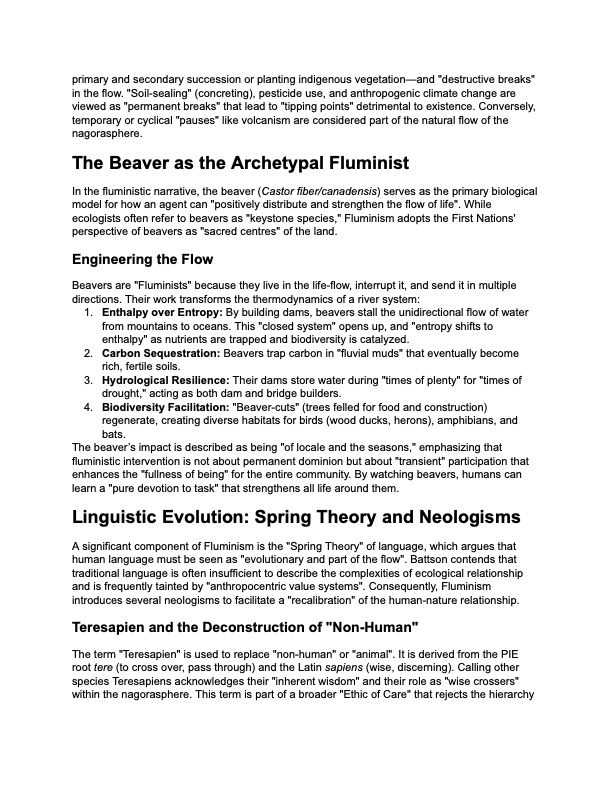
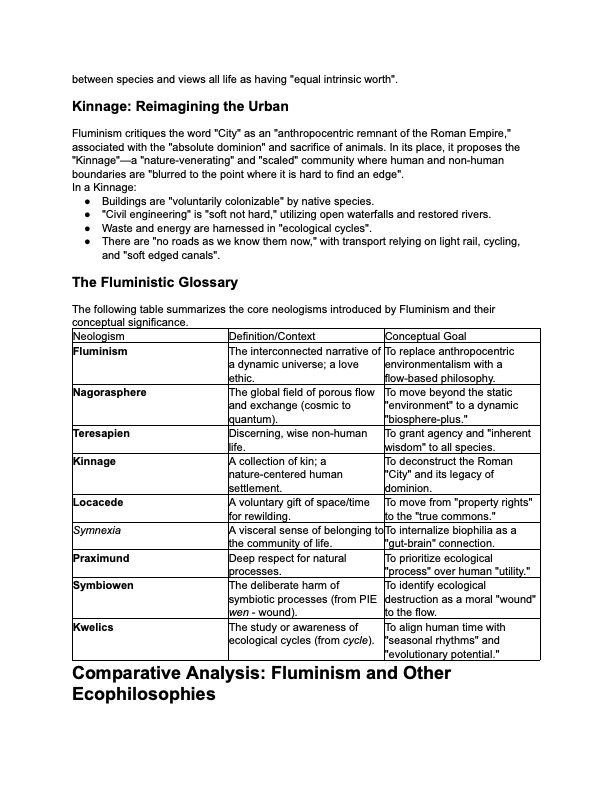
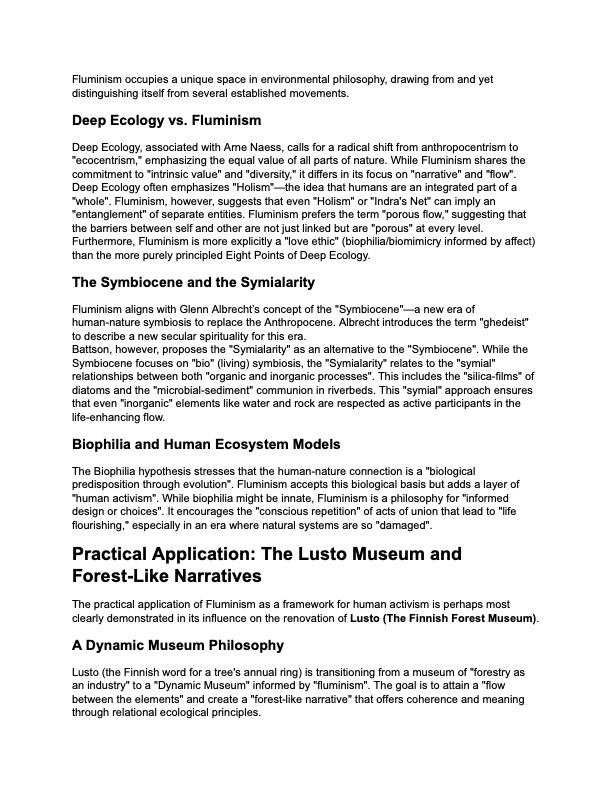
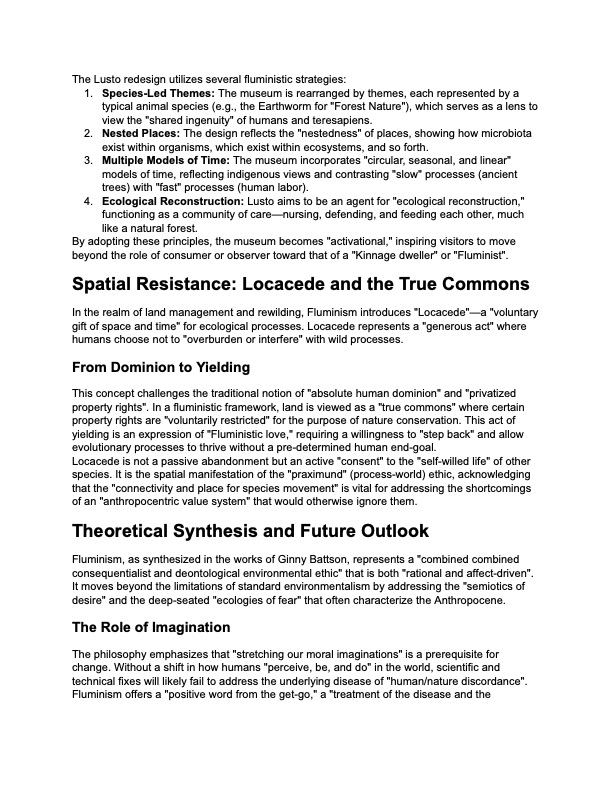
    I have been developing alternative ways to communicate my ecophilosophies. Below is an animated presentation of my #FutureSketch depicting ethics/values routes to what I am now calling the Symialarity (relates to organic and inorganic processes rather than Albrecht’s SymBIOcene).

    It shows Indigenous wisdom/continuity despite the violence of Colonialism, plus an increasing flow towards Fluministic choices, resulting in a return to the abundance of nature upon which we are a part and utterly inseparable (biologically).

    Interconnectivity of Life on Earth is critical to planetary climatic processes. Too few people understand this. Influence over all processes supporting LiFE must also, therefore, be wise. To divert multiple energies and matter to selfish, patriarchal, or elitest pursuits – like resource or territorial wars, the great AI theft and threat, or symbiotically impossible long-term human space travel – will only continue to bolster the Sixth Extinction.

    I hope the message is positive because it also shows we have choices. We can make them before the full measure of catastrophe unfolds. As I have stated before in developing my “symialosophy” fluminism, human technology is focused on truly meaningful progress, such as achieving human equity and ensuring the wellbeing and thriving of all LiFE (One Health).

    I would very much appreciate any useful feedback if you have time.

    Additional Note:

    Death Zones will not depict the full spectrum of suffering caused by the catastrophic mental detachment of humans from the rest of Nature. But unless mass values shift soon, these events are probably important, though tragically unessecesary, to an aggregation of change. This is especially so, given a modern cultural shortage of empathy and ignorant celebrations of inhibited moral boundaries (eg the MAGAVERSE).

    To the Symialarity

    ~~~

  • Sturgeon – The Ecophilosopher’s Fish.

    Sturgeon – The Ecophilosopher’s Fish.

    It is slightly galling to learn that The Philosopher Fish by Richard Adams Carey has won The Bookseller’s Diagram Prize for the oddest book title. As an ecophilosopher who has written about sturgeon during my PhD Literature of Place studies, I felt it timely to publish my mini-treatise.

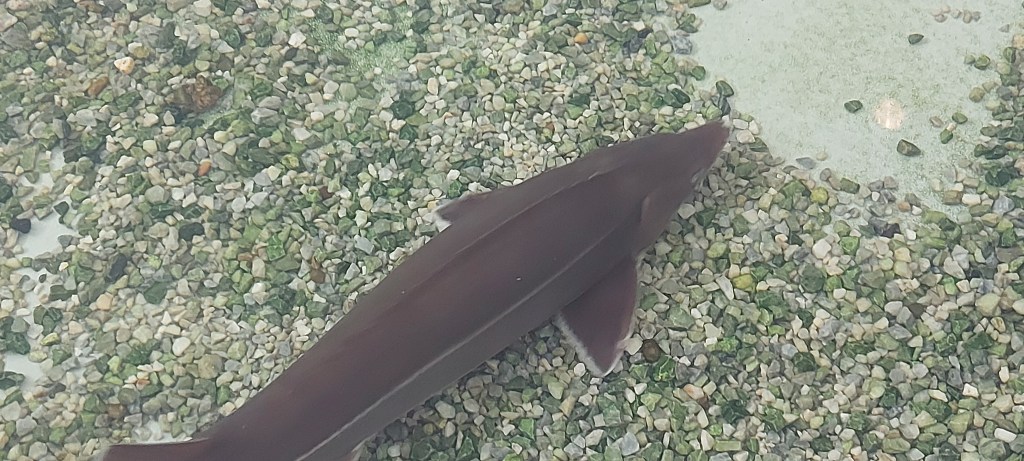
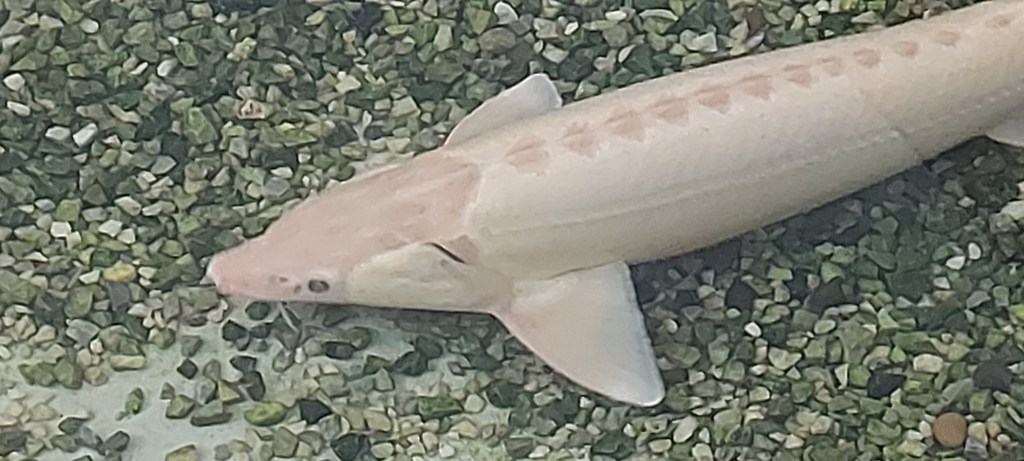
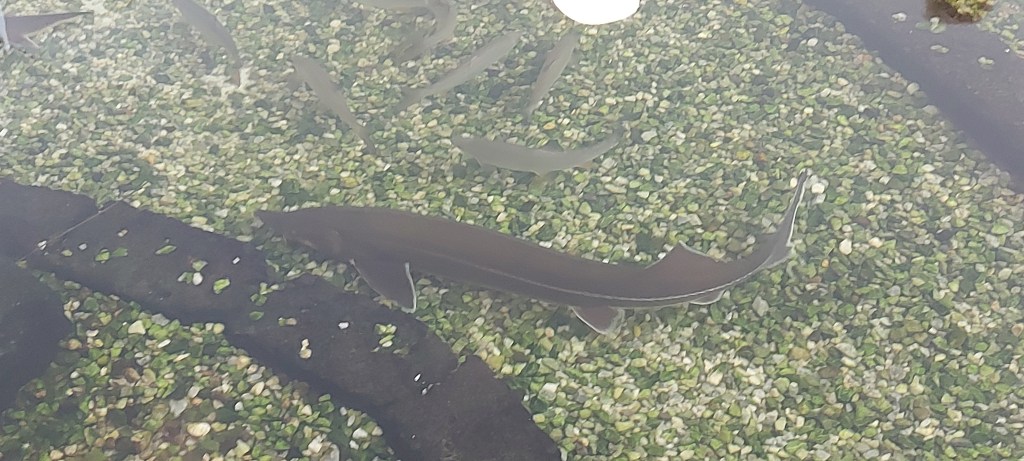
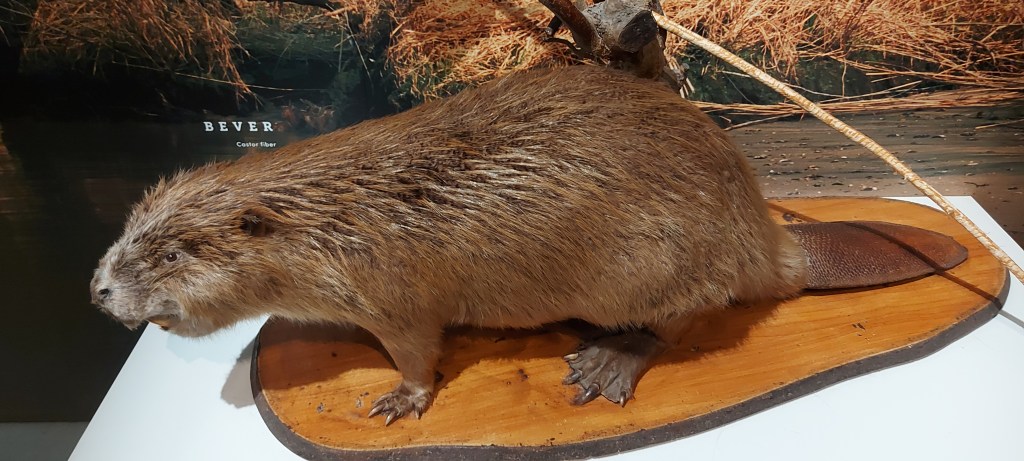
    When I wrote the following oddness, call it a “research breakthrough,” (excerpt from Chapter Severn, Rivering), to observe sturgeon ‘in the flesh’ seemed like a pipedream. But last year I was surprised to find a small display of youngsters in an indoor pond at the otherwise fabulous Biesbosch Museum near Dordrecht, Netherlands. Despite welfare concerns, I took the opportunity to observe their sublime and ancient movement through water and hoped one day for their return to the wild, unlimited. The island upon which the museum is built was created by digging channels to provide outflow in the process of the vast depoldering project at Noordwaard. Polder construction, along with fishing, was a major reason why sturgeon were extirpated by humans from the region. Now this vast and largely fluministic intervention, the largest of the Dutch Government’s “Room for Rivers” infrastructure policy, has offered a chance for their return to this National Park aside the beavers.

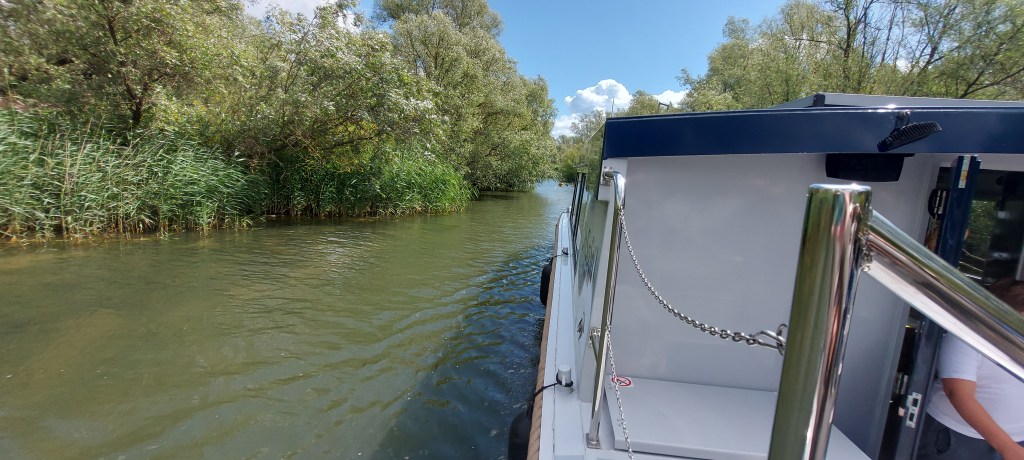
    Note: living beavers at home were whom I had originally intended to visit during a boat trip. But to prevent such human voyeurism is their endearing habit! The boat trip failed to find one though, gratefully, I did see evidence of their wondrous fluministic activities.

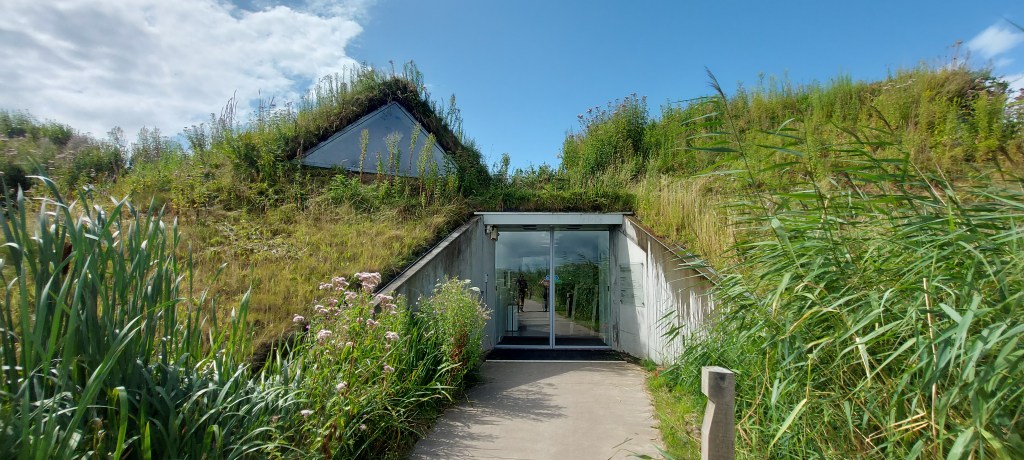
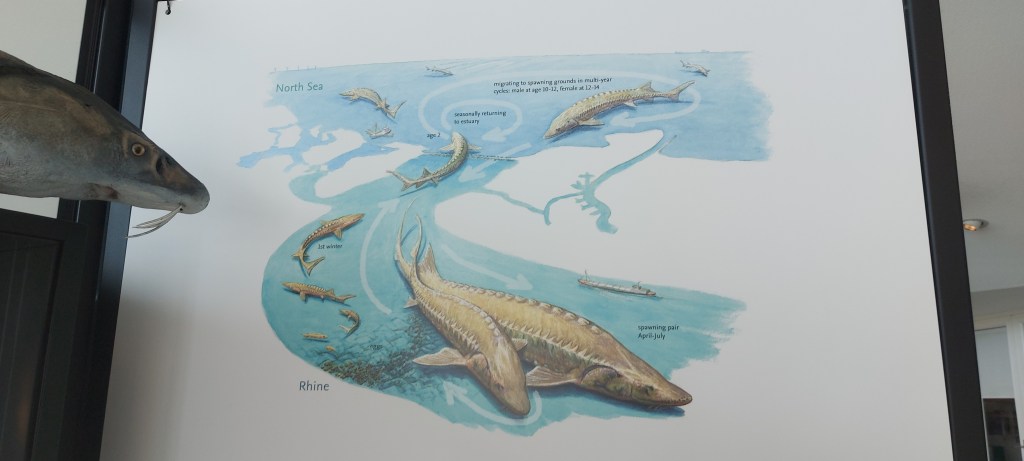
    Biesbosch Museum, with its award winning “green roof” architecture and more natural landscaping, is designed by Studio Marco Vermuelen, and the internal exhibition spaces, including displays on the natural/unnatural history of sturgeon, are by Studio Joyce Langezaal. Please find my photos below.

    ~~~

    “The Wye does not end or begin at the mouth. All the way from those springs in the Cambrian hills, evaporating and extracted, it is both part and feeder of the swirling nagorasphere. What is carried in its flow by gravity to this dynamic turbidity in the estuary is cycled by the smallest of beings and turned into a festival for all beings: those that live or visit this place, those that shield here to grow from vulnerable to strong; those who are touched by its protective storm-buffering and surge-quelling. The matter of the basin—the huge lasso of the Wye—is swept here by rains and floods and held in suspension on top of the saltwater, pushed around the peninsula and sucked back towards the oceans by the tides. Time and time again, they mix all of us under the bridge and back until we, and all our junk, are mud banks, sandbanks and longshore drift. Here in the flow that switches east to west and west to east, with the weight and wobble of both the moon and the Earth, the ebb current to seaward and flood current to landward, filling the mouths and the lower reaches of all the rivers that drain here with salt and the anadromous fish at high tides who swim upstream since our Silurian to spawn like king salmon and their parasitic dependents, the ancient sea lampreys, and the catadromous fish at low tides, who swim down the rivers to be unleashed into the great oceans to spawn like the eels, mullet and flatfish flounder.

    ~~~

    European sturgeon, redlist critically endangered anadromous species, ghost to our rivers. But now, once again, curiously visiting our estuaries. Stay with us. Live with us. 

    Bat’Umi, Basel, Fethiye, Toulouse, Reykjavik, Tangier. 

    Way below the plate glass of the cities, deep in the rivers, your unfamiliar body winds upstream under the night lights. I can just make out your huge dead body in silver nitrates, museum plates of iron and steel greys next to all those proud, fading men.

    Your underwater knowing is as old as the triassic cliffs on these Severn Estuary edges, my spectral kin. Like smooth-hounds and thornback rays, flick your strong fossil tail for that exquisite downward force, shimmering from tide to river and back with the burning electrosensitivity of your upturned beak, running along those beautiful lateral lines. 

    Swimming in from the depths of the sea, you stay in Winter to syphon the bottom of the estuary with your soft mouth, tasting for shelled morsels and goby enzymes with your long barbels and electroreceptors. Mine is the quietest of observations; yours is a full more-than-human sensory devotion of self that is the whole river-estuary-marine continuum; an internal blueprint of the movements required to get from where you are now, the bed mud and bristle worms, to the fine river grit at the foothills of the mountains when you are old enough, to where you’ll gather in oxygenated pools to leave your young. Then, to twist through a meander with a freshwater surge, to swim-out each run into salinity, and bend this way and that way to a shallow coastal sea in falling light. Your young ought to be safe here if they reach the estuary, and they will grow well until they are fit for the pelagic, yet to return to their natal rivers to reproduce. Everything about you is revered by me. There’s a glint in your ancient, metallic orange-bronze eye.

    You are a patientist, realised in acute potential—if we humans could remember it’s within us too—primed for imagining the moment of exquisite love in the flow of all life. How patient must you be, waiting for us to clean up our act and destroy those dams. Would you come and stay, then? 

    Your spirit presence is the result of a swim of magnificence, from the misty Gironde, the Garonne and the red wines of the Dordogne, and the Bay of Biscay, to this moment in a future Welsh Wye, a time also threatened with Gaian fury, with flash floods, heat waves and drought. The crowd who came before have all gone, shadows blocked by weirs and finished by bullets and huge gill nets. But you came here curious, tested the water for ripeness. You have sent news back: made signs. And now they also know to be here, pulled by the smell of Welsh hills, the magnetism and internal maps of 400 million years. Ah, sister, to match your devotion! Standing perfectly still, staying present with your strength and intelligence, distraction would be unwelcome; not even to raise an underwater camera. Your hunt is too important.

    Your ichthyolite-ability to swim so elegantly from the ocean through a curtain of silt and into clear green emeralds is for all to know, and fewer ever to notice. You see, unlike me, your electro-centrism helps you navigate complexity without injury. How would the expanse of the English Channel shine as you swim under waves and ghost-whale bellies, steel hulls and oil slicks. How you would rise again without giant, slicing propellor blades.

    How does electricity reflect off of me?

    I am not afraid to tell you, I love you, and all our kin, as I care for this place–a happy place–down on the banks of the River Wye in June. I love the microbiota and the symbiotic relationships that sustain all the lives that exist right now, though the majority I can neither see nor hear. But I want you here too. Fluministic love means more than they think. It’s not a uniquely selfish act, but specific for this place linked in flows to all places, and little to do with the brain’s reward centres—though there is that. My life is an expression of your way in the flow, you as part of larger flows, that are part of the flows of life that distinguish planet Earth from all else yet known.

    Flow runs into itself and all matter, even in death. This is the truth continuum.

    Sturgeon, you and the things that creep in and out of the water beside us, the things that never enter the water, the things that never climb trees, share everything through drifts in the nagorasphere. It is felt by evoking our patient imagination—you have it, like the salmon and the eels. This is a process too. Being a fluminist is a process, because we are all creatures of process not objects nor even subjects. All are one verb through time and space.

    Palermo, Arkhangelsk, Prague, Odesa, Galway, Paris, Lisbon. 

    Chepstow, Ross-on-Wye, Monmouth, Hereford, Hay-on-Wye, Builth Wells. 

    Stay with us. Live with us. 

    I write about you so that others may choose to protect your interests in this constant dynamism, to remember that flow exists between every life, even in death, true beauty to celebrate and protect. This place is held close, and this ocean, this estuary, this river—and back again—you, the bristle worms, and the benthic deeps. We declare these waters sacred. In our kindship, we share hope for a unified love of the exquisite nature of natural moments, everything joined at the hip bone and berry, undivided, and for the continued liberty of life and the living. It is, in a way, our small act of resistance.  

    ~~~

    Here in the estuary, a KBA (Key Biodiversity Area of international importance), a SAC (Special Are of conservation), there are five main rivers who open their mouths to salt, with little pills or streams to create a softening in the juncture between land and water. This is a body of land in dissolution, where aquatic beings have adapted to the storm surges, or cling to the banks of mud, where some hang in the water column rushing along with the tides at 1.5 metres per second, and some ripple against and with the tides. Some move in and over the shore, some shelter with the carbon sequestering eel grasses, fly high with the South Westerlies, the strong prevailing winds that snag an outgoing tide in sentient antagonism. For you and me, orange-red signs for danger but for many, a brown hatchery, a brown nursery, fat for winter storage; sanctuary deep inside a maelstrom. 

    Tiny soft pink-white bodies form dark crystalline reefs on rocky substrate, or on top of years of the devotion of their own ancestors, like cities on top of cities, under the tides and in between. We—the catch of the land—are filtered by millions of these honeycomb worms (Sabellaria alveolata), quartz and mica, forams (shelled algae), shell bits, polystyrene and plastics, cemented by their tiny bodily secretions into large biogenic reefs that provide stability for their feeding and reproducing, and shelter for more beings like Brittle Stars and Beadlet Anemones.

    Cobbles to gravels to clean sands, muddy sands and muds, here holds restlessly 7% of Britains madflats and sandflats, a tenth of all that is supposed to be lawfully protected. Ragworms, Catworms, Sludge-worms, burrowers, burrowers, burrowers. Baltic Clams, Laver Spires Shells, Mud Shrimps, Sand Digger Shrimps, Speckled Sea Lice, free living Bristle Worms, Peppery Furrow Shells. Some are suspended, some are globs and slivers of benthic biofilm on mud banks; long, pennate bodied algaes, seasonal algae diatoms, tube-dwelling diatoms, epipelic diatoms residing at the kiss between water and sediment – all silicon cyclers on a gradient out to the sea, like living glass. 

    Black Goby hunt through the Dwarf Eel Grass and Seawrack beds also harbouring Nilsson’s Pipefish—at home with low salinity—sequestering carbon and grazed by wild ducks like the chestnut Widgeon, sociable birds with their noisy whistles and growls. Straggling, motley Great Pipefish, slender Snake Pipefish, Straight-nosed pipefish surge in with the storms. With the heads of seahorses and the bodies of snakes, pipefish males rear their young in marsupial-like pouches to be freed into the tide and out to sea.

    Saltmarsh Glassworts, Common Reeds, Sea Barley, rare Bulbous Foxtail dwell and stabilise the ephemeral into thriving, brackish feeding and nesting grounds for waterbirds. Pills—little streams leaking land close into the estuary—and human-dug back-breaking ditches bring life to the hinterland where Water Voles plop, Common Toads croak and Little Egrets, Grass Snakes and Otters hunt. Knots, Oystercatchers, Curlew roost in crevices of rock and mussel scars foraging Barnacles, Limpets, and Winkles as well wading for their worms and clams. 

    Common Goby, Sand Smelt ~ these beauties stay in the deep heart of the brown to spawn. Bass and Cod are opportunists, they’ll swim in and out of the estuary to find food and seek shelter to grow. Whiting eat Brown Shrimp, shimmering silver Bristling or Sprats eat microscopic copepods who eat anything they can find, flat Dab eat the rotting dead, along with young Shore Crabs. So many babies wash through here, but they’ll move upstream to safer waters, or back out to sea. 

    Tundra and Bewick Swans, Shelducks and Norther Pintails, Ringed Plovers, Eurasian Curlews, Dunlins, Redshanks, Turnstones, Lesser Black-Backed Gulls, Grey Herons, Goosanders, resident, passing through, topping up, gracing, dying. An incredible place for wading birds, named by human conservationists as a global RAMSAR site of feathery significance, this is a place only recently given back to the elegant re-introduced Avocets and uncommon Common Cranes (Grus grus), but a place worth life itself to avian kin, where all length beaks find all depths in the mud and the shingle to find what is eternally desired, the wiggling, creeping proteins and lipids and carbohydrates caked into these living shores of abundance; a place of sanctuary for them all, a passing plane, a global meeting point on major air routes from Sub Saharan Africa to the Arctic. This is a place of Earth’s Body Bio-Continuum worthy of great reverence and the highest protection, of Praximund.

    And back to the Wye’s Mouth, overseen by Old Man heron and his spindly legs, between tyre distribution centre and firing range, between two banks of slippery mud. Here hosts the lampreys, salmonids, twaite and allis shad, and the ghosts of the sturgeon, all ready to rise north on a big swell of brackish, to heave their lithe fragile bodies against the weight of flowing freshwater, to find sanctuary upstream to spawn sticky on shattered till below the rare yellow mayfly. As tough as the ocean is, the toughest is yet to come. This is a place where the animal must endure a race against gravity, and spates, pathogens, and human scorn, and banks lined with khaki and fish hooks, to get to the sanctuary – the mythological place in their ancient minds nestled in the foothills of old, worn mountains, of transparent water and scattered sunlight, a clear little crack in a shallow rocky bed, some one-hundred miles or more inland.”

    🌀

    ~~~
  • Ethights, diatoms: a circular, silicanian route to justice.

    (PhD “Rivering” by me, extract from Chapter Shine).

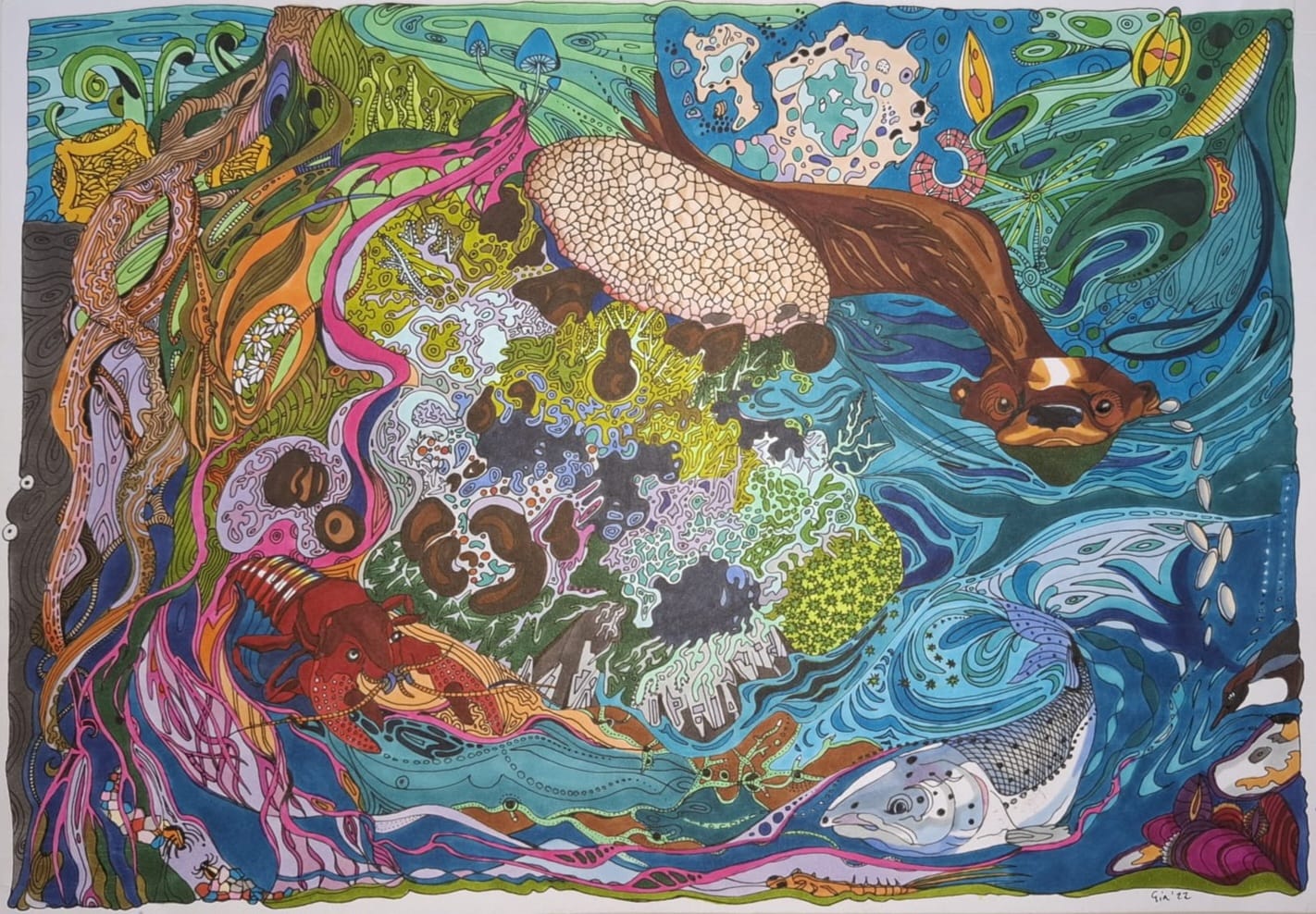
    The Fluminscent River, pen and ink by Ginny Battson

    River LiFE in-sees, and it is symial. Look again at gold to read how bacteria and river sediments commune. Or just feel the diatom-slip, your bare feet on silica-films under the water, films coating the bed of a healthy river. 

    Diatoms— I love them—despite their smell turning my stomach. They are spectacular bionts, kwelical frustule forms of silica life. They only last a few days, yet they are just a little older than Homo as a family; a living array of opal-quartz jewels, minute glassy beings in a plethora of single-cell shapes around a nucleus, asexually reproducing every damn day. They eat the sun (photosynthetic beings converting energy to sugars)—and busily account for 40% of the oceans’ primary productivity. And they are busy fixing atmospheric nitrogen too—the kind of nitrogen that a lightning strike generates out of thin air. And they have a urea cycle like animals not plants! They are abundant in all water and watery places, but they love brightness, as do I. Some diatoms have become dinotoms, temporary or more permanent endosymbionts within other little beings called flagellates. They are so new to this symbiosis that they have retained their vital genetic character, although their silica skeleton has been gifted to their holobionts.

    Continents constantly weather, silica falling through LiFE expressed in bones, connective tissue, in cascades of forms washed through deltas and estuaries, flushing off—or shaken off—continental shelves, and into the pelagic deeps to form a siliceous ooze. Trillions of diatom skeletons form layers of diatomaceous earth (we use it for cat litter and toothpaste), pressurised again to form diatomite, quartz and shimmering opal, ready to be sub-ducted into magma and ejected back up to form new volcanic continental crust. All is connected. What is time? Ha! Silica-rich igneous rocks become the mountains once more, via orogenesis and its vast, slow collision of continents. Exposed to the night stars after millions of years in hiding, silica is raw again to the elements, and down comes the snow and the rain…we walk upon moments, swim amongst fractions. Silica is the second most abundant element in Earth’s crust after oxygen, and cyclically bio-essential. We would not be here if it were not for the rivers that carry it.

    ~~~

    If ever there were more a complex and dynamic system to present before a one-brain judge, or even an AI system of some future AI-driven court room design, it would be River. Offer rivers new and relevant names, even deities made of silica. Personify and perceive ancestral spirit. Relay stories, as we have, always. But in an adversarial human court of law—rivers, river life, river halos of water and life, aquifers, mountains, forests, species, farmed animals, humans, parasites, bacteria…viruses…the silica-carbon geochemical cycle, geology, magnetism, gravity, the Sun, the Moon, relatedness, process, love: nature? Right against Right, where do we find room for all the lawyers? Who dares to separate again, and then speak on behalf of the separated? Courts are human constructs. Do we really need more of those battle lines? Anthropocene could do with its own kind of weathering, eventually to be sub-ducted under more meaningful crusts, melted into magma.

    There will be always be problems and resolutions, flow and resistance, between multiple forces of nature. They are natural. Please don’t get me wrong. Between humans, Rights are a legitimate route to criminal justice from a place of severe injustice—sometimes the only route. That is, at least until extreme individualism, hierarchies, and pathocracies are slung into the distant past, and Ethics of Care become the norm. Humans are able to express their own pasts, but also the present and futures. At the same time, they can find commonality among diversity, given the will. Empathy for quieter, stymied voices should mean amplification, and we can take care to really listen, especially in defining and preventing pain and suffering. 

    All clans require rules, and criminality is real (diatoms help to forensically track it). But criminality is so often charged by cycles of unnecessary trauma, especially in early childhood. The current inequitable fugue of detachment, fuelling such trauma and planetary destruction helps no-one in the end. Even so, Universal Rights—concrete Rights descended on all like ash from the fires of the powerful—cannot surely articulate uniqueness of relatedness and experience. This is where my deep sense of soul finds justice, in the minutiae/grandeur of relatedness, the silica-enriched connective tissue, and why Ethics of Care (Gilligan) rings so true for me. They mean diverse sensitive responses to diverse experiences of diverse beings and kinships (nurture or nature). They mean circles, not polar opposites.

    This means case by case

    This means panels of advisors, thoughtful and considerate of childhoods, relationships, places and times; yet guilt, nor rehabilitating forms of punishment, are not forgotten.

    Perhaps a less arguable legal declaration is one that ensures all humans have access to those Ethics of Care, learning and sharing the real wisdom of relationship, living place, and safe place in an ever moving world. Call them Ethights. Roundtable Ethights. We don’t need adversarial systems. Even against increasing forces of destruction, I ask we be less aggressive about our responses. We don’t need the culture of testosterone fuelled warring terms like “battle,” or a “fight” in court, or even the assertion of enforcement before the utterance of kinship, mentorship, and responsibility. Look instead to the symbiotic ways of nature, and the silica cycle, of which we are all part – those ethights.  

    It won’t be easy. Nothing good comes easy, not even love. But in this way, like the removal of river-damming concrete (also silica-derived), conflict tends to give way to connection. Read the sedimentary varves, the layers upon layers in the swirls of a beautiful river pebble, to glimpse seasonal pasts and otherwise volatile futures. Look at the bone beds of catastrophe, or slick anoxic mudstones made under pressure, black without bioturbation, without LiFE. I think we can do better. 

    ETHIGHTS ~ eeth-ites, or ˈiːθaɪt (IPA transcription) ~ legal declarations that ensure access to Ethics of Care (Gilligan) as a route to justice from human actions, for both organic and inorganic causes.

    ~~~

  • Kwelics of place, including bodies.

    Kwelics of place, including bodies.

    Sheep bone, photo by me

    Extract of Rivering, Fluminism as Literature (PhD).

    Like sedimentary rock traps bodies to become fossils, bodies of water contain the nucleotides of all who live within, or have recently lived. Same with air. They recount a story of genetic diversity or its demise. We just need the right tools to find them, unless we are so tiny that we do not need tools. Imagine the world of the tiny!

    ~~~

    In life, organic bodies move in balance with microbial symbionts, not least expressed in the mammalian gut brain axis, reproduction, and systems of immunity. That is until the pathogens overcome, or death comes by any other means and all is subsumed. Those same bacteria that supplied us with our happy thoughts now overwhelm our spectacular mass of structured carbon. But they are still helping us, regardless, like all our crucial scavengers and detrivores—including a writhing mass of blowfly larvae—to mix down into the ground. And from there, critically, they aid us to reassemble at the confluences with new, exciting life forms. The laws of thermal dynamics apply to these flows, and heat is released (imagine all that resistance), and, yes, smell. But death begets life.

    Like rivers, animate life embodies moving places, and vice versa—everything moves and is moved—though it remains a question of endurance under geo-thermal and atmospheric forces, as to when the moving processes of decay will begin, and how much resistance to that decay there will be. Once more, opportunities for diversity are bountiful.

    ~~~

    In perfect flow with the floloca, stable isotopes of the distinct recipe of the Stowe water oozes from the hill. They are probably still traceable in those ol’bones of the Brights, laid feet to the east, the last forms of a human body to decompose. In hardwood coffins buried deep in the 19th century, and at this latitude and altitude, they are, most likely, still clinging on to the peacefulness of St Michael’s. And they could still tell us a story or two. As forensic anthropologist, Sue Black, writes

    “As water percolates through various geological formations, it will take up isotope ratios of elements specific to that location and when we ingest it, its signature will be transferred into the chemical make-up of all our tissues.” p39

    These are our watermarks, long after death.

    “So we could, in theory, look at the remains of an individual and, from the isotopic signature in the otic capsule and first molar, discover where in the world their mother was living when she was pregnant with them and the nature of her diet. We could then analyse the remainder of the adult teeth to establish where the deceased person had grown up, and then the rest of their bones to determine where they had lived for the past fifteen years or so. Finally, we could use their hair and nails to locate where they spent the last years or months of their life.”

    The same it is for all life, regardless of variations in genetic make-up.

    Watermarks.

    ~~~

    Fluminists and crime writers find forensics fascinating. We care in the superlative detail and the tools that solve puzzles and seek justice. We observe, photograph, collect, sort. We imagine, philosophise, assemble, sketch. To test, to annotate, to review. And then we share the signs and the traces that we find in the flows, and we tell the stories of the dead ancestors and the extirpated, bringing their aliveness to us again, proven in the small things.

    We acknowledge that life, and also death, always leave their marks, whether our human sensibilities are able to perceive them or not. Our cultures, inheritance, status and styles can be read by scalpel and litmus. So, too, our fears and early traumas, given away by our scars and our deepest secrets. Identities matter, and the unions matter (think DNA), and places really do matter. But also the bullets, the knives, the overdoses, the radiation, drugs, pesticides, carcinogens, plastic toxicities, the abuses and greed, and the chemistries and the violences of the Anthropocene. There is a bright forensic light able to be shone upon our human failings, to illuminate the wanton release of poison into the flow.

    Extraction to waste. Dominance and hegemony. Of soil, water, air, life, even rock. How vulnerable have we made life be? Diatoms in lungs, pollen under nails, heavy metals (lead, mercury, gold), and isotopes swapped in and out of place, tattoos through each other, and of place, and of the many confluences between all living beings and all things; evidence, proof, yes, but they are also memoirs. Lives are honoured by the seeking of truth to their ends. Minerals, food, and water are embodied from the ground in which they emerge, like records of the journey. So it is in the trace of all living things, and the rocks and rivers, the great migrations and colliding continents. To the end of time. We are space dust, even in the gold nanoparticles from rivers we accidentally ingest to metabolise in our livers and spleens.

    The word forensics is rooted in latin for forums, open arenas within Roman cities that hosted all kinds of civic events drawing a crowd. Criminal trials tended to attract more interest than civil disputes, as they do to this day, and the more infamous the individuals involved (like Caraticus), the louder the rabble. Presentation of both crime and evidence, and sometimes baseless character assassinations, were brought by advocates who argued for the few privileged citizens permitted to have their cases heard before magistrates or consuls. These courts would pop up with temporary wooden benches (the seats of the adjudicators) between market day, say, and official games. The system gradually grew more formal, and upon the destruction of the Republic, all-powerful Emperor Augustus himself became judge, juror, and vicarious executioner in cases that suited. What better way to be rid of your enemies, or follow the growing grievances of your political foe to ward off insurrection.


    So forgive me if I set all the politics aside for a moment. I’ve created another word to describe these fundamental traces of exchange within the nagorasphere, crime or no, and will leave the honourable science of forensics to criminology and the courts.

    ~~~

    “Culture” descends to us from the Indo-European root *kwel-, which essentially means to “turn, revolve, move round” but also (or by way of extension) “sojourn, dwell.” A secondary connotation of the root is “far”, that it is about some sort of turning in space and time. The original sense speaks to a turning of seasons, of cyclical planting and cultivating, which log ically dictates where and how communities come together and live.” Jason Renshaw (2021)

    ~
    Kwel ~ PIE for “turn, revolve, move around.” To dwell for a while, to spin in and out, like a wheel.
    with suffix ic/s, as in forensic/s “like” or “of”, and more definitive than “ous”.
    ~


    Both forensics and kwelics (kwɛlɪks IPA transcription), in a strong sense, seek justice. Widespread awareness of our watermarks, and more, may plunge us deeper into the nature of nature, its signals, alerts, language, and art. We may better understand the consequences of our interactions—our confluences— on Earth, even from Space. And we may seek to find peace in them, and plenty more life; an extraordinary loving thing to do. This is our entropic lottery of new becoming, kwelical cycles of the entire nagorasphere, with potential all the way to the end of time. I don’t know about you, but I find this comforting.

    ~~~~

  • A sore reminder of the function and impact of words: Alternatives to “economy”.

    Painted stones as symbols of animals, humans, and feathers by Gracie and Ginny Battson.

    Physics informs us that relativity exists between everything in the universe. Flows of information travel in all possible directions by wave and particle, force and probability. So it is the same for LiFE on Earth. Biology informs us that LiFE is alive with flows of information within and between cells, and between beings, using a plethora of processes. It happens between generations.

    At continua of scales of magnitude and frequency, language, generated as bundles of recognisable, absorbable energy, moves back and forth between humans through multimedia and space-time. Our epoch-making physiology of speech and sign, sight, sound, and touch (for example, Braille), is transmitted between biological senses and brains, and we have adopted all kinds of technologies to enhance and collate. There may be exquisite nature-close forms of language that have been lost to the vast entropy of the universe. If we stop to think about it, these systems, in their vast total forms, are awe-inspiring and beautiful.

    No matter the transmission device–biological, physical, chemical, technological, or a combination of either or all–we come to absorb and understand words in repetitive patterns and as sensory shortcuts to meaning. And we can do this from a relatively young age if given the chance. But, as in evolution itself, language mutates, evolves, and semantically shifts at many levels between the myriad of organisational groupings and moments of usage.

    In meaning, we absorb, process, and act – cause/effect/repeat. We fuse our memories and emotions with language in positive and negative ways, and we shrink, reject, or propel different values expressed through ethics that we apply from this kind of embodiment. We are beings of bias, searching for patterns for survival whether or not they are before us. Sometimes we resort to making them up. And language-as-pattern can either satiate this evolved urge and settle our anxieties, or motivate and catalyse change towards new goals. Words can be acts of persuasion and confusion, and sometimes the perpetuation of misinterpretation can even help individuals or groups to achieve certain goals.

    All things are relative, and the human species has an almost unlimited potential for linguistic, cultural, mental, and physiological differences. Diversity, like LiFE, is good; covers all the bases in a dynamic world but even changes in mood may impact perception, as may microbiomes affecting the gut-brain axis, or the specific place or trajectory we find ourselves within (or without) the biosphere–high in the mountains, down deep in a cave, on the ISS. Again, as a social species, who we are with matters, and across language barriers, and via our antennae-like constructions of space-time– (more often than not) to human scale.

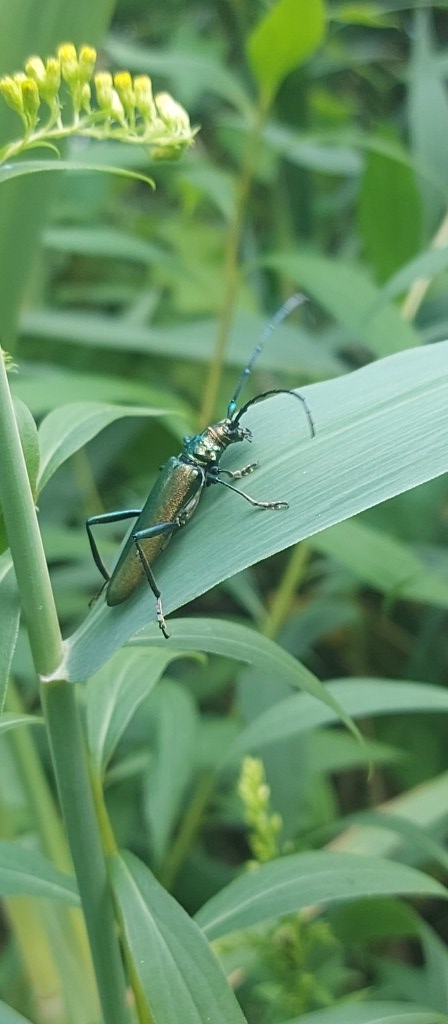
    Wittgenstein says you and I together may perceive a “beetle-in-a-box” placed before us slightly differently. We may both take for granted a mutual familiarity and imagine that the experience is exactly the same for each of us. But that might be false. Our uniqueness of embodiment, or consciousness, may interfere with the communication of the exact inner experience. How do you perceive the “idea” of an organic, complex living being if I say to you that they are “trapped” in this geometric block of space-time? “Trapped” to kill, or rescue and release? What else is going on in your imagination? What is the box made of? Could it be toxic? Try articulating both what you simply observe and what you feel, through words. Would there be any knock-on effects of any difference in articulating our perceptions? How do we now feel about each other? Should we try to shift our view to match each other, to lie, or is that wrong? Would a difference magnify as the story is passed onwards?

    Interpret or change the meaning of particular words in any significant way, and as a social species with a strong evolved tendency for evaluating, if more people begin to imagine one thing over another, we are more susceptible to follow. Are “beetles” good or bad? For whom, what? There is power in the amplification and there are consequences. Cultural expression is influential and encourages feedback loops and paradigm shifts, and social guides or regulatory political policies emerge with their own set of consequences.

    Economy, zoenem, ilesariany.

    I have been making a purely unscientific note of the frequency of the use of the words “economy” and “economics” on BBC News. I’m sure language AIs could provide a more accurate representation of the data, but the sum of the everyday use of “the economy” seems gargantuan, with a gravity generated almost as big as a Black Hole. The audience is bound to be effected/affected. The words, as a packet of information, are passed between a certain narrow set of people and mass audiences and are therefore highly influential in society. The same goes for “Economics” although seemingly in the context of experts discussing “it.” I noticed “it” is almost always described as “THE Economy”, with a definite article defining it as one particular thing, as if there is no other kind. The journalists and editors refer to “it” and barely question what kind of economy “it” is. “It” is objectified as if it is an unstoppable growth machine shapen intermittently by the chaos of external forces. A hierarchy of values is taken for granted. There is no mention of how this hierarchy is organised (with the exception of GDP and capital growth or recession), and how a different order may direct action by way of conscious change.

    Over human history, there have been many different systems of production and exchange. British journalists don’t see it as their job to set “the economy” or “the UK economy” in the context of this very rich history, nor refer to “it” as any kind of choice, especially now as Conservatives and Labour are so similar in outlook. The BBC itself justifies its own existence by its role in growth rates.

    “The principles relating to the BBC’s political impartiality and independence from political influence are central to our coverage of politics and public policy.”

    That is until it comes to economic policy.

    They make comparisons with “the” economies of other nation-states–mainly the US & China– and, of course, “the global” economy. In that sense, we are perpetually reminded that we are running at maximum VO2 in a global competitive race, with status reports issued each year issued from the World Economic Forum. It’s exhausting and, in terms of embodiment, traumatic for too many, human and teresapien alike. The critical distraction of survival within this elitist constructed process means very few are able to even think about it, let alone feel enabled to change it.*

    Formal definitions of the word “economy” vary, but we may say it is generally the rationalisation of anthropocentric efficiency of resources, goods, services, and labour. Its etymology seems (anthropocentrically) clear, stemming mainly from the Greek oikonomia meaning household management, or thrift. The modern political sense of the word, in English, has seemingly developed only in the last three or four centuries and corresponds with (brutal) Colonialism and, more recently, its ignominious legacy of corporate Globalism (call it neoliberalism).

    An economy is now more of a political value system of exchange with variable parameters that are designed by an elite– some may say more of an art. At a macro scale, there’s an obvious time lag between cause and effect. I remember my sixth-form economics class one Autumn, and how we were very excited–and then quickly horrified–by a new computer macro-economic modelling system. We could play with inputting new data to the variables, and in multiple combinations, and could almost immediately see the predicted consequences for a hypothetical human population, which were usually devastating. Stop-Go! It struck me then how narrow those choices were because they were based on a narrow set of values leading to “growth of GDP”.

    There have been many systems with many variables and different goals in human history, generally broken down into taxa (as per huma-usual), such as traditional**, command, centrally planned, market, and mixed. Britain’s 19th-century laissez-faire fuelled Empire caused an inordinate amount of suffering within our national boundaries and beyond, and the social kickback can be broadly traced to that suffering – disease outbreaks, mass-fatalities in expanding industries, oppression – leading rebellions, uprisings, strikes, independence movements, and new labour laws, and then in the post-war periods of the 20thC Britain the introduction of a Welfare State and the NHS. Those very safety nets, even within a capitalist system, are now under significant attack by the extreme free marketeers in power, as are the small strides made in the protection of nature, including our atmosphere (the correlation is clear).

    In my usual way, I am looking for moments in the cycles of cause/effect to highlight or tweak them in the hope of spurring more thought towards real care for Life as our central ethic. As we are human, and we use language, and I have learned the power of words as small acts to effect big acts, I see the overall repetitive use of the words “the economy” as a negative feedback loop. This is because, I suggest, their centrifugal mass of meaning has changed, in the context of GDP and capital growth, plus inequitable distribution, at the expense of vast numbers of vulnerable people and our interconnected biosphere. And I now think the words are beyond retrieval in our market-saturated culture. “The economy’ as equivalent to neoliberal growth is, of course, simply a hypothesis and remains unproven. Again, I would love someone to test it. But I think it is such an important problem that it’s worth forging alternative offerings now: words that may just shift the centrifugal mass of meaning towards wellbeing and the cycles of LiFE as central to developing new systems of production and distribution, and indisputably built into their etymology.


    Meanwhile, please see the latest news on planetary boundaries and tipping points (hint: not good).

    *See Steady State and how it fundamentally challenges the growth paradigm which is so abysmally taken for granted as a “successful” strategy.

    **A fascinating array of systems, generally closer to nature, by way of immense cultural diversity across human history.

  • Symbiowen

    Symbiowen

    Image: labwork, petridish, green microbial jelly.
    Symbio wen

    Wen ~ PIE root for wound.

    The deliberate harm of life-giving symbiotic processes.

    To knowingly block, engineer, or interfere with these processes in any life-negative way.

    Once it is done, harmful consequences may be partially or fully unknowable.

    To commit symbiowen is to risk much, though may be justified, arguably, as an ethic of care in certain special and unique circumstances intended to sustain life.

    ~~~

  • Mocktree

    Staring at the mycelium-split quarry face, I see you, rosy woodlouse, gliding across the Mocktree lime. Lightning streaks across the ridge above the wild ash giants, phasing all, and we wait stock-still, just for a moment, drenched in white light. Blinded by the crystal mural on the old, hot, sea bed like a rainbow, rain plunges around our antennae in a wet bomb. So we hide in the fault lines of this shot-blasted corner hewn by labouring men buried in the village churchyard. Ancient Silurian reef sands once storm-washed into our bumping fissure from the closing Iapetus 430 million years behind us, and again just like us. And in the quiet, in the darkness, we can taste primordial life a billion years old, touch the symbiotic mother-daughter cells, and feel the broken trilobites, our very own ancestors, calcified into stone-memory as perfection of extinction. 
          We smell the water honing vertically, as if we are magnetised to rods, to form our own unique streak along the deepest roots of those toppling giants, roots now lashing about and down to hold on to life itself. The streak - pulled, cool glass - we spill over the edge, the Wenlockian roseate coral edge, and we flow flush with all the genes into the sump where farm and road junk was dragged out a few years back. Dainty oxalis now grow out of the bog beside a rising pool - is where the black Norman fallow come to drink; see all their hoof prints and ticks, and where the overspill leaks through the old kiln walls and across an A4113 slope that freezes rough in winter. Waves of flat sheets, we creep through roadkill pheasants, squeeze through rubber tyre treads, until we soak the road-salt into a sheep valley above the Saxon ghost kings of Kinton. Magnets once more, we attract the bound-water into a now-nameless brook, and gush through a concrete culvert built cut-cost by volume house builders. 
          Life-water! It is devotion, this risk we take. Flow on to the Teme, the Severn, the Severn Sea, to the Irish and away to the Atlantic, to those big volatile skies rushing back to Mocktree.


    ~~~
    
    A short passage from "Rivering," a work in progress, photos by me.
  • Symbioethics – Publication!

    I’m very happy to inform readers that a Chapter introducing my neologism symbioethics has been published in a new anthology by Tirant lo Blanch, Valencia, Spain. I begin by setting the word within the general canon of environmental ethics or ecophilosophy, and then I call for more research into areas of symbiosis and symphysica as a form of welldoing for wellbeing.

    I hope to open up hearts and minds to the basic, natural “symial” and fluministic processes that sustain life in abundance and diversity, and I ask all to apply this understanding in areas including, but also beyond, conservation, not least in language and art, other cultural forms of communication, but also spanning education to peace studies, architecture to space exploration, artificial intelligence to issues of planetary “One Health”, genetics, and more.

    The work sits with an international and trans-disciplinary group of highly esteemed researchers and writers from the world of Ecological Humanities, Social Sciences, Economics, and Cultural Studies, with an editorial emphasis on togetherness, anti-anthropocentrism, equity, and eco-socialism. So I am seriously honoured to have been invited to participate! I offer my sincere thanks to the publishers, editors, and fellow contributors for this wonderfully positive, thought-provoking collaboration. The biosphere is desperate for more positive action!

    Last but not least, many thanks and abundant love to my daughter Gracie who, having just turned 18, translated a difficult piece during a complicated time last year (just after my breast cancer diagnosis and treatment), under the watchful guidance of the great and compassionate Dr Jorge Riechmann, whose own marvellous book Simbioética was also published last year. I also recommend this book wholeheartedly, and I am extremely grateful to him for his support. 

    “Humanidades ecológicas – hacia un humanismo biosférico” is edited by José Albelda, Fernando Arribas-Herguedas, and Carmen Madorrán, and is available to buy now, including a digital version, via the website, or may be ordered through any good and independent bookshop. 

    ~~~