Author: Ginny Battson

  • Mental wellbeing, capitalism and fluminism. Notes.

    1. 27754913103_40a3c5cfe1_b.jpg
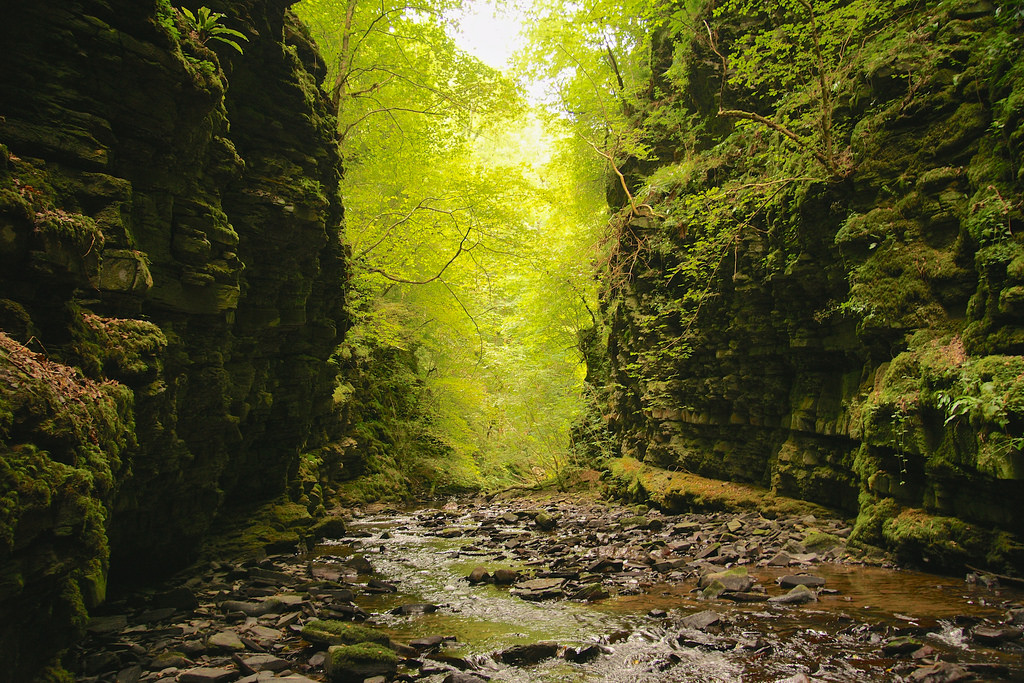
      Photo by me

      On social media, I read of a woman who recently experienced rejection from mental health services during a crisis of severe distress and suicidal thoughts. Seemingly, nurses judged she had been ill for so long and survived that she has developed coping mechanisms so did not need further support. How devastating must that have been for her. I know something of the absolute fear and isolation suffered during times of severe distress and suicidal thoughts. My heart goes out to her.

      What kind of society perpetuates this kind of distress? A society where so many are driven to desperation, then have no-one to turn to. Humans are biologically social beings, yet our social foundations have been shaken to the core. Communities, families and institutional service providers have been hammered by the pressures of a failing economic system ~ Neoliberal Capitalism.

      Competition or co-operation? Increasingly, evidence points towards the latter as dominant in human evolution, nay, many interconnected living species. The political Right would have you think otherwise. And a globalised machine based on competition rides roughshod over mental wellbeing. So many aspects to life are bleached-out by pressures to accumulate wealth and property (capital). Poverty, trauma, money stress, expectation to produce and buy…. tensions manifest directly upon loving and supporting relationships, right across the globe.

      Mental wellbeing is complex. Humans are biologically responding to internal and external stimuli. But the externals are largely ignored in our systems of care. Individuals who suffer from the fall-out of a broken system are, instead, expected to take full responsibility for their state. Meanwhile, the machine rolls on and GDP growth remains a deeply mistaken priority.

      The accumulators persist in power. Competition is perpetuated by our education system. Commodification seeps into so many aspects of modern life. Even the monetisation of nature is being forced at a pace, adopted by advocates of a growth-oriented market system dominated by corporate interests. Nothing seems safe. Nothing sacrosanct.

      People who advocate capitalisation and market force as salvation are either blind or callous to what this is doing to us all on a leviathan scale. Lives are worn down and snuffed out by competitive examinations, interviews, PIPS, job markets, mortgage payments, rents, bills, the weekly shop. It’s a machine.

      This is not what life could be. We don’t have to accept it.

      I will not accept all-out competition is the god-given ‘natural state’ of human existence.

      All is interconnected. All is flow. We can choose to be co-operative and compassionate. We can perpetuate and proliferate positive interconnections between all living beings. I call this fluminism. Love is life. Life is love.

      But the system is rigged and has been for a very long time. It is a form of entrapment. Baby-boomers, sitting pretty on their increased assets, have forgotten a deep sense of community responsibility. They are content with their pensions, when so many born since will have none. Their votes for low taxes keep centre right and rightwing politics in power, particularly in England, where the majority of elected MPs are seated in power.
      Trauma is now shown to ripple through generations via epigenetic changes in DNA. Positivity can help to reverse these affects, but life sometimes does not work out that way. Prejudice burns through a rich fabric of life. Some people never escape the proverty trap, a long, slow traumatic experience for many, and through no fault of their own. More are falling head-first into it. How hard it is to be single and afford such huge living costs.We can perceive and measure a wide array of symptoms of a broken society worsening ~ mental distress being just one, but critical. For the greater population, and down through generations, there will be a long process of recovery, even if all our socio-political systems changed overnight. It’s salutary.
      Positive relationships are so vital to wellbeing. Yet just how many are screwed by impacts of societal stress including lack of money, loss of money and debt.

      Mad? This makes me mad. It can be different. We are so on the wrong track in the way we live our lives together. I can’t tell you how much I want this to change. Vanessa Spedding  calls this a “yearning”. This is my truth. It is a deep, unequivocal yearning for society based instead on care and compassion.

      And yet, apparently, it is me who expects too much. My hopes for love and happiness fall flat. How terribly un-pragmatic am I, dreamily romantic, to want a better life for everyone, including myself, and not just a select few. To want true equality. How “blue sky’ to want a society cleared of such false constructs, to leave room for deep love and care, for one another and for all other life.

      Let me say this in reply. Pragmatic is now RADICAL change. Every day, I read the science on the state of this amazing planet upon which we depend. The Transilience Gap is huge. Cost? There is your cost.

      I cannot repeat it enough. Positive relationships are quintessentially foundational to our wellbeing. But how many continue to be screwed by the relentless instabilities, insecurities and unpredictabilities of an economic system based on material aspiration, accumulation of money and debt.

      @acathbrn Anna Biren says:

      “This is so true. Being forced to work for the majority of the day and coming home drained and exhausted also contributes to not being able to maintain relationships. So as we grow older, the more we work, the more alienated and lonely we become.”

             And alienation and loneliness is a killer. We can do better. We can be fluminists.

             ~~~~~~~~~~~~~~~

    ~~~~~~~~~~~~~~~~

  • Introducing Spring Theory.

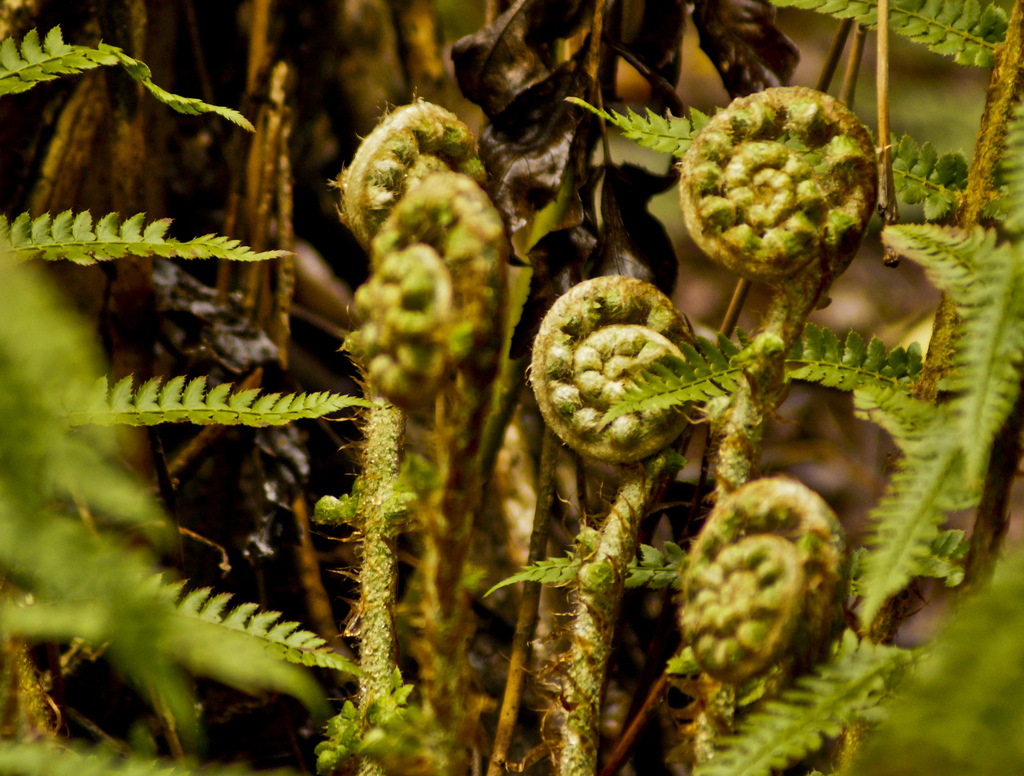
    7128901907_e7e66fdb93_bPhoto by me.

    A few words on words.

    Two particular yet simple words, love and ecology, are my inspiration in the creation of my own neologisms ~ fluminism, and then sanguimund and praximund, the latter two as constituent parts of the former.

    As to the title of my thesis ~ Love and ecology; an integrative force for good and as resistance to the commodification of nature and planetary harm ~ love and ecology, as lexicons combined, are complementary, in that one word is a positive emotion and the other a rational science. Like life itself, it is the combination of affect and rationale which our brains assimilate as moral constructs and in the choices we make every day. Love is multi-faceted. But in terms of axiology, love is largely incommensurable with commodification and, therefore, I propose love serves to resist the debasing of nature by market force.

    As part of my research into the meaning of these words, I have been trying to unravel the philosophy of language. It has been illuminating, despite academia tying itself in exquisite little knots over the last one hundred years. What are words in relation to reality, experience, meaning or truth? How does a word (or two), become an action? Wittgenstein and Searle said human experience and language are structurally linked. Words are integrally part of experience. Searle once quoted early French philosopher, La Rochefoucauld, famed for his acidic aphorisms:

    ‘There are some people who would never have fallen in love, if they had not heard there was such a thing.’

    I’m not so convinced. If one is blind and mute, does love never come? Culture does influence experience, there’s no doubt, and language is also a part of culture. Like all, love and meaning are both ‘nature and nurture,‘ with no separation.

    I do not think language alone, between any living species, makes this world. Rather, all forms are of the same world. It is innately ‘being’. As a form of life, language is not something separate (Wittgenstein). I do not see language as transparent either, as Russell suggested. We are not transparent because of our ability to communicate in words, far from it! There will always be hidden depths where unique identities and consciousness are concerned and there is beauty in this complexity.

    In Wittgenstein’s later work, then Austin and Searle, a distinction between meaning and intention via utterances began to emerge as a focus. Objectifying, naming, categorising, taxonomising; these are functional to us, how we humans interpret life, or as Searle put it, the systems of representation we bring to bear upon things. Words are neural concepts, but they do not singularly define language. Once formed, there is a kind of closure of an openness, as Hilary Lawson asserts in response to Rorty and Derrida’s works on relativism, in that they crystalise into a headline, or as he describes… ‘language closing the world into things.’ Lawson’s video art movement demonstrates the openness side, which I interpret (ironically), as a state of inquiry without resolution. Words may only attempt closure in collective meaning, by officiates of companies that publish dictionaries or taxonomists working on genetic data sets. Words, like species themselves, have a certain porosity about them, in nuance and imperfection of full meaning, again a beautiful thing in itself.

    Yes, by grouping words together, we can be more or less certain about clarity of meaning, and all is related to intent and consequence, even the obsurd. A poem may be deliberately open. But a key to a map must indicate, at least, some closure on what the words mean. They may also seem closed in our own unique minds and verbal expressions.

    If I write or say the word, “table,” and you read or hear me, you’ll probably envision your own idea of what a table is. My idea of a table will be transformed by your own memories and experiences. It may create a feeling. I can’t help but feel (feel, being key), that feelings and emotions have been set aside in the analytics of language. My grandmother’s table had a certain smell, of bees wax and lino and the word table makes me think of toast for breakfast in her kitchen. Your idea of table might make you feel very different. The word, “dog” may mean pure, unconditional love to me. But to others, it may instill fear.

    In certain psychologies, this is referred as word fusion. Sometimes these feelings are invalid in relevance to our states of being in the present. They can be distressing or deceiving. But by understanding the brain is plastic and neural connections can be either thickened or thinned, behavioural therapies, such as action and commitment or cognitive behaviour can help shift either the meaning of words or the feelings that arise from them.

    Each person, therefore, holds language both uniquely and in common; a dialectic. The same word swapped into the mouths of others transforms. It is a kind of flow of underlying meanings and feelings. I cannot agree with Lawson, therefore, that words are closure. Words are, instead, like magnets, attracting, repelling, fusing and defusing emotions from each person and their life trajectory. There is evolution, and over time, the culture and meaning of a word can inherently change beyond recognition. Language is a living thing and connects us, like mycelium networks in the woodland floor, in multiple, dynamic patterns. We can approach language as fluminists.

    Making the interconnections is what is most meaningful. Language is connectivity, relationship, whether it be verbal, body movement, chemical or electrical. When it is for good, not bad, then it may then be argued as a flow of love. In unison with my ethic, fluminism, I perceive language, like music, as flow. It is a living thing (the dead neither speak nor read).

    Art and artistic expression, musical pauses, or the hidden meanings beneath the subsurface of poetry can keep to the idea of openness (Lawson) or mystery. But I think, with affect, all is never completely closed.

    Together, the words love and ecology create something compelling, larger than the sum of each word. It goes to the root of what I understand. In creating neologisms, the potential is even greater. They are like linguistic finger posts, in that they convey hope in the focusing of minds to a new or previously overlooked idea. I create the word fluminism from my own deep understanding of love and ecology as interconnected life flow, but I pass it on to others and hope for boundless contributions to intent, meaning and consequences.

    Neologisms are not only ‘speech acts’ in declarations, but also loaded in potential, like compression springs. A word is formed, deliberated, received, whereupon as the ‘other’ is attracted and jumps on it, meaning springs forth in different directions each time, or by chance, the same. Different interpretations are ‘felt’ (affected), because each have lived different lives. Before long, we are realised (Weir) within our own understanding, and living as fluminists by simply ‘being,’ as in the existence of the universe. I would like to call this ‘Spring Theory’.

    Heaven knows there are enough theories. But in physics, string theory is where pointlike particles are replaced by one-dimensional objects called strings. It describes these strings propagating through space-time, interacting with each other. Flow.

    Fluminism is the flow in all dimensions and directions, as it protects and/or proliferates life (the love of life). As such, language will even spring across species divides and, as long as there is life, the possibilities are endless.

    ~~~~~~~~~~


  • Folk Memory

    Folk memory is the mystery of human-nature time, a connection to ancestral imagination forged directly in the natural world. Even the unnatural and odd root us in something evermore powerful than ourselves ~ as powerful as evolution itself. All is possible.

    With mischievous ribbons, folk memory weaves, with words and mind-pictures, the ghosts of all the life that has ever existed. Folk memory is a collective and no-one is excluded, not even the cynical. Tales flow from mind to mind through space and time. Like the ancient soils, they pull us deep into our origins and lead us to the windy paths of the future. There will be more eyes and ears to absorb them along the way, transforming them through cultural eddies. They will be shape-shifted into memory.

    Old to young. Old to young. And so on. They are the “dreaming”.

    Folk memory is deep within us all, leaving impressions, like light trails in the darkness or shadows after light. And we tell and listen with the same mannerisms of the long dead. Feel this, try not to intellectualise.

    Folk memory is to be enjoyed. It’s fun. But remember its warnings, for there are many.

    The Heron, the Cat and the Bramble via the National Museum Wales. A story told by Lewis T Evans (1882-1975). I’d love you to read the English and listen to the Welsh…

    Now we are the young, listening to our old. Their memories are invaluable.

    27277226799_2508a4ec84_b

    Photo by me. Wye heron at dusk.

    ~~~~~~~~~~~~~

    ~~~~~~~~~~~~~~

  • An urgent appeal to the world's leading humanities scholars, organisations and institutions.

    IMG_3918.jpg
    Owl of Athena, ink drawing by Ginny Battson

     
    More than 15,000 scientists have signed a SECOND WARNING to humanity, that we must curtail the crippling damage we, as an interconnected species, are inflicting upon Planet Earth.
    I appeal to all humanities scholars, organisations and institutions. Please read this document, in full.

    World Scientists’ Warning to Humanity: A Second Notice

    It is time for leading humanities scholars, philosophers, ethicists, anthropologists, historians, archaeologists, geographers, writers, artists and musicians, et al, to collectively issue a similar and vital warning.
    We must unite across the board in human understanding, and with urgency.
    Action is needed NOW to curtail disasters of epic proportions over the next century and beyond.
    Thank you.
     
    Ginny Battson.
    Environmental Ethicist, Writer, Photographer and Mother.
     
    Me


  • An urgent appeal to the world’s leading humanities scholars, organisations and institutions.

    IMG_3918.jpg
    Owl of Athena, ink drawing by Ginny Battson


    More than 15,000 scientists have signed a SECOND WARNING to humanity, that we must curtail the crippling damage we, as an interconnected species, are inflicting upon Planet Earth.

    I appeal to all humanities scholars, organisations and institutions. Please read this document, in full.

    World Scientists’ Warning to Humanity: A Second Notice

    It is time for leading humanities scholars, philosophers, ethicists, anthropologists, historians, archaeologists, geographers, writers, artists and musicians, et al, to collectively issue a similar and vital warning.

    We must unite across the board in human understanding, and with urgency.

    Action is needed NOW to curtail disasters of epic proportions over the next century and beyond.

    Thank you.


    Ginny Battson.

    Environmental Ethicist, Writer, Photographer and Mother.


    Me


  • My Landlines Nomination

    I have chosen my favorite book, not by intellectual analysis, reputation, or any kind of prophetic philosophy, but by its visceral and healing effect/affect on me as a child.

    The Country Diary of an Edwardian Lady by Edith Holden.

    In Edith Holden, I found someone I felt knew me.

    “This book was given to me by my mother, whom I loved dearly. I was an 8 year old girl, fascinated by my wild kin. The words and drawings spoke to me of a deep love of nature. I poured over the intimacy, poetry and the gentle, powerful observations, from a period in time that already seemed lost. It sold many, many copies, a popular book. But in no way does this detract from its unique meaning to me. I treasured my 1st Edition.”

    51ZYNDEV5PL._SX372_BO1,204,203,200_.jpg

    ~~~~~~~~~


  • Xenotrauma ~ an appeal.

    220px-Razor_Wire_Bunch

    I have been following the plight of the Manus Island and Nauru Detainees. The belligerence of the rightwing Australian coalition government is shameful. Ministers appear to be defending a right to hold refugees seeking asylum by boat in unfathomable conditions, with exposure to abuse and exploitation. Evidence continues to unfold of neglect in the provision of basic welfare and consent of these individual human beings. It is, and has been, a callous exercise in ego and detachment. It won’t serve as a deterrent for those fleeing perilous places of conflict and scarcity, with little or no access to international news. Instead, it will deter anyone finding trust in this government ever again.

    Discriminating against those who are so desperate to escape conflict or persecution, to leave family, home and all that is familiar, to pay criminals for passage by overcrowded, dangerous boats, is a debasing of their intrinsic worth, their potential as flourishing individuals and as fair contributors to society and the biosphere. Inflicting further trauma upon them is a crime against humanity and utterly reprehensible.

    I offer xenotrauma as a word to describe this specific new and heinous form of human anguish inflicted by those prejudiced against foreigners, xenophobes who despise and fear desperate people fleeing desperate situations. Symptoms are similar to that usually framed as “PTSD”. Exhausted people, adults and children, already traumatised by arduous journeys, violence and threat, are forced into inadequate detention centres or dangerous living quarters, further deprived of food, water and medical attention, support from family, friends and legal representation. They are detained for unspecified lengths of time and symptoms become chronic and extremely difficult to treat.

    Xenotrauma is entirely avoidable and is a natural injustice. Denial of care and support amplifies distress, and chronic conditions may affect and scar for life. Repercussions will be ongoing through generations.

    Science and technology plagues us with big data fed into a reductionist utilitarian approach in solving ethical dilemmas at the expense of individual wellbeing. Data is spun by a biased media and used as a tool for spreading fear and resentment. Sentience of the individual is lost in a swell of political nationalism, racism and prejudicial ideologies fearing ‘faceless’ and ‘nameless’ data. Human life is complex ~ a rational and emotional matrix of biology, experience and relationships ~ and I assert Ethics of Care, (case by case), is a far better approach to solving such quandaries.

    Examine the latest predicted sea level and tidal changes and imagine just how many sentient individuals living in low income coastal communities and densely populated cities will be displaced by rising water levels. Parched interiors on top, and Two billion people on the move over the next few decades will create vast logistical, psychological and complex social problems. A  surge of anti-fluministic chaos and torment will be unleashed upon our already threatened non-human kin, their processes and interconnections. Pernicious and devastating tension and conflict over resources and territory lays in wait. But to deal with two billion individuals simply as a human tsunami to be repelled is a recipe for disaster. Each person will have a unique story and will need to be treated with respect and care. Forward planning is now an absolute requisite, yet so little is being done. COP23 Fiji/Bonn begins today and continues through to November 17th. Already, the Prime Minister of Fiji has flagged the growing need to care now and in future for those most vulnerable to climate change. I applaud him.

    If a nation and its geography are unable to meet the fundamental needs of its people, many citizens will choose to move internationally, either legally or illegally. Instead of impenetrable, defensive borders erected and defended by xenophobes, causing acute and chronic trauma and resentment, we need to manage a stable and consistent flow of migration, and compassionate resettlement of people between all nations that is truly sustainable for all life and the biosphere. We must avoid xenotrauma. The vast majority of Earth Crisis victims will be innocent of creating and emitting greenhouse gases, one of the main causes of Earth Crisis.

    Leaders feigning ignorance or denial will not be tolerated. We know this is coming. Approaches of receiving nations and places of refugia must be underpinned by empathy, compassion and altruism in order to ward off ripples of discontent and conflict on all sides and into the future. Collaborative thought and time needs to be given to this problem in preparedness, and we all need to start the process now.

    ~~~~~~~~~~~