
The River Wye, towards the Black Mountains. Ginny Battson © 2014
The River Wye, towards the Black Mountains. Ginny Battson © 2014
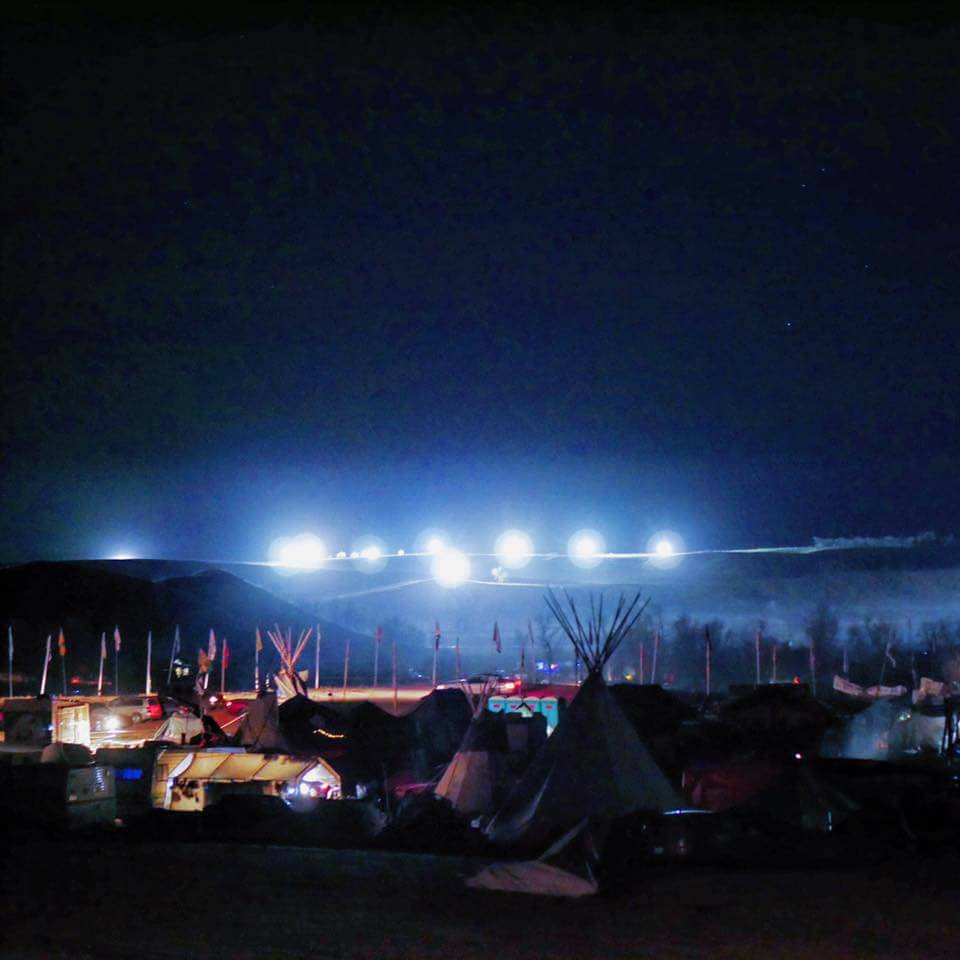
“DAPL is now flooding the camp with huge lights and flying drones, helicopters, planes, and even fighter jets over us.” Olowaan Plain 2016, Standing Rock Protests (+ credit photo)
“I see in the near future a crisis approaching that unnerves me and causes me to tremble for the safety of my country. . . . corporations have been enthroned and an era of corruption in high places will follow, and the money power of the country will endeavor to prolong its reign by working upon the prejudices of the people until all wealth is aggregated in a few hands and the Republic is destroyed.”
—U.S. President Abraham Lincoln, Nov. 21, 1864
(letter to Col. William F. Elkins)
Ref: The Lincoln Encyclopedia: The Spoken and Written Words of A. Lincoln
Arranged for Ready Reference, Archer H. Shaw (NY, NY: Macmillan, 1950)
(via Rick Crawford, Ratical.org )
~~~~~~~~~~~~~~~~~~~~~~~~~
Imponderable numbers of interconnections exist between all matter and lifeforms. Like a child, I try to visualise them. I imagine a kind of three dimensional fabric made from glowing yarns, bristling through all, across space and time. The light dims a little when small threads break between phenomena, fading entirely if there are deeper tears and cuts. But the light is ablaze when the fabric is alive with interconnectedness, and all is well with existence. We may not even realise, but we need this incandescence like a new-born baby needs fresh air. The same it is with love.
Imponderable numbers of interconnections exist between all matter and lifeforms. Like a child, I try to visualise them. I imagine a kind of three dimensional fabric made from glowing yarns, bristling through all, across space and time. The light dims a little when small threads break between phenomena, fading entirely if there are deeper tears and cuts. But the light is ablaze when the fabric is alive with interconnectedness, and all is well with existence. We may not even realise, but we need this incandescence like a new-born baby needs fresh air. The same it is with love.
‘Speciesism is morally wrong in the same way that racism and sexism is morally wrong.’ Do you agree with this claim?
Introduction
In answering the question, I will define the origins of racism, sexism and then speciesism, and then discuss the key difference of speciesism as I perceive it. It is vital that the reader understands that I do recognise differences between racism and sexism and acknowledge their importance, but for comparison with speciesism in this short essay, I will treat them as a unit.
I assert that speciesism is not exactly the same as racism and sexism in that a distinction of ‘needs in order to flourish’ has to be separated away from surplus ‘desires’ and ‘wants.’ (1) However, what is left is similarly wrong.
I will explore the idea of human-induced biodiversity loss and climate change manifest as a consequence of speciesism, and prolonged emissions post-COP21, as being speciesist. One example of a moral dilemma is in the treatment of alien invasive species, which I will explore briefly.
In a real sense, speciesism may be equally morally defunct as racism and sexism in many cases. Moreover, racism and sexism will also manifest as a consequence of speciesism in relation to biodiversity loss and climate change and, quite possibly, on an unprecedented scale, along with the loss and/or suffering of all other forms of life as we move forward in time.
Racism and sexism.
Racism (2) as a distinct word possibly from the French, ‘racisme,’ and after ‘racialism,’ developed during the twentieth century to describe prejudice, discrimination, or antagonism directed towards individuals and groups of ‘race’ based on the belief that one’s own is superior.
There is dispute as to whether the word ‘race’ has worth at all, since it was thought there was only one phenotype ~ Homo sapiens. New genetic evidence shows a phenotype admix with neanderthal (3)(4) and other genomic evidence found within, except for pure African heredity. The continental African genome is proposed as the purest of all, putting pay to any notion by white supremacists they are pure in genetic origin. Never-the-less, there is diversity in some eye, hair and skin-types and colours and other biological features, but these only constitute around 0.1% of our total genome.(5)
Racists (some might include early protagonists of Social Darwinism as precursor to eu- genics), will pick out certain human features and cultural characteristics and pronounce they are more or less superior than others. The causes of racism are varied, including clashes between values, cultures, social systems, jobs, and territorial disputes, varying language, modern ancestries, religions and customs, resulting in segregation, persecution and, to the extreme, slavery and genocidal acts such as the horrors of Nazi Eugenics and Holocaust, ethnic ‘cleansing’ during the Balkan Wars of the 1990s and the Genocide against the Tutsi, Rwanda, 1994.
Sexism may be described as prejudice and/or discrimination between humans in relation to gender, (6) and was first coined in 1965 by Pauline M. Leet (according to Shapiro) , a US academic and poet. US author and feminist, Caroline Bird, then wrote it into her speech entitled, ”On Being Born Female” published 1968, in Vital Speeches of the Day (p. 6).
“There is recognition abroad that we (US) are in many ways a sexist country. Sexism is judging people by their sex when sex doesn’t matter. Sexism is intended to rhyme with racism.”
Sexism, named or not, has occurred for millennia in various cultures and is still an ongoing struggle, as is the fight against racism. It manifests, as with many other ‘isms,’ in a range of oppressions, from the use of derogative terms, measures of physical and mental strength, through to unequal work opportunities and in extreme, violence such as domestic/sexual abuse, beatings and murders.
To protect the wellbeing of all subjected to the ills of oppression and abuse of both racism and sexism, there have been a number of interventions in Western Society, mostly legal. The long-standing fight for equality/women’s rights and suffrage, the civil rights movement, UN Declarations on Religious Tolerance, and the UK’s Animal Welfare Act 2006 are all examples of a response to ‘isms.’ (7) It may be argued, however, ‘responsibility ’ is a more enduring pathway to equity than asserting ‘rights’ based on laws being created and enforced by the select few (usually powerful and/or wealthy, over the many). Even though many would advocate due to a deep mistrust of the human condition, the judicial system, at the end of the day, is an expensive system and not equal to all.
Species and Speciesism
A species is frequently characterised as a group of individual living beings that actually (or potentially), interbreed. Science reveals, however, that individuals are more interconnected than once thought, and the boundaries between each more permeable. Examples include discoveries on the wood-wide web (8), three-way symbiosis in lichen (9) and microbial HMOs found in human breastmilk (10). When we refer to species, it must therefore be a loose term. Key, none-the-less, is that (11) (12) each living being, as a member of species, has a will to flourish , regardless of genetic make-up.
The word ‘speciesism’ was coined by Ryder in a pamphlet on animal experimentation for the Oxford Group in 1970 and reiterated in his essay “Experiments on Animals” 1971, arguing that speciesism is as illogical as racism. Singer took up the word and expanded on its meaning in his book ‘Animal Liberation’ 1975. He described it as,
‘prejudice or attitude of bias towards the interest of members of one’s own species and against those of members of other species.’ (13)
Others have referred to, on similar but not the same grounds, human chauvinism and superiority, all (14) being problematical. Evidence manifests in the enormous quantity of expressions and acts of speciesism (both violent and non-violent), carried out globally each day. Speciesism spurs numerous and wide-ranging practices, many taken for granted, including rearing and eating animals for food, animal experimentation, the fur and hide trade, fishing and hunting (15) (especially for sport), circuses, rodeos, zoos and even the pet business , pesticide use, timber and horticulture. I would add that working animals are also victims of speciesism, for war and crime related ‘use’ in extreme but also in their ‘use’ as a form of transport.
Non-human Life, Moral Standing and Personhood
A common moral sense of natural justice on behalf of non-human life has progressed much slower than that for either racism and sexism. Laws are, therefore, thinner on the ground and responsibili- ties (over and above any laws), fall a long way short of those for humans on a global scale. But the idea is growing, I suspect thanks to the comparative and connecting advantages of social media. Non-human lives do not have a direct voice in human society to protest and fight for their own will to flourish, leave alone rights. It is left to benevolent human beings, on behalf of non-humans, as agents. So the cause is distanced somewhat from the solution.
“There are important differences between humans and other animals, and these differences must give rise to some differences in the rights that each have. Recognising this obvious fact, however, is no barrier to the case for extending the basic principle of equality to non-human animals.”(16)
Ryder and Singer are advocates of the moral standing and, therefore, ‘rights’ of animals, based on the ability to feel pain and sentience respectively (Singer accords personhood to individual beings that are both sentient and with a self awareness or rationality (17) ~ thus new born human babies don’t qualify yet adult great apes do, for example).
Speciesism, however, exists also towards perceived ‘non-sentient’ life. Both Ryder and Singer have limited their assertions to (largely) vertebrate species and this cannot be correct. All life is connected, and some species may well be sentient in some way other than how we humans traditionally assume sentience to exhibit itself. An example is the sentience of trees (18), which is a relatively new scientific discovery and could change the way we (at least, we in the West), value and act towards them.
The victims of sexism and racism are human persons (19), and as such have indisputable moral standing. Therein lies an obvious conflict which needs rectification via responsibilities and/or rights. Victims of speciesism are not valued as persons in Western societies as opposed to some indigenous cultures. They do not speak human languages (although many have languages of their own), and are, therefore, not directly represented in human social systems. They rely on benevolent agents to protect their wellbeing. Specifically human characteristics and languages are not a pre-requisite of personhood according to some. If species are unto themselves, with a consciousness of their own form, the capacity to learn and store memories, and so on, personhood may reasonably be assigned. Robin Wall Kimmerer, botanist, and of the Potawatomi Nation, says;
“And this denial of personhood to all other beings is increasingly being refuted by science itself.”(20)
Her indigenous ‘truth’ is that intrinsic value is inherent within all living beings, whether or not science has proven sentience and self awareness, and I am in agreement, as I see life’s will to flourish as existentially intrinsically valuable.
Kimmerer also describes the gifts we exchange with non-human persons (kin), which enable us to meet our needs. As part of nature, we also need to kill and eat other beings from various domains of life (plants, animals, fungi, etc). In exchange, she asserts, we care for our non-human kin. She calls this process reciprocity. If we take more than we give, are greedy and ungrateful, then we negate our responsibilities, and this is wrong. Paul Taylor makes a similar point, but uses the word harmony. (21) It is without doubt that speciesism resulting in undue suffering and, to extreme, extinctions of non-human life, is disharmonious in our one biosphere. All things are connected, and if one species suffers, we all do in a real sense, which leads me to discuss the role of biodiversity.
Speciesism and biodiversity loss
Importantly, deliberate or neglectful extinction of entire species, leading to a reduction in biodiversity, puts all life at risk, including humans whatever race, gender, etc. The term biodiversity is used to describe variety and population of non-human life here on Earth. Biodiversity includes everything from tiny microbes to blue whales. Human actions are proven to be reducing global biodiversity. (22) We are part of nature, and are not evolved as instinctively cannibalistic carnivores, and so rely upon what biodiversity provides us, like food, clean water, medicines and materials to clothe and protect us from the weather. If these basics needs are not entirely met, conflicts arise between humans and disputes over what opportunities remain, with racism and sexism (and general inequality), surfacing in any power struggle.
The lack of intrinsic value ascribed to non-human life leads, in a great sense, to the nature of speciesism. I assert that speciesism enacted beyond a basic need for humans to flourish (wants and wanton) results in biodiversity loss. One could also extend the argument to include our over-population, in that our sheer numbers are oppressive on the entire web of life. Acts of speciesism, aided and abetted by anthropogenic climate change, directly and indirectly, cause harm and/or suffering to all species, their habitats, individual living beings and their will to flourish and this is morally wrong. The intrinsic value of all life for its own sake is unquestionable. But there are false hierarchies assumed in the kind of speciesism which is not about basic need, particularly in human-centred utilitarianism and capitalisation of nature as simply ‘resource’ ~ monetised and tradable.
Alien invasive species; application of the Ethics of Care
Human-introduced alien invasive species (23) are extremely difficult moral dilemmas for those of us who deem speciesism is largely wrong, because, in some cases, they really do cause damage to na- tive species and overall biodiversity. As I have stated, intrinsic value gives way to our basic needs and self defence, as we are part of nature also. There are also economic costs which may impact unfairly on vulnerable humans in society, threatening their basic needs/security.
A deontological approach might, at first, encourage a ‘right’ to correct a ‘wrong’~ intervention to control or kill-off the species introduced… but what if the ‘right’ turns out to be cruel and/or unnecessary inflicted upon species members, and the ecosystem already altered in complex ways that a return to ‘normal’ is impossible? Thompson rightly points out cases where introduced species have (24) turned out, unpredictably, to be ecologically useful to certain degrees within ecosystems. In the case of invasive swamp buffalo in Australia, indigenous human communities also have found utility value in the meat of hunted animals (25), despite ecological impacts, so a blanket speciesist approach, which tends to prevail, is misguided.
Individual members of invasive species are, like any other individuals, of moral standing. And with a will to flourish, they are intrinsically valuable. They should not be ‘punished’ for what comes naturally and through no fault of their own. After all, it is humans who have made the ‘error’.
There’s an imperative, however, to scrutinise whether or not humans should or could intervene for the sake of the wellbeing/welfare of the invasive and/or other beings impacted by their presence in a negative way. What’s more, some might conclude humans are the most prevalent invasive species of all but the idea of human extermination is plainly abhorrent. We need to treat species with compassion, at the very least, including our own.
As an alternative, the ‘Ethics of Care’ approach (Gilligan) (26) could facilitate case by case solutions bringing compassion/empathy to the equation, especially with regard to the vulnerable involved (human and non-human), interdependencies, vulnerabilities and relationships between the various living beings, and the range-boundedness of each complex problem. We simply cannot treat species, fauna or flora, or any other taxon, with such utter contempt as to deliberately cause unnecessary suffering. Non-lethal solutions to human/non-human conflicts should be priority, with a moral duty of care and compassion. Invasive species’ suffering is as real as any native’s.
Conclusion
Racism and sexism are a prejudicial form of oppression between humans.
“Racists violate the principle of equality by giving greater weight to the interests of members of their own race when there is a clash between their interests and the interests of those of another race. Sexists violate the principle of equality by favouring the interests of their own sex. Similarly, speciesists allows the interests of their own species to override the greater interests of members of other species. The pattern is identical in each case.”(27)
I would disagree that the pattern is identical, although there is some margin of overlap. Homo sapiens are linked to all life on Earth, via common needs, a will to flourish, ecological interactions and a profound interconnectedness, all of which we are yet to fully understand. In this way, it is living the good life to respect, and have compassion for, all species.
Species encompasses individuals and groups of living organisms with a will to flourish, have intrinsic value and moral standing. But we humans are part of nature also and rely on other species for basic food and protection. This form of speciesism cannot, therefore be morally wrong, with a prerequisite that suffering is minimised and that we do not take in excess of our needs in order to flourish. Neither can protecting those interests against direct threats of harm such as viruses and some bacteria (although, in honesty, we do not fully understand the long-term consequences of these actions). If human action based on speciesism, consequentially, leads to denigration, subjugation and unnecessary suffering of non-human lives, then I conclude this is morally wrong.
Speciesism, racism and sexism are attitudes and actions. I do not believe they are innate, but learned. Thoughts that give rise to unethical acts must be seriously questioned. The basis of our acts, pure deontological compassion aside, rely somewhat on how we may value the moral status of others. There are many factors which will contribute. Culture, religion, feelings (memories, word-fusing, sensations), pain and pleasure, vested interests, rationality, rights, relationships and character (and more) all play a role. (28)
Biodiversity loss and climate change , combined, form a particularly destructive form of speciesism. If we know that extinctions of certain species are happening or will happen, then continuing to pollute the atmosphere and acidifying the oceans is an active form of speciesism. If we put human wants and over-population before all, we continue to wreak havoc on the natural ecosystems upon which humans also rely.
An illustration of a moral dilemma fraught with potential speciesism, conflict and possible suffering, is in the ethics of dealing with alien invasive species. Gilligan’s Ethics of Care offers compassion and understanding towards all life in solving difficult and complex problems of alien invasive species on a case by case basis. This provides an alternative to a carte blanche policy towards eradicating all invasive species, which is misguided and speciesist. Cases are often perceived by humans as emotive and value-conflicting. By applying an Ethics of Care approach, all relationships may be considered with the range-boundedness of each case and ethical decisions focused on helping the most vulnerable (human or non-human) with care and compassion, reducing suffering, physically, emotionally and in some cases, spiritually.
Care, love and reciprocity towards all human and non-human life (save for harmful viruses and bacteria) are essential for continued peaceful co-existence in our one biosphere, whatever species, race, gender, age, size, sexuality, et al.
~~~~~~~~~`
(1) See Appendix 1 ~ Diagram
(2) Oxford English Dictionary “racism, n.” Oxford University Press (2016) <http://www.oed.com/view/Entry/157097?redirected-From=racism>
(3) Simonti, C. N. & others “The phenotypic legacy of admixture between modern humans and Neandertals” Science (12 Feb 2016) Vol. 351, Issue 6274, pp. 737-741 <http://science.sciencemag.org/content/351/6274/737>
(4) University of Cambridge Research “Ancient DNA shows earliest European genomes weathered the ice age, and shines new light on Neanderthal interbreeding and a mystery human lineage” (6 Nov 2014) <http://www.cam.ac.uk/research/news/ancient-dna-shows-earliest-european-genomes-weathered-the-ice-age-and-shines-new-light-on>
(5) Jorde, L.B. & Wooding, S. P. “Genetic variation, classification and ‘race’” Nature Genetics 36 S28 – S33 (2004) <http://www.nature.com/ng/journal/v36/n11s/full/ng1435.html>
(6) Shapiro, F.R. “Historical notes on the vocabulary of the women’s movement.” Vol. 60, No. 1 (Spring, 1985) pp. 3-16
(7) Williams, G. “Responsibility” Internet Encyclopedia of Philosophy <http://www.iep.utm.edu/responsi/> (2016)
(8) Simard, S “Mother Tree” Youtube (2011) <https://www.youtube.com/watchv=-8SORM4dYG8>
(9) Spribille, T & others.“Basidiomycete yeasts in the cortex of ascomycete macrolichens.” Published Online (21 Jul 2016) <http://science.sciencemag.org/content/early/2016/07/20/science.aaf8287>
(10) Yong, E “Breastfeeding the Microbiome” The New Yorker (22 July 2016) <http://www.newyorker.com/tech/elements/breast-feed-ing-the-microbiome>
(11) “The well-being of the group is a function of the well-being of the individuals that compose it” Taylor, P. “Respect for Nature; a theory of Environmental Ethics”. Princeton University Press, Oxford. (2011) p 70
(12) Schopenhauer, A “The World as Will and Representation” Christopher Janaway Cambridge University Press, 28 Oct (2010) bk.1, chap. 21
(13) Singer, P “Animal Liberation” Pimlico, London. (1995) p7
(14) Routley, R. & V. in Goodpaster and Sayre’s “Ethics and Problems of the 21st Century”. Notre Dame Press (1979) pp36-59, and also Regan in the same book, “The case for animal rights” Chapters 7 & 8.
(15) Singer, P “Practical Ethics” Cambridge University Press, Cambridge. (2011) pp 56-59
(16) Singer, P “All Animals are Equal; from animal rights to radical ecology.” Environmental Philosophy Third Edition ed. Zimmer- man, M. E. Prentice-Hall, New Jersey (2001) p29
(17) Singer, P., Keynote Address, Person beyond the Human Conference, Yale University. (Dec 2013) <https://www.youtube.com/watch?v=Q1aMcUg2HDU>
(18) Hay, A., Book Review “Peter Wohlleben hears voices in his bestseller The Hidden World of Trees” The Sydney Morning Herald (Sep 2016) <http://www.smh.com.au/entertainment/books/peter-wohlleben-hears-voices-in-his-bestseller-the-hidden-world-of-trees-20160908-grbtps.html>
(19) Locke’s definition of a person, “a thinking intelligent being, that has reason and reflection, and can consider itself the same think- ing thing, in different times and places.” (Locke, J. (1690) “An Essay Concerning Human Understanding.” London: J. M. Dent and Sons, 1961)
(20) Tippett, K. Transcript Interview with Robin Wall-Kimmerer – “The Intelligence in all Kinds of Life”(Feb 2016) <http://www.onbeing.org/program/robin-wall-kimmerer-the-intelligence-in-all-kinds-of-life/transcript/8467>
(21) Taylor, P. “Respect for Nature; a theory of Environmental Ethics”. Princeton University Press, Oxford. (2011) p 307
(22) Global Biodiversity Outlook 3, Executive Summary, Convention on Biological Diversity (2010) <https://www.cbd.int/gbo3/?pub=6667§ion=6673>
(23) GB Non-Native Species Secretariat “Definition of Terms” <http://www.nonnativespecies.org/index.cfm?pageid=64>
(24) Thompson, K. “Where do Camels Belong?” Profile Books (2015) p68 – 70 ~ Himalayan Balsam being beneficial to pollinators as a late food source.
(25) Albrecht, G & Others “Convergence of Culture, Ecology, and Ethics: Management of Feral Swamp Buffalo in Northern Australia.” Springer Science & Business Media B.V. (March 2009)
(26) Sander-Stoudt, M. “Care Ethics” Internet Encyclopedia of Philosophy <http://www.iep.utm.edu/care-eth/#SH1a> 27 Singer, P “Animal Liberation” Pimlico, London. (1995) pp. 6, 9
(27) Singer, P “Animal Liberation” Pimlico, London. (1995) pp. 6, 9
(28) González-Orozco, C. E. & Others “Phylogenetic approaches reveal biodiversity threats under climate change.” Nature Climate Change (Sept 2016) <http://www.nature.com/nclimate/journal/vaop/ncurrent/full/nclimate3126.html>
~~~~~~~~~~~~~
Appendix 1

~~~~~~~~~~~~~
Bibliography
Goodpaster and Sayre’s “Ethics and Problems of the 21st Century”. Notre Dame Press (1979)
Locke, J. (1690) “An Essay Concerning Human Understanding.” M. Dent and Sons, London. (1961)
Schopenhauer, A. “The World as Will and Presentation,” trans. Richard E. Aquila in collaboration with David Carus Longman, New York (2008)
Schopenhauer, A “The World as Will and Representation” Christopher Janaway Cambridge University Press, 28 Oct (2010)
Singer, P “Animal Liberation” Pimlico, London. (1995)
Singer, P “Practical Ethics” Cambridge University Press, Cambridge. (2011)
Taylor, P. “Respect for Nature; a theory of Environmental Ethics”. Princeton University Press, Oxford. (2011)
Thompson, K. “Where do Camels Belong?” Profile Books (2015)
Wall-Kimmerer, R. “Braiding Sweetgrass: Indigenous Wisdom, Scientific Knowledge and the Teachings of Plants.” Milkweed Edi- tions, Minneapolis (2014)
Zimmerman, M. E. (Ed) “Environmental Philosophy Third Edition” Prentice-Hall, New Jersey (2001)
‘Medusa.’ What image comes to mind at the mention of her name? I doubt very much if it is one of renewal and wisdom. The Hellenic myth of Medusa remains as metaphor for all that …
Source: Snake Goddess, a modern emblem?

Indigenous. The word is powerful, there is no doubt ~ a descriptive adjective that evokes strong concepts of ancestral roots, cultural and historic sensitivities as well as endemic ties to place, species and habitats. It represents ancient peoples who, more often than not, have been usurped in the image of a European trail wagon, tallship, or CAT 60 Tractor. The problem continues.
Globalised capitalist markets persist in nothing short of gargantuan theft. The people who constitute these markets use false utilitarian arguments (supply for the greater good), in trying to justify fossil fuel extraction, deforestation, damming, and other planet-wrecking pursuits for profit. The reality is that they enlist proselytes to conjure most of these markets from thin air. Consumer-junkies keep the process alive in forms of novelty-addiction that seem hard to break, when all we really need, in terms of material things at home, are good organic food, pure water, recyclable clothes and shelter designed for locale from local materials.
Right now, the Standing Rock Protests, one of the biggest gatherings of First Nation peoples in decades, unite to stop brazen neoliberal arrogance manifesting in the form of the Dakota Access Pipeline, snaking its way across spirit-lands like a bad omen.
All over the world, we are seeing indigenous authenticity rising to fight for these sacred ties to land and seas, when, often, biodiversity rich areas selected for Western systems of conservation are only in a good ecological state because of eons of successful co-existence of indigenous peoples.
At least, a notional global postcolonial respect for the Rights of Indigenous exists more soundly in the United Nations Declaration on the Rights of Indigenous Peoples (2007) , but how sad it is that rights need to be enforced in the first instance. No one should need the “right” to flourish. All should be able to simply… flourish.
Those of us who revere the one biosphere we call home, and truly understand the stress it’s now under, may thank these peoples for trying to stem the blood loss, the profound inequality and environmental destruction which flows from Western growth-greed. The growth mantra is the instrument of harm, and the gash in our collective psyche needs to heal, fast.
Now, what if you, like me, are of Western ancestral heritage and cannot be classed as indigenous under such a UN Declaration? Moreover, if you are not endemic, have no ancestral attachment to a particular bioregion, is it still possible or even respectful, to suggest that one may engender a sense of indigenous belonging and, therefore, legitimacy in feeling sanguimund and eutierria with the immediate environment in which you have made your home?
We need time, intimacy and knowledge to assimilate.
For when we feel that true belonging, we love, and what we love, we are motivated to protect.
Perhaps we need a new word, beyond indigenous, to articulate, at least, the potential for this kind of belonging, belonging that is colour/race-blind, discernable in whatever timeframe we each need as individuals.
I call it ANDEMISM.
There is no intent here to devalue endemism, rather, to increase the value of adopted endemism via kinship between peoples.
The adopted endemism generates a fully human response to economic oppression materialized as growth-greed. As Bill Neidjie says in Gagudju Man (2002),
“Language is different,
Like skin.
Skin can be different,
but blood same.
Blood and bone,
all same.
Man can’t split himself.”
~~~~~~~~~~~~~~~
A moment on the words ‘tribes’ and ‘tribal’… An interesting discussion here at the BBC World Service.
Indigenous. The word is powerful, there is no doubt ~ a descriptive adjective that evokes strong concepts of ancestral roots, cultural and historic sensitivities as well as endemic ties to place, species and habitats. It represents ancient tribal peoples who, more often than not, have been usurped in the image of a European trail wagon, tallship, or CAT 60 Tractor. The problem continues.
Globalised capitalist markets persist in nothing short of gargantuan theft. The people who constitute these markets use false utilitarian arguments (supply for the greater good), in trying to justify fossil fuel extraction, deforestation, damming, and other planet-wrecking pursuits for profit. The reality is that they enlist proselytes to conjure most of these markets from thin air. Consumer-junkies keep the process alive in forms of novelty-addiction that seem hard to break, when all we really need, in terms of material things, are good organic food, pure water, recyclable clothes and shelter designed for locale from local materials.
Right now, the Standing Rock Protests, one of the biggest gatherings of First Nation peoples in decades, unite to stop brazen neoliberal arrogance manifesting in the form of the Dakota Access Pipeline, snaking its way across spirit-lands like a bad omen.
All over the world, we are seeing indigenous authenticity rising to fight for these sacred ties to land and seas, when, often, biodiversity rich areas selected for Western systems of conservation are only in a good ecological state because of eons of successful co-existence of indigenous peoples.
At least, a notional global postcolonial respect for the Rights of Indigenous exists more soundly in the United Nations Declaration on the Rights of Indigenous Peoples (2007) , but how sad it is that rights need to be enforced in the first instance. No one should need the “right” to flourish. All should be able to simply… flourish.
Those of us who revere the one biosphere we call home, and truly understand the stress it’s now under, may thank these peoples for trying to stem the blood loss, the profound inequality and environmental destruction which flows from Western growth-greed. The growth mantra is the instrument of harm, and the gash in our collective psyche needs to heal, fast.
Now, what if you, like me, are of Western ancestral heritage and cannot be classed as indigenous under such a UN Declaration? Moreover, if you are not endemic, have no ancestral attachment to a particular region, is it still possible or even respectful, to suggest that one may engender a sense of indigenous belonging and, therefore, legitimacy in feeling sanguimund and eutierria with the immediate environment in which you have made your home? We need time to assimilate, some of us more than others. For when we feel that true belonging, we love, and what we love, we are motivated to protect.
Perhaps we need a new word, beyond indigenous, to articulate, at least, the potential for this kind of belonging, belonging that is colour/race-blind, discernable in whatever timeframe we each need as individuals. There is no intent here to devalue endemism, rather, to increase the value of adopted endemism via kinship between peoples.
The adopted endemism generates a fully human response to economic oppression materialized as growth-greed. As Bill Neidjie says in Gagudju Man (2002),
“Language is different,
Like skin.
Skin can be different,
but blood same.
Blood and bone,
all same.
Man can’t split himself.”
~~~~~~~~~~~~~~~

It was a blessing to walk with Ben Dog under gently bronzing beech trees. I nearly lost him last month, so our time together today was as golden as the sunlight falling across my desk just now. With my resilient little steed bumbling along the woodland path by my side, I caught my first falling leaf of Autumn – an annual ritual going so far back, I can’t tell you who first extolled me of its virtues.
This year’s catch was a surprise (considering we were in a beechwood) ~ an English Oak leaf (Quercus robur), meaning ‘strength.’ I examined it, with all my senses, then with my eyes fixed on Ben, I made my usual wish and let it go. I walked home, against the wind, yet somehow felt at peace.
It’s been a while since I wrote anything here on this blog, my mind fixed to pre-set Masters questions. They have been challenging research subjects too, like euthanasia and abortion, sometimes very dark and always taxing. I was not asked the specific essay questions I’d have liked on each topic. Narrow questions are hard to answer when subjects are vast and chaotic. I guess this is the nature of post graduate study!
Twelve essays into my degree, and channels of understanding have opened that I have not fully considered before. I have uncovered surprising things about my own sense of right and wrong. I have caught the Autumn leaf, examined it, but now must let it go.
Next, I will turn into the headwinds of dissertation, a squall into which I must lean, as much as catch my breath. It will captivate me, I know it. A meditation. I tend to absorb myself in meaning, and have trouble remembering to eat. But like setting course into new adventures, I’ll feel joy in moving forwards, despite resistance (yes, there will be much resistance, and in many forms).
Life is never simple and, as Rilke has written, we may embrace difficulties because they are the normality of existence. Joy in life then, as if by magic, transforms into the exquisite, ecstasy set against a backdrop of the mundane.
Now to regain my own sense of purpose and direction in thought, to retain some colour and independence. This will be my next mind-adventure. There will be surprises, and on my way home, I hope to find peace. I wish!
~~~~~~~~~~~~~~

Openness.
By sharing stories, we can learn from one another. Not least, being honest about our feelings, no matter how bleak.
No-one should have to deal with emotional turbulence on their own.
Life is not all about being happy. But sometimes, unhappy is the bottom of a deep, dark well.
After many years, I’ve come to the conclusion that illness is the wrong description for mental distress. There are multiple reasons for mental distress; evolutionary traits, genetics then, importantly, experiences, memories, habits, social pressures, governance, wealth, relationships, trauma, stress, climate change, biodiversity loss… the list goes on.
We are all unique.
To class every distress of the mind as ‘Illness’ simply gives over our own power to others, to medics. We do have our own powers, even if we need help to find them. Even if we need medics to help.
Key though, is that the right help for each person is needed, which means the first help might be the wrong sort.
Please, encourage those suffering to find the right help. It may take a while, sometimes a long while.
We are all unique.
And so then I would ask all to be receptive to those expressions of feelings. Listening is good. To be a listener is to live the good life. It is a skill that can be learnt.
Also, Suicide Survival Lists are good (reminders of why one should stay alive that can be kept in a pocket).
Suicide is preventable, but even ‘treatment’ doesn’t necessary end in avoiding the worst.
My mother was being treated.
All we can do is share the stories, our own and others.
Openness.
One final thing from me. And it is important.
Peace is not death. Peace is here on this Earth, at one with yourself, in your relationships and at one with the planet. Death is nothingness. Escaping from pain to eternal nothingness? I’d rather find peace here on Earth. Having been to the bottom of the darkest well, I know this is possible.
You can find peace again and live.
~~~~~~~~~~~
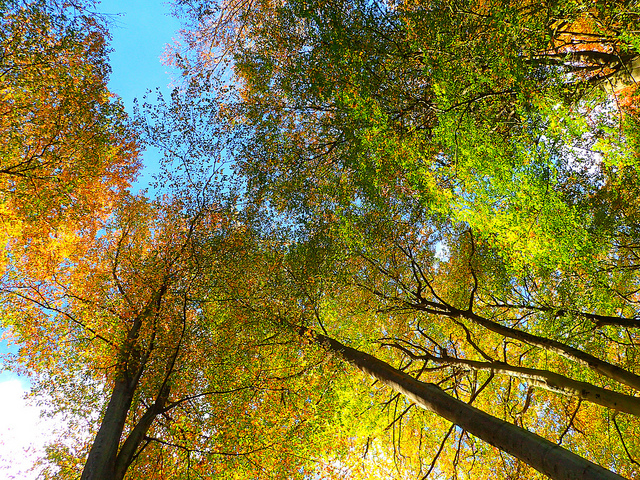
 Seasonalight
You must be logged in to post a comment.