Author: Ginny Battson

  • Notes: Nucleotidal range, the rivers of my kin.

    8118893638_b68ddc878e_k

    My double helix, a sugar-phosphate backbone runs the course of a few special rivers. My Walian DNA is a lotic flow winding South towards the sun and into the Severn Sea. Prokaryote, eukaryote. We are one and the same, and yet different. We survive in all things.

    All things are connected.

    ~~~

    Mother River

    My mother’s mother, borne by the Ithon Headwaters, Kerry sheep and curlew. Her mother, Jinny, of the Upper Severn Reach, dragonflies and lapwing.

    My mother’s father, the Upper Lugg Reach, his father, the Upper Lugg Reach, his father, the Upper Lugg Reach, and so on into deep time. Horse and bracken. Wolves, hunted to extinction.

    My mother and I, both borne by the Middle Wye Reach. We are of blossoming orchards and red-white cattle. My daughter too. Yet we all swim the Arrow.

    The Ithon flows the Wye.
    The Lugg (and Arrow) flows the Wye.
    The Wye flows the Severn
    …and into the Severn Sea.

    We are together. All life.

    ~~~

    Father River

    My father, borne by the Middle Cynon Reach, of black coal and shire horses.

    His father of the Ebbw Fawr, of heath and pit ponies.

    The Cynon flows the Taff
    The Ebbw flows the Taff
    …and into the Severn Sea.

    My father’s mother, of the Lower Tawe Reach, of sea trout and dogs.

    The Tawe flows the Severn Sea.

    We are together. All life.

    ~~~

    My freshwater super-coils, stress-strained, have carved through rock-time: Silurian, Devonian, Carboniferous and Triassic have reached saltwater.

    We are all the Severn Sea now, in atomic suspension, sucked along vast tidal beats to beaches below Liassic cliffs.

    I am Monknash, I am Dunraven. I am Jurassic coastal life.

    We are together. All life. All things are connected.

    ~~~


    ~~~

  • Kosmos ~ poem by Walt Whitman

    19205275654_d6082e6c1c_z

    Emerald Damselfly by me 2015

    Who includes diversity and is Nature,
    Who is the amplitude of the earth, and the coarseness and sexuality of the earth, and the great charity of the earth and the equilibrium also,
    Who has not look’d forth from the windows the eyes for nothing, or whose brain held audience with messengers for nothing,
    Who contains believers and disbelievers, who is the most majestic lover,
    Who holds duly his or her triune proportion of realism, spiritualism, and of the æsthetic or intellectual,
    Who having consider’d the body finds all its organs and parts good,
    Who, out of the theory of the earth and of his or her body understands by subtle analogies all other theories,
    The theory of a city, a poem, and of the large politics of these States;
    Who believes not only in our globe with its sun and moon, but in other globes with their suns and moons,
    Who, constructing the house of himself or herself, not for a day but for all time, sees races, eras, dates, generations,
    The past, the future, dwelling there, like space, inseparable together.

  • The Rocks, the Ghedeist and Me.

    25241199705_df2d8d148e_z

    Crinoid fossil in the rock, St Donats. Photo by me, 2016

    ~~~

    Having relied so much on wifi to express my love for family and friends recently, I have been considering the comparative values of the internet. By extension, I have realised I am considering the worth of the inanimate; the cables, the silicon chips, and the raw materials like oil and copper derived from Earth’s rocks and deep wells that constitute much that is ‘man-made.’

    I watched the film “Her” recently. The story-line centres around a man falling in love with his artificially intelligent operating system with female voice called Samantha. ‘She,’ meanwhile, is learning the meaning of human relationships and love. Hardly an obvious connection to the axiology of geodiversity, but amid the interplay of fictional characters, I realised that the hardware (and therefore the rocks), were integral to Samantha’s developing personality, her consciousness. She seemed not to represent anything artificial in this sense, but something more tangible. Ourselves.

    Nearly 3.5 billion users globally connect to the internet (and to each other), every day, and these blistering connections constitute not only a new era in technological communication, with issues of equity and speed of access also prescient, but perhaps a kind of manifestation of human intelligence outside of our physical bodies.

    If all humans dropped their devices and switched off the energy sources, the internet would quickly become inert, of course ~ just a series of cold cables and silent mainframe computers. But the same could be said of ourselves when we die. Cut off our energy sources and what is left? Our bodies, as biological husks, would revert to dust to become part of the biosphere’s elemental flows or absorbed into other organic life forms. There is a difference, of course, in the internet’s favour. A dormant internet has potential to be re-energised and operated once more given restorative maintenance and materials. We humans, so far, cannot be brought back to life.

    The internet forms a kind of protection in unifying those with a cause, although it is fallible without policing, abused by hardline capitalists, malicious hackers and in hiding evils. None-the-less, billions of connections are made every second. How could consciousness exist within the system, when the materials used to transmit information and data around the globe are perceived widely as inanimate and simply tools? There must be more to it.

    There is something of an extension of ourselves in the mass of cables stitched across Earth. Our personalities, our consciousnesses flow through the ether, as Einstein would have it, a fabric woven of both matter and time. Make a gesture, and like ripples, you’ll find union of consciousness with others and in some form, by an extension of your thoughts and physical touch. All things are connected.

    My brain formulates a thought, which I communicate through using my body to type (or speak), into my electronic device. It is translated by the computer into bytes and pulses sent along through wireless (radio waves), cable and mainframe until it reaches my friend’s computer and translates into typed words, which can be displayed and then read by his eyes and transmitted to his brain. Brain to brain. The brain is a powerful organ and is constantly filling in gaps, a pseudo-reality of company in the absence of direct contact. Instead of the handwritten ink words of a paper letter, that we may touch, smell, even taste, we now have an exchange of photographs, text, even video to facilitate the brain in strengthening connections. Our imaginations do the rest. Perhaps in future, all our senses will find ethereal connection. Mind altering stuff.

    The Ghost in the Machine, or the replacement of ones own being, even temporarily, into radio waves and electrical impulses reminds me of the Theseus Paradox, an ancient thought experiment. Plutarch asked whether The Ship of Theseus (restored by replacing all single wooden parts), remained the same ship. Does an object, or ourselves transmitted digitally through the ether, with all parts replaced over time, stay fundamentally the same object/subject? Heraclitus looked at this question by asking whether one may step into the same river twice. There is a unity of opposites. Hegel similarly wrote, “Identity is the identity of identity and non-identity.” Is the fossil in the rock still a crinoid? Could we be ourselves and, at the same time, not ourselves, because we are also the cables, the mainframes, the rocks?

    And more, there is an extension of the self and community, like the mycelium hyphae connecting trees of the wood-wide-web. Laptops, routers, cables and mainframe computers may not contain our DNA, but they contain our social evolutionary equivalent, our inventive fingerprints, broadcasting seeds of thought through ripples of nutritious data potentially for the collective good.

    I wonder how all nature, if it were somehow plugged in to our internet, The Ghedeist in the Machine, may gain or lose from this intense stream of information. I have a bold suspicion that we humans would gain far more from the sum of other life-forms than we could ever offer. But the rocks themselves, in situ, the geo-diverse epochs of formation and incremental movement, might well be one of nature’s original foundations for exchange of information. Heat, static electricity, H2O, sounds ~ all transmitted through rock, our species requiring high-tech gadgets to perceive, though other life-forms may well already have the biology to sense. There is so much we do not yet know.

    Let me bring in again the concept of Albrecht’s ‘Ghedeist’ and whether it is life alone which constitutes ‘aliveness’ as interconnection or whether there are what are considered inanimate (by Western standards), elements integral to it. If all life ceased, and what is left are rocks, would a universal Ghedeist still exist? On the basis that the rocks have the potential to hold a form of our consciousness, our identity and non-identity as one, and could possibly already be integral to the consciousness of other life forms, I have come to the conclusion that it would.

    This has been a revelation to me, because so far I have only found solid reason enough for inherent value of life. That we are made of ‘inanimate’ star dust has always to me been fascinating, yet secondary, in that the inorganic could not merit the same hierarchy of value as a miraculous collection of evolved cells and life-force that constitutes an individual being. I still cannot assert that I would ever choose bare rocks over existential life, if there was ever the slightest cause to make that choice. I can’t simply let go of my biocentric leanings. Life and the will to flourish, both individually and collectively, is miraculous and precious. But neither can I now detach from the idea that rocks are integral, not simply utility, to our existence and consciousness, old and new, even via the food and water we absorb. There is a profound intrinsic worth in the inert and alert. All is the Ghedeist. Even the internet, when we connect for the common good.

    There seems purpose in the formation of phenomena, dynamism and pattern in the natural laws that appear to count (so far) as universal. So much is invisible to our senses and, perhaps, even more to our technologies. But there is deep interconnection and runs unbroken if the spirit of the advancement of co-existence and evolution of all species on Earth is conserved and protected. Conflict and disturbance, we know, may result in evolutionary traits emerging and surviving. One cannot assume that all life will ever be at peace. But what we may find is that, as the Ghedeist flows, and we are fully connected with and aware of it, there will be less suffering. And so, more on this from me, in time.

    ~~~~~~~~
  • Love and love again.

    27628896865_932ba4af46_k

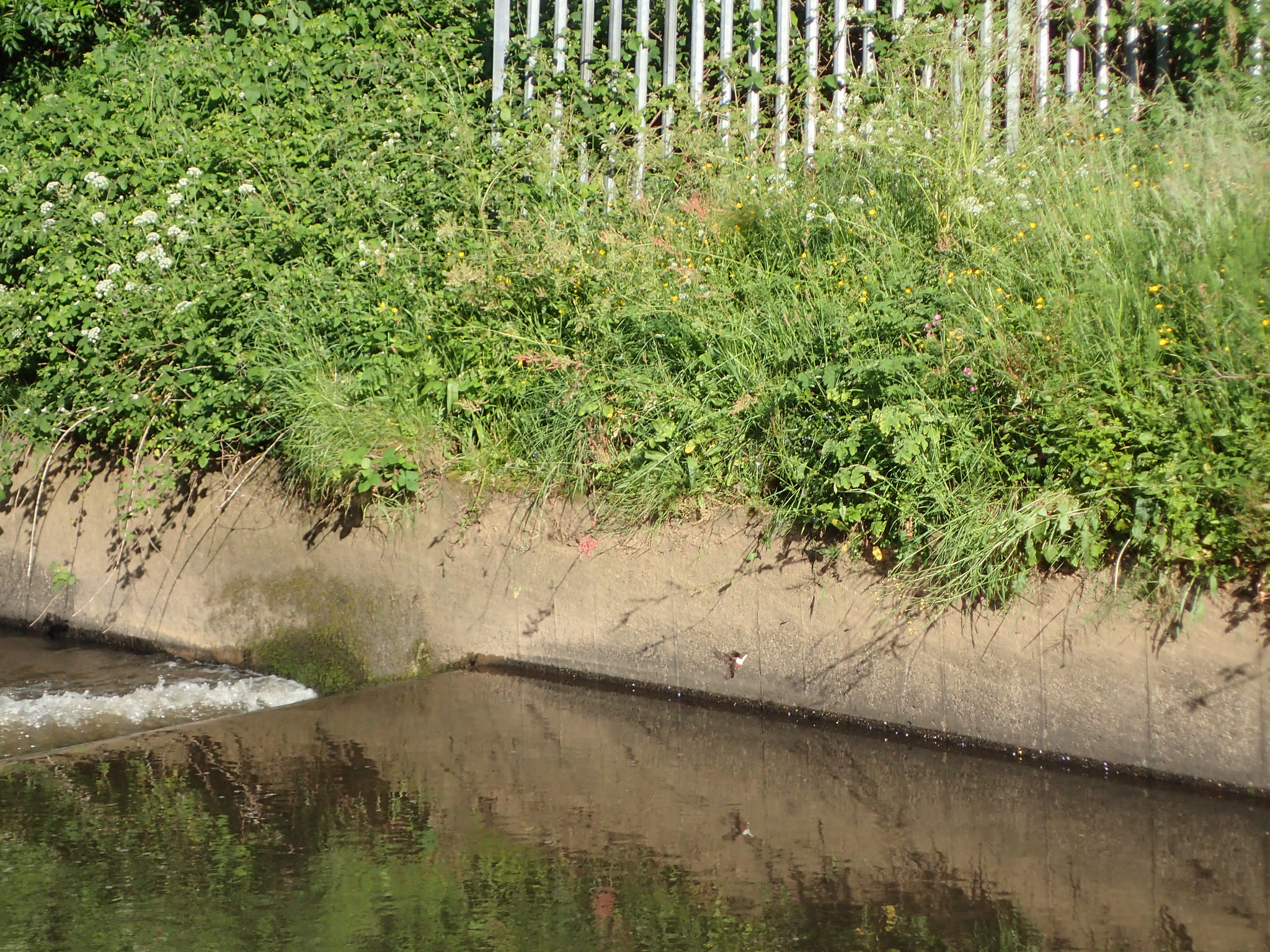
    A dipper, Cinclus cinclus, flies to her nest site above a weir on the River Ely.  Photo by me, 2016.

    A short post today, but for me none-less vital. By typing, I find clarification.

    These words were said by the wonderful Maya Angelou:

    “Have enough courage to trust love one more time and always one more time.”

    A childhood spent in relative rural remoteness meant animal companions and wilder kin were the ones I felt I understood and, more importantly I guess, the ones who truly understood me. I also loved plants in a Victorian glass greenhouse and spent way too much time in their attendance for a normal teenager.

    It has been difficult for me to find like-minded souls. I am largely an introvert in the company of other human beings. Mother-distress, parentohol, a family split, sibling separation, financial instability, Ursuline nuns, and an overwhelming sense of responsibility for others, including my nephews and a niece, were all features of my young life. I struggled with the idea of true friends. At 21, I lost my Aunt to brain cancer. With her to the very end, mortality has always seemed quite close.

    All my life, I’ve found great solace in my connection with other species in wilder places. In fact, I think I have always perceived myself as just another species alongside fox, cat, wren, dog, bee, sheep, butterfly, horse. I’m amazed I ever found a man to love me. But he did find me in student digs, and we had Bendog and then Gracie.

    Place is such a loaded word, much noise made of the ‘sense’ of it. Although my childhood home in North Herefordshire remained in the family for forty years (now sold), my life’s oceanic currents have washed me around from place to place with an almost predictable frequency. My siblings’ address books are black with lines drawn through my temporary addresses, international postcodes and landline numbers.

    I do feel rooted around the River Wye somehow, and miss it, but it is not ‘place’ that draws me. The Wye is some 134 miles long and even the most knowledgeable of river experts could not know every mile so intimately. But I do feel a strong sense of understanding those that live in and around it. I identify with them. Moreover, I love them.

    Last year I moved to the outskirts of Cardiff.  But this time I became worried about abandoning loved ones (non-human), for living so near to the City. I thought to myself, “there will be more people, more litter, more traffic, more intense recreational use of nearby areas normally in the realm of the non-human.” My worries were all borne out, of course though, it must be said, rural pressures are equally pressing upon wildlife, just in different ways.

    None-the-less, a year of being here and if I am called away, I miss the wild community to which I have recently been so warmly welcomed. I admire the community here because it exists despite human calamity. I miss all the individuals of the many species that I have spent time with, even if we’ve met only once. Dippers, brown trout, hedgehogs. I miss them because I now care deeply about them. It is love.

    Having once studied architecture in the scale of ‘human’, I am acutely aware of the homogeneity of ignoring ‘place’, and witnessing the melding of cultural nuance to the universal symbol as dull and colonial. A similar wrecking ball is that nature can be treated with one scientific masterplan and conservation enacted to a single manual of value and technological application. Regionalism was my study area, and at the time it felt radical. But now it’s wholly inadequate to describe my sense of being. Regionalism could be vast, especially to a bee or a wren. My sense of place is now almost microscopic. Wherever I am, I use all my senses to find the wilder beings. Sometimes, they find me in the nightly track of a bat, or the beat of an otter along the Ely.

    The fact is I am not constrained by place at all. My sense of place is hugely superseded by my sense of belonging to community, and this community is largely non-human. In retrospect, I suppose I have felt this wherever I have lived and now I see it as a blessing. I am not tied. I can roam, yet still feel I belong. If I were to be washed up anywhere on the planet I will belong because I know to commune with life.

    The courage to find new individuals, new species, new homes, is also the courage to trust love one more time and always one more time. I open my heart to all, despite the losses I may incur in future as I inevitably move on again.

    For this love is the union of myself and the Ghedeist, a Heraclatean Unity of Opposites in that it is both one and many. Along with my close terrestrial human loves, not least my Gracie and my Ben, there cannot be anything more comforting.

    ~~~~~~~~~~~~~~~~~

  • Love and love again

    27628896865_932ba4af46_k

    A dipper, Cinclus cinclus, flies to her nest site above a weir on the River Ely.  Photo by me, 2016.


    A short post today, but for me none-less vital. By typing, I find clarification.

    I discovered these words recently, written by the wonderful Maya Angelou:

    “Have enough courage to trust love one more time and always one more time.”

    It has been difficult for me to find like-minded souls in my life. Family and close friends aside, and especially social media, I am largely an introvert in the company of other human beings. I have found great solace in my connection with other species in wilder places. In fact, I think I have always perceived myself as just another species alongside fox, cat, wren, dog, bee, sheep, butterfly, horse. A childhood spent with older family, but mostly on my own, meant my animal companions and wilder kin were the ones I felt I understood and, more importantly I guess, the ones who truly understood me.

    Place is such a loaded word, much noise made of the ‘sense’ of it. Although my childhood home in North Herefordshire remained in the family for forty years (now sold), my life’s oceanic currents have washed me around from place to place with an almost predictable frequency. My siblings’ address books are black with lines drawn through my temporary addresses, international postcodes and landline numbers. Yes, I do feel rooted around the River Wye somehow, and miss it, but it is not ‘place’ that draws me. The Wye is some 134 miles long and even the most knowledgeable of river experts could not know every mile so intimately. But I do feel a strong sense of understanding those that live in and around it. I identify with them. Moreover, I love them.

    Last year I moved to the outskirts of Cardiff.  But this time I became worried about abandoning loved ones (non-human), for living so near to the City. I thought to myself, “there will be more people, more litter, more traffic, more intense recreational use of nearby areas normally in the realm of the non-human.” My worries were all borne out, of course though, it must be said, rural pressures are equally pressing upon wildlife, just in different ways.

    None-the-less, after a year of being here, if I am called away, I miss the wild community to which I have recently been so warmly welcomed. I admire the community here because it exists despite the human calamity. I miss all the individuals of the many species that I have spent time with, even if we’ve met only once. Dippers, brown trout, hedgehogs. I miss them because I now care deeply about them. It is love.

    Having studied architecture in the scale of ‘human’, I am acutely aware of the homogeneity of ignoring ‘place’, and witnessing the melding of cultural nuance to the universal symbol as dull and colonial. A similar wrecking ball is that nature can be treated with one scientific masterplan and conservation enacted to a single manual of value and technological application. Regionalism was my study area, and at the time it felt radical. But now it’s wholly inadequate to describe my sense of being. Regionalism could be vast, especially to a bee or a wren. My sense of place is now almost microscopic. Wherever I am, I use all my senses to find the wilder beings. Sometimes, they find me in the nightly track of a bat, or the beat of an otter along the Ely.

    The fact is I am not constrained by place at all. My sense of place is hugely superseded by my sense of belonging to community, and this community is largely non-human. In retrospect, I suppose I have felt this wherever I have lived and now I see it as a blessing. I am not tied. I can roam, yet still feel I belong. If I were to be washed up anywhere on the planet I will belong because I know to commune with life.

    The courage to find new individuals, new species, new habitats is also the courage to trust love one more time and always one more time. I open my heart to all, despite the losses I may incur in future as I inevitably move on again. For this love is the union of myself and the Ghedeist, a Heraclatean Unity of Opposites in that it is both one and many. Along with my close terrestrial human loves, there cannot be anything more comforting.

    ~~~~~~~~~~~~~~~~~

  • From 'Rape of the Fair Country,' a novel by Alexander Cordell, first published 1959.

    nantyglo_ironworks.jpg

    Nant-y-glo Ironworks (Artist unknown) c.1830

    “I thought of my river, the Afon-Lwydd, that my father had fished in youth, with rod and line for the leaping salmon under the drooping alders. The alders, he said, that fringed the banks ten deep, planted by the wind of the mountains. But no salmon leap in the river now, for it is black with furnace washings and slag, and the great silver fish have been beaten back to the sea or gasped out of their lives on sands of coal. No alders stand now for they have been chopped as fuel for the cold blast. Even the mountains are shells, groaning in their hollows of emptiness, trembling to the arrows of the pit-props in their sides, bellowing down the old workings that collapse in unseen dust five hundred feet below. Plundered is my country, violated, raped.”
    ~~~~~~~~~~~~

  • From ‘Rape of the Fair Country,’ a novel by Alexander Cordell, first published 1959.

    nantyglo_ironworks.jpg

    Nant-y-glo Ironworks (Artist unknown) c.1830

    “I thought of my river, the Afon-Lwydd, that my father had fished in youth, with rod and line for the leaping salmon under the drooping alders. The alders, he said, that fringed the banks ten deep, planted by the wind of the mountains. But no salmon leap in the river now, for it is black with furnace washings and slag, and the great silver fish have been beaten back to the sea or gasped out of their lives on sands of coal. No alders stand now for they have been chopped as fuel for the cold blast. Even the mountains are shells, groaning in their hollows of emptiness, trembling to the arrows of the pit-props in their sides, bellowing down the old workings that collapse in unseen dust five hundred feet below. Plundered is my country, violated, raped.”

    ~~~~~~~~~~~~

  • Has the world gone mad?

    14743616069_510198ece8_z

    Statue of Sir Peter Scott, London Wetland Centre, by Ginny Battson © 2014


    “The world has gone mad.”

    I am hearing this often in my particular sprachraum (the Anglosphere, at least), off-line and on-line, an almost daily occurrence from one quarter or another. Along with a sharply rising global temperature mean, record breaking norm-shattering meteorology and ice-melt across consecutive months, we are witnessing regressive steps in socio-political relationships; intolerance and prejudice gaining traction as some kind of reactive protest against uneven wealth distribution and increasing migration of the dispossessed. The far right have their heads up for the main-chance. This is deeply worrying to those with a conscience.

    Yet still, so few engage with what all urgently need to discuss ~ our relationship with Planet Earth, our home amidst a sixth mass extinction, the source of our very existence and our ultimate survival kit, regardless of who or to what our perceived moral community extends. Moreover, the intrinsic value of life, all life, and the processes and interconnections between all.

    Never have we been so vast in number. Never have we, or any other living being, witnessed such unbridled ecocybernetic change. One cannot simply call this era the ‘new normal’, because it is highly dynamic. Each dataset combined appears as a new abnormal.

    We exist in a falsely-assumed human realm, an evolutionary cul-de-sac, into which we are all symbolically corralled by our own global media and techno-markets. The truth is that we are so interconnected to all living beings and all inorganic phenomenon that we shall never fully understand it entirely. Humans are simply part of the whole. Despite what science and scientists may imply, the uncertainties are vast. Just to understand that we shall never fully understand the ultimate complexity is a humility. It is to inject some wisdom back into our times, when all else seems lost to our own arrogances.

    The irony is that so many problems are made worse by delusional and fragmented ways a dominant Western pedagogy view the Earth, its systems and unfathomable complexities. Purely anthropocentric “utility” of nature (servitude and subordination to humans) still reigns supreme in UK conservation circles, indeed UNEP. It is no panacea, as if nature is inert and placed here for one purpose only. Sometimes, I find it is these individuals and organisations who make me more angry than the just plain greedy. Given their privileged status of being educated, they ought to know better. Some are even ecologists, studying some of these very interconnections.

    I think, as others do, many are limited to a narrow field of vision, disjointed fragments of connections, encouraged by the rationalisation of Western education tied to a career-plan ~ the training of specifics, cognitive biases towards the familiar, a lack of the cross-disciplinary, rendering many blind to the peripheral vision required upon the ‘whole.’ Or is it desperation? On the frontline, they may be tired of a fight, susceptible to caving in to global financial ambitions towards exponential growth on a finite planet. Those dark forces are, indeed, strong. But giving in is not pragmatism. Giving in is simply giving in.

    I have written before on the dangers of so-called Natural Capital valued by a single unit of financial measure. Now the WWT have released their latest policy document on economic value into the very heart of the neoliberal centre-line in Westminster, subjecting nature to the same volatile economic paradigm that favours the rich and acutely fails to ‘trickle down.’ How can we legitimately and morally divide into financial units that which is hugely interconnected and that we do not fully conceive? We too are nature, the moon and the stars. Where does this end?

    This is on top of the widespread eco-illiteracy of even the most basic of underlying cybernetic principles of the ecosphere. WWT were, and are, leaders in voluntary environmental education. I revere them in this sense, utterly. Peter Scott’s beautifully altruistic ambitions have influenced many across the globe, ~ no mean feat. In his wake, I wish this respected organisation would expand education into the mainstream, not enter the fray on economics as if there were no economic alternatives than to subject nature to the language of commerce and government ~ the corporates, lobbyists, hedge funds and bankers. Investment in support of nature (including us), is important, that the flow of resources towards habitat restoration and integrated protection is generously provided via better understanding. But to value non-human life in packets of currency is another matter, I don’t care how desperate things may seem! A 25 year plan along these lines makes me suffer from eco-anxiety. I am imagining the abuses possible by a hedonistic, self-regulating City of London as I write. Many new Cabinet members don’t even acknowledge climate change as a real and present threat, leave alone that a sixth extinction is underway, and between them a small to non-existent understanding of functional ecology. Money is not an ecological educator. No matter how ‘regulated’ this new order may seem, entrepreneurial spirit and diligent accountants will find the gaps in order to take advantage at a profit. There can be no guarantees all will be for the good. This is the nature of free commerce right now. The whole paradigm needs to shift.

    And it is not by accident that our consumption-driven culture is stealing the human cumulative brain-force that could be working on better solutions. And as the shopping malls hum with either those with cash to buy or those eternally unhappy people with unrequited aspirations and no cash, the planet burns. The 1% percent skim it all off and walk away scot free. Leopold spoke of land as community to which we should belong, not chattels to be owned. Pricing nature implicitly commodifies, even if unintended, like a serious side-effect to be listed on pharma labels. And let us not forget that slavery is immoral. Ownership of all living beings follows (even domestic animals – an argument for another day).

    I am being blunt here, because I feel blunt is required. “The world has gone mad?” It is the human world that is mad. The majority of Earth is probably trying to regain homeostasis despite us. There are better ways to induce care for one another, our non-human kin and the inorganic phenomenon which are integral to life. Egalitarian eco-education/mentoring has not yet been tried, not least in the corridors of the City of London and Westminster, indeed any centre of power in great force! There’s huge room for engendering respect and reciprocity, love ~ I have not and will not give up on the ultimate power of love ~ and, with a will and a way, a return to the ecosphere perceived by the majority as sacrosanct.

    I will write again on the sacrosanct, the return and the sacred, soon. And with love!

    ~~~~~~~~~~~~~~~

  • For the Record, this day 15th July 2016

    6891357509_aa34bc25c7_o

    To Theresa Mary May, PM UK.

    ~~~~

    @ginbat
    @Number10gov you’ve made serious & grave errors on Environment in your 1st week in office. Let it not get any worse. #climate #biodiversity

    @ginbat
    @Number10gov As Prime Minister, you have ultimate responsibility for more than the people of Britain. It extends to all life. One biosphere.

    @ginbat
    @Number10gov in any lust for growth, construction sprees, wealth-accumulation plots, please don’t forget… environment is our lifeline.

    @ginbat
    @Number10gov It is not secondary. Biosphere is home. It is PRIMARY to survival /wellbeing & we are already EXCEEDING planetary boundaries.

    ~~~~

    Ginny Battson.


  • For the love of imperfection

    27867332666_a4a235e2ff_z

    “When one has once fully entered the realm of love, the world ~ no matter how imperfect ~ becomes rich and beautiful, it consists solely of opportunities for love.”
    ~ Søren Kierkegaard, Works of Love

    My walking boots have taken me downstream lately, to several water meadows,
    where tall, riparian vegetation and dependent insect life ripple to breezes like shallow, verdant seas. As I kick along deep troughs formed by smaller mammals, Skipper butterflies shimmer forward from their lofty look-outs and out to either side. Before they settle, they tussle for the top spots, as butterflies do whether I am present or not, in an extraordinary aerial display of defiance and speed. I love watching them. I love their tenacity, though they sometimes pay for it in broken wings and missing antennae.

    Wabi sabi is commonly interpreted outside Asia as recognition of the value of visual imperfections in the nature of the age-worn, crackleature and objects weathered by the elements. We may find physical deterioration artistically satisfying, joy in the uniqueness of things by their flaws. For example, I once received a brand new picture frame in the post. When I opened the package, the wood was dented, having had some kind of tussle with a mail-train door (I would imagine). I kept that frame rather than return it, admiring the dent as Zen-like and unique, whilst saving logistical resources at the same time. I look at the damage now, framing a print of a snow leopard high on a Himalayan cliff, and smile.

    Wabi sabi, as a Japanese aesthetic ideal however, is far richer in meaning than these superficial flaws. The visual cues are a mere scratch at the surface. There are deeper, emotional stirrings in action, and even the Japanese find few words to describe them. “Consciousness transcending appearance”, an acceptance of a form of “atmospheric emptiness”, a wistful mix of loneliness and serenity whilst garnering a sense of “freedom from materialism”. At the same time, there’s an inherent weight or mass in meaning and intent. Wabi sabi may be more of a ‘doing’ word than many might think.

    You’ll already know, wabi sabi is not an aesthetic commonly adopted in marketing strategies. We are courted to pay for perfection from an early age. Our faces, our houses, lawns and cars must be in impeccable order, blemishes neither tolerated nor encouraged. Ageing skin or chaos in nature are hard to bear for these gurus with money boxes to fill. Even landscapes are airbrushed, in reality and in symbolism. Foundation creams and herbicides come to our “rescue’ and at a cost (beyond money).

    Neither is imperfection the culture of nature photo competitions. A shot of a broken butterfly wing, no matter how atmospheric, would rarely pass first round of elimination. Cherry blossom and autumn leaves might be celebrated, of course, but only in full glory and not when run into a road or pressed into the mud of a woodland trail. Some attention is paid to transience and impermanence, but dying, death and bodily decay are certainly off the menu.

    Such a relentless pursuit of sublimity is a competition all life is bound to lose. We are constantly being set up for a fall. Non-human life should not have to measure up to such false, anthropocentric standards. Life is a tussle, and so few are left unscathed. Broken wings and missing antennae are common place. We may love these beings as we love our own, warts and all, for they are our kin.

    “Wabi sabi” are two kanji or Chinese characters shared by the Japanese and Chinese language. Originally, wabi 侘 meant ‘despondence’, and sabi 寂 meant ‘loneliness’ or ‘solitude’. These are emotions not portraits or landscapes, vases or tea cups. Ancient Chinese artists and writers ascribed to the aesthetic long before it was brought to Japan via Zen Buddhism and the Tea Ceremony, though classical literature, brush painting and poetry have been key to its development as an ideal and interpretive device.

    山寺や
    撞きそこなひの
    鐘霞む
    From a Mountain Temple
    the sound of a bell struck fumblingly
    vanishes in the mist

    (haiku by the 18th C Japanese poet Yosano Buson (与謝蕪村) )

    Whether one is an artist or a lover, mechanic or a parent, we attempt to communicate our personal understanding of such deep, private emotions with the ones we care about. And when we are at our most transparent and authentic, we succeed. This can take courage, of course. Our flaws are perceived by the sensibilities of our patrons and/or loves and, with fortune, are accepted unconditionally. If we fake it, we invite alienation and regret. We can learn to love all imperfections as “rich and beautiful,” and there will be endless opportunities.

    Wabi sabi exists of the organic as well as the inanimate. On a dark, rainy day, skippers are subfusc, well on their way to becoming a constituent part of the soils of the flood plain. When the sun shines, they are transformed into brazen flames of orange, flickering and fully alive. Remind me to take beautiful photos of them on those duller days, with their broken wings and missing antennae ~ I will be richer for it, in all that is love and serenity.


    ~~~~~~~~~~~~~~~~~