Author: Ginny Battson

  • A Tale of Two Rock Doves

    20953693_10212968864750552_454629679865659993_n

    The first day I moved into our new top-floor flat, a poorly rock dove landed on the balcony, waif-like with feathers broken and missing. His chest was nothing more than a wisp of grey smoke. His eyes were dull, and lumpy growths protruded from his matchstick feet. I thought he might die. Then again, I thought I might too.

    I was not feeling strong. This was my first step away from married life. We were separated.

    My husband flew our daughter to Canada for half term, and Ben-dog stayed with my sister and her husband. The marital home was sold and I was left to handle all. I had sorted, packed, thrown out and recycled. I had cleaned and dusted. I was totally exhausted. I hurt.

    Once the hired hands left, hardly a place to stand existed indoors, leave alone sit. Boxes lay deep like a swollen, cardboard river through the rooms, and the sofa stood upended, a bear waiting to hook out some tasty books. The shower was the best place to drink my tea. Last minute, more things had to be stored in a lock-up; extra journeys, extra costs. There was no wi-fi, of course. I found myself outside on the balcony alone, breathing the chilled February air.

    As the weak sun fell from the sky, and the lights of the city began to twinkle, my bird landed next to me on the balcony rail. Compassion consumed me. I guess I craved someone to love, to be present, and he needed help.

    Somewhere in a kitchen cupboard, hurriedly thrown in the back, was a pot of seeds I use for cooking. I waded through the cardboard river and found them. I sprinkled a few sunflower hearts and pumpkin seeds on to the balcony tiles. The dove dropped from the rail, bounced and hobbled towards me. He was too sick to be afraid and began to peck. He kept pausing to gaze at me, and I whispered to him, “things will be better, I promise.”

    Did he trust me? He seemed surprised someone cared. Over the weeks, he returned, sometimes many times each day. I sorted my desk and books, and regained a sense of order, along with caring for my girl once she returned. We made her bedroom cosy, a safe retreat from any emotional turmoil, and she returned to the usual patterns of school and then weekend father-visits. I bought some mixed feed and my bird’s condition improved. His eyes began to sparkle bright orange. His feathers grew neat and tidy, and he preened himself regularly. His chest puffed out with air-brushed greys and his neck shimmered green and purple in the sunshine. My daughter named him Smokey.

    One day he flew back with a mate. He took care of her, loved her. It was an honour to watch. My daughter and I delighted in seeing them bond and flourish as a pair. We still do. Their mating rituals are sheer gold. I noticed they started to visit only one by one, and guessed they were nesting. Both males and female rock doves are attentive to their young, feeding and sitting on the eggs, as fair an arrangement of parenthood as ever there was. Down there, somewhere among the slate roofs and brick chimneys, there was a clutch of warm, peeping eggs they had made. It seems I played a small part in a miracle of life, and this still makes me happy. Occasionally, Smokey coos for me, a liquid, loving call. And when I hear him, I find my way to him and we share quiet moments together. There’s no food, just presence. It’s lovely.

    I now have a few rock doves visit my balcony, each discernible by their markings and colours. I observe them at rest and in flight. Fat wood pigeons dominate feeding times by savoire faire timing and a dandy stride. Sometimes, I admit, I feel compelled to supervise. I know the gulls and jackdaws too, the magpies and even a leucistic crow, but not as well as my rock doves. I seem to have become just another bird up here in our eagles’ eyrie. I have also seen sparrow hawks riding roof-waves below like albatrosses and watched peregrines patrol the open skies above. I keep a look out.

    The second main rock dove of this tale is also a special one. She visits only when there are strong winds and cloud bursts, when the air is so drenched there seems no space even for a fly. She’s tenacious and wise. If I am at home, she knows I will feed her, even in the heaviest of downpours, with no other birds to compete. If I hear tinpany on the roof or the walls in the day time, I look out for her through the glass doors. I call her Angel.

    So much is possible.

    I’m grateful to Smokey and also to Angel; I think my two rock doves understand. Life’s commonality of need and provision applies to us all ~ people to people, people to pigeons. Pigeons to people. No-one, or life-form, is any different. We are kin and interconnected. It’s agape to feel, and fluminism to participate. My birds are still wild, and I am still Ginny. Divorce has not been the death of me and my bird family have found new energy and rhythms to life.

    My daughter says I am the mad pigeon lady. I think I may have been all along.

    ~~~~~~~~~~~~~


  • Anger, a strong messenger.

    170909091516-01-hurricane-satellite-0908-1545-utc-large-169

    NASA NOAA39’s GOES satellite image


    It’s 8 o’clock on Sunday morning and my phone alarm sounds a carefully chosen softly-softly chime to wake me up. I climb out of bed, stumble to my galley kitchen and click on the kettle. Ben sleeps cocooned by blankets on the sofa, and is dreaming as dogs do, paws and legs twitching, as if in full chase.

    I’m thinking now about the people and wildlife of the West Atlantic as I have thought of those in Africa and Asia.

    Barefoot, coffee in hand, I unlock the patio door and step out onto the balcony. It’s raining and cool. I look up to watch the scudding clouds, thick and pallid. Summimbers lace the hills to the west of the city’s sea of slate rooves. There’s a stiff breeze, nothing compared to what’s going on elsewhere in the world.

    A wave of anger suddenly burns away at my insides. I try to distract by watching the juvenile herring gulls in flight, their wings and bodies like unsteady turbines in the gusts. But the anger doesn’t go away. I can feel it rising.

    Anger, despite some religious teachings, is an important emotion. It acts (is affecting), as a signal that all is not as it should be. It can be a motivation to change, comes in varying strengths and can manifest as controlled and uncontrolled, direct or indirect. It can also conjure the urge to harm, if left unchecked.

    I need to acknowledge my feelings, because supressing them is harmful. I come inside, close my books on evolution and sit at my desk. I open my laptop and begin to type, furiously.

    ~~~~~~~~~~~~~~

    Ang is an ancient, seed word to mean narrow, constrict or choke across many languages. It has been cultivated to convey sorrow, angst and fury. Think of anger also as an ancient tree about to be felled.

    Archaic anger is the museum inside us, the tree trunk, where unsorted issues are stored deep in our consciousness as growth rings. The deep heart exists, can become hollow, yet there’s lignum to defy the odds, to defy gravity. The cortiform, rough or smooth, is our defence. Some have thicker skins than others.

    Surface anger is our reactive state, leaves and branches, often the first to be hacked off by the tree-feller or attacked by insects. Leaves are blown around in the wind, bristling, dynamic and short-lived. The anger is current and present.

    Root anger is the deep responsive urge to seek justice. It goes deep into the soils and substrate, the great wrongs, moral injustices and societal failings. It’s where the connections with the soils, the mycelium and other trees exist. Without the roots, all is lost. The tree could never regrow. Attack the roots and one attacks the community, so the community may join together to counter-attack.

    Misshapen over the years, like a coastal tree grown bent in the prevailing wind, anger can eat at the heart, sometimes unecessarily, because our inner worlds are not always a reflection of truth. We can be deceived by ourselves. Far better to air the greivances. The signal, to ourselves and to others, gets attention. Controlled, we can launch into discussion and try to resolve the problems. Acknowledge wrong from right. But supressed and it can turn explosive or snidy and manipulative, so often destructive. If we communicate in articulate ways, this can fuel us to to bring matters to a head for fuller resolution.

    Despite the awful pain and risk, anger is an opportunity. Many of us have been trained (or punished), not to show our anger from a young age. Anger is framed as insubordination and selfishness, chastised and curtailed by our elders with lasting consequence. But there is honesty in the expression of our feelings. And if we do it naturally, we can learn to control it for more positive outcomes. If that honesty is not respected, especially in a close relationship, then perhaps there is no real love. The fear of rejection looms large, but love is strong enough to withstand even a hurricane.

    If our love for all life is strong, we’ll be unafraid to show our anger. Discuss all issues and find resolution. Don’t let fear of rejection stop us. Nature can never reject us, even if we wanted it. We are inseparable.

    Yesterday, I poured over online and TV news for coverage of the multiple, ongoing climatic ‘breakdowns’ (the new buzz), though ask me and I’ll tell you…climate isn’t breaking down. Far from it. It’s ramping up, augmented by our stupid habits, shaped by marketeers, and the few who benefit excessively from that particular accumulation of monetary wealth. This is what makes me angry, because even some environmentalists won’t even accept the real changes needed. Markets will solve all? No. Facts? Sadly, not always. Valuing life and diversity for so many other valid reasons than an homogenous single unit of money is our best bet. And we do this through education. That’s where we really need to focus, and across all aspects of our daily lives.

    Extremes are fast becoming the new normal. If the biosphere is conscious (some may believe in Gaia), hurricanes would be a sabre-rattling show of root anger. Raw and unleashed, they rile against a collossal and accumulated disrespect for the biosphere represented by our egocentric Anthropocene. Yet all are harmed, human and non-human alike. Instead of utilising anger’s energy in manifesting conscientiousness and positive changes, as humans are able to choose to do, those swirling masses of heat energy simply dump it in process. Gaia’s wrath? That wrath seems too indiscriminate, bearing down on human and non-human life alike and destroying habitats. There are too many innocents harmed, and the vulnerable suffer disproportionately.

    The media coverage has been hugely anthropocentric, relentlessly showing destruction caused to human settlement and development by the hurricane cauldron, as if we are to mourn that loss. This truly is the age of stupid. Human development amplifies human-caused climate amplification. This is not to demean the human lives affected but the choices we, as societies, make. Fire and flood? No journalist immediately mentions the toll on ALL other life, as if they are frightened of appearing uncaring for fellow man. Or perhaps that massive loss (our life support system), simply does not cross their minds.

    The human ego is leviathan, behemoth and ziz. Sea, land and air.

    One of the most incredible wetland areas in the world, the Everglades, was due a direct hit by the worst of Irma and it was barely acknowledged in public, beyond the rangers who care for it. Mangroves are heralded as the great resilience, worth billions…. but even this disconnecting method of valuation is eroded when ecosystem sensitivity is blasted  by ‘new normals.’ Past events show us that life, though individually pummelled, can return yet uneccesarily altered, and not necessarily for human good. But it takes time for rejuvenation, deep time, which we as a species may not have, and we will extinguish other species before they can evolve. The pain is happening now and will only become worse. My conclusion? We are overdue for a golden era of egalitarian Earth-System pedagogy. Let all know life is interconnected even beyond our imaginations. Then stand back. We’ll inevitably see more Bookchin-ish Communality arise over Pinochet’s authoritarian Neoliberalism.

    I’ll finish now with my response to Alan Duncan’s ridiculous incarnation as UK’s Foreign Secretary. Please click to read the full thread. Now is OVERDUE to talk about action to avert Earth Crisis. Caroline Lucas would have been right to unleash her anger. Right there, in parliament. The so-called seat of British democracy.

    ~~~~~~~~~~~~~

    https://twitter.com/seasonalight/status/905809845705728000

    ~~~~~~~~~~~~~~

  • Cortiform

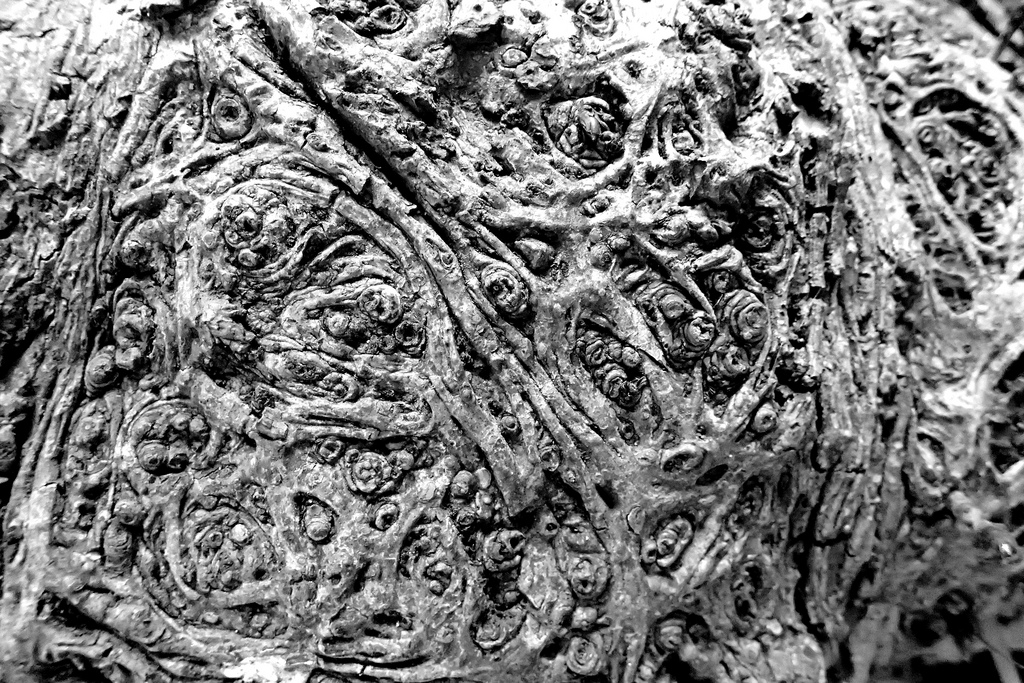
    36946862891_710c1a58a4_b

    Photo by me.

    Cortiform (latin bark/pattern)

    I have been trying to find a single word to describe all the variable characteristic features of bark including colour, texture, pattern/fissure, thickness, density and hardness.

    I couldn’t find one, so this is my #inventaword for today. Enjoy.

    ~~~~~~~~~~~~

  • Water, microbes, life, climate ~ exploring Fluminism.


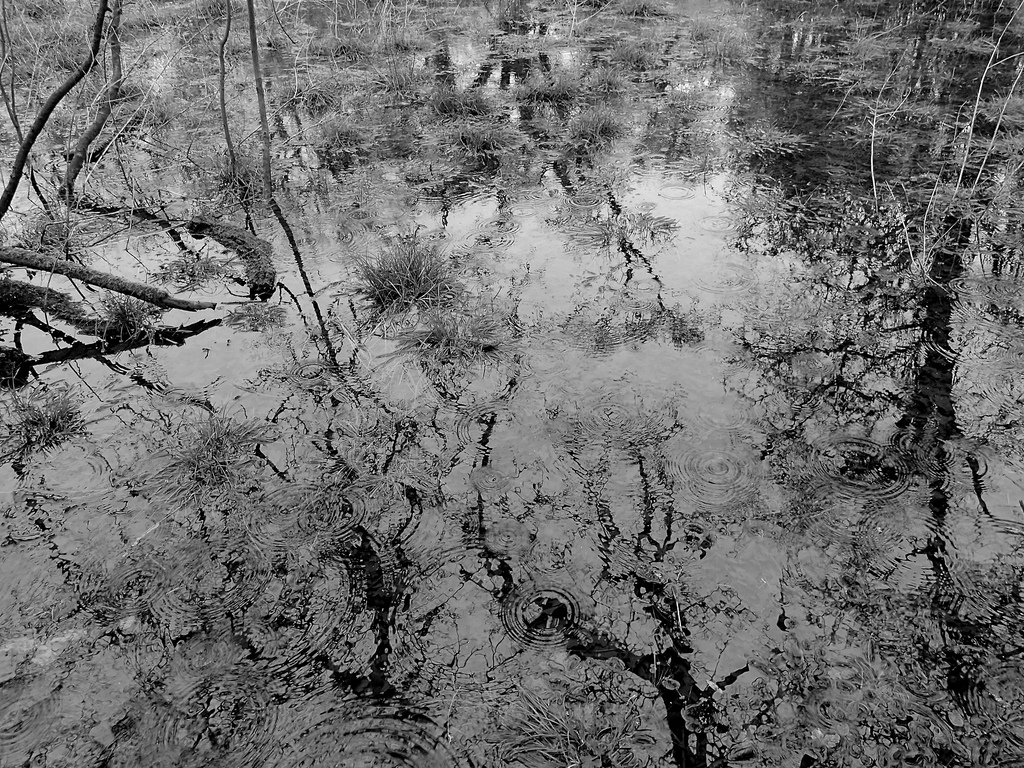
    24661005390_e71ddf7187_bPhoto by me.

    When water pulses through our blood vessels, and through all existence, it branches and converges with an array of forces. By hydrodynamics and changes of state, it braids sky with earth, underworld with ocean.

    Seven billion human souls are dependent on water, yet we are a small measure of its flow. Beauty and complexity abounds, in the form of life, in and around it. Beings flourish in the smallest of mountain springs, among the echos of the karst underworld, in the greatest living rivers and down in the deep blue sea. When water falls as rain through a forest canopy, it soaks through the humus, and all awaiting lifeforms spring up, out and, importantly, together. A wave of nutrients flow outwards, carried by water’s own intrinsic nature, but also by the animals it nurtures. When water gathers to channels and wells, life bathes and there seems more certainty in the world.

    Water gives life, and some say life made some of the water. Earth is a shiny blue dot lit up by a star, a place in space where water has gathered uniquely from within rock and deep without, pulled from a vast universe of dark matter and energy.

    Zillions of microbes gathered at first in water to settle and then to colonise Earth. All other life has evolved to encompass them. They do not simply live alongside, but on us and within us, directing moods and determining the sex of some species.

    Water is flow. Microbes are flow.

    Raindrops fall with gravitational force, impacting various structures of leaves and soils in complex ways, dispersing microbes and carrying them afar in the bioaerosols created. I observe that evaporating snow may work in similar ways. Water and microbes are interconnected.

    Life IS climate, climate IS life. There is no separation. All is flow.

    A mathematician would perceive inordinate complexity in a matrix of interconnectedness. There is no single rule, save there is no single rule. Bacteria, fungi, algae, protozoa and viruses all converse in chemisignals. The world is never, ever truly silent. And we are never physically separate, but wholly interconnected.

    Microbes relay messages to the collective. They commune. Microbes are mind, and determined, a challenge to Darwinian thoughts of success derived from catalogues of failure. Success, it seems, is intent and attempt, rather than failure after failure. This new knowledge of microbial wisdom supports cooperative evolution. We, as humans, are an extention. We, and our genome, can determine our future in order to fairly flourish. Suffering will always be part of the matrix, though we can choose to reduce it by our own actions. There is responsibility, not administered by authoritarianism but by generous, informed self-will. I am now interested, at least, in noimetics, but flow, as dynamic and interconnected life, is a constant love, because that is the quintessential nature of the evolution of life.

    Imagination is an evolved gift, we can imagine goals, articulate them in a collective consciousness, like the microbes. And with both rationale and affect, set out to achieve them. There is fluministic love in ‘doing’ these things for the promotion of life’s interconnectedness. Those that imagine and act on this better world are Fluminists. This love is a doing word.

    We also know that water and microbes can be a force majeur that overwhelms and destroys. We’ve seen it across the world this last month. Some have felt it. The destruction, loss of life and loved-ones, not just human, has been traumatising. Water and mudslides have ripped into community, clawing and scraping the toxins left recklessly about, draining them into the rivers and eventually to the sea. There will be more human disease as the climate shifts and life migrates. There has always been, but we will see new forms and strengths in others, and across other species ~ animals and plants. The collective immunity will take time to adapt. The way we apply our own lives to the interconnected flow is shown frequently to be a dis-ease. We can change. It will take commitment and a collective mind, like the microbes. It will take Fluminism and Soliphilia.

    To not commodify, but to sanctify.
    To aid and multiply life flow, not destroy it.

    These are my noimetic meanings. I can only hope they ‘affect’ you in some essential way.

    ~~~~~~~~~~~~

    The sound of rain on leaves….

    The Rainbow Serpent, Aborginal Art…


  • Mental Distress = Rain Gauge

    14908393_10210188280877693_7585100975550314501_n

    Self Portrait

    Despite all effort to break the stigma of mental distress, some still assume some kind of weakness manifest as illness, limp or spent.

    What naivity!

    To the contrary, it takes deep fortitude sometimes just to endure each day. It takes steely courage sometimes just to ask for help.

    Mental distress is no weakness. It’s a brave search. It’s a cultivation of resilience to deal and discount implicit threats palpable by bio-chemical shitstorms within us, whatever the cause.

    It’s an evolutionary adaptation giving us deep life-insight somehow. I really think so, and so does Randolph Nesse. If all truly recognised this point, think of the good ways society might change.

    Mental distress = rain gauge. Life and society. Read the measures, the answers are more likely to be here.

    But it takes relentless stamina, and sometimes we just need a break.

    ~~~~~~~~~~~~~~

  • Auranima

    IMG_3051

    Photo by me

    Auranima (latin glimmer/ghost) ~ my latest #inventaword, for when the sun shines on glossy leaves, wet pebbles or corvid feathers, turning them white.

    When there are many moments of auranima at one time, say in a forest understorey of holly, or a flock of rooks taking flight, it might seem like the brightest, gleaming mist.

  • The Badger Cull: Backfire Effect and Self Esteem

    36154945513_8df240fe2c_o36154955033_a45cc24e2e_z


    There’s palpable desperation from those good people who know that the badger cull is wrong in every sense. People who want to protect badgers need the best arguments to save them from imminent death. Many campaigners against the cull are claiming to be fully objective in their considerations because they are quoting the science. In doing so, the aim is to persuade the ‘opposition’ to simply accept they are in the wrong and change their minds. I’ve done this myself in the past, but I’m afraid it won’t work.

    If you want to talk about the science, let’s talk about psychology.

    As social animals, dependent on groups with a common interest, the more threatened humans feel (by economic uncertainty, aggression or negativity), the more they circle the wagons of opinion to keep the ‘tribe’ together, bonded and ‘safe’. They grow increasingly inflexible and defensive regardless of the facts. Psychologists call it the Backfire Effect. In the case of the pro-culling lobby, this includes many farmers, NFU and rural politicians who rely on their votes. No matter how many facts you throw at people who are already prejudiced against an action, angry or scared, you will not likely change their minds. Indignation may even increase.

    By contrast, studies show the less threatened humans feel, the more flexible opinions are likely to be, and so the more likely minds will change. If a group feel valued, with increased feelings of self-esteem, and an inner confidence about the good things they have achieved, they are far more likely to concede ground, accept new facts, compromise and change their minds.

    So, as much as we might want to hurl rocks (or facts), we may be far more successful in convincing the dairy industry to change if we hired community halls and invited all to come celebrate the products to be bought for a decent price. With humans, mostly, facts come second to values.

    At such events, healing could occur, empathy established for both sides and facts exchanged in a more caring environment. Each side might realise that, as producer and consumer (unless vegan), it is in both our interests to get things right. Maybe reciprocal events could also be arranged such as farm open days and badger watching/ecology lectures.

    Anti-cull campaigners claim objectivity in contrast with the vested interests of the farmers. Some are actively signalling that showing emotion somehow weakens the cause. Many have stopped claiming they are the voice of the badgers in a socio-political system that does not directly represent non-human interests. Many have curtailed arguing that the cull is inhumane. Some have stopped arguing that they love these wild lives and want to protect from blatant, unecessary cruelty and death. Sympathy for the cows has waned and, more still, for the farmers and their families. It’s not surprising. The cull has been, and will be, brutal and pointless. It may even make things worse.

    I’ll say this now. I strongly contest the assumption that emotions are weak. Emotions cannot be discounted because they are, and scientifically proven to be, part of our moral evolutionary frameworks for decision making. Of course we are all biased, with a fabric of values woven throughout our lives. Those of us who wish the badger culls to cease have taken sides, of course we have! It is the scientific findings that are unbiased and these assertions of fact are what we ought to be using in ethical decisions discerning wrong from right. Key, opponents will see through any bias-denial, and consequently find it easy to throw all arguments out with the bath water, including the valuable conclusions of the unbiased RBCT (see below).

    So what do we do? We look at VALUES.

    After years of being underpaid for their products and hard work, since the disbanding of the milk marketing board, increased power of the supermarkets over price and demand, the expectation of increased yields, and other factors impacting costs and price, farmers, mostly with a love of their land and the physical lifestyle, feel mentally cornered, undervalued and financially threatened. The National Herd suffers further because of the intensification required to simply earn a crust. Bovine biology has not evolved to cope with such pressures and animal immunity has weakened (e.g. rates of mastitis are also high). Vets bills have increased. Farmers are angry that bTB has impacted their lives on top of a failing market system with ever decreasing margins. EU laws forbid vaccinated meat and products for export.

    Sadly, the rationale for attacking badgers is massively poor and they hurt themselves in pursuing actions that may make the situation worse in the long run. Worst of all, evidentially, are the markets for distributing animals sold across the nation when cow to cow infection is most prevalent. Badger vaccination can assist in localised reservoirs of disease in the wild.

    Yes, empirical science ought to be foundational in making the moral choices. We need certain facts in order to make coherent assessments. The Randomised Badger Culling Trial report, authored by Krebs, et al (I have read in its entirety), is broad and deep in its scientific rigour. It has been subject to attack, regardless, with data and conclusions often misquoted or edited out of context. Read it yourselves for the minutae. But whilst overseeing the killing of around 11,000 badgers in the process of crystalisation (one cannot argue that the authors were biased by sanctifying life in their empirical work), the key conclusion was that, at best, killing local badgers over a 9 year period would yield a 16% drop in the increase of cattle infection rates of bTB.

    The Conservative Party’s decision to largely extirpate a native species from large areas of terrestrial England is, no doubt, to preserve the farming ‘tribe’ vote, because they are reciprocating action for votes in expectation they will maintain power in these rural strongholds. Good science has been ignored, deliberately muddled and misconstrued. This is a stategy, but also a tragedy, for the sake of the National Herd, farmers, badgers, whole ecosystems and all concerned citizens.

    Complicating things further, there are still deep prejudices against badgers, largely through ecological and biological ignorance and the perception of badgers as an ‘out of control’ population of pests and vermin. These prejudices are sometimes passed down from father to son. Badger baiting and the blocking of sett entrances are still prevalent, with the culling providing some false sense of legitimacy to continuing persecution. It only takes a handful of men, on the sly, with a spade and a few breeze blocks (or terriers) to do great damage in a large area of badger territory. But it is not all farmers or members of the NFU, and the culprits are sometimes not even from the local area. In Radnorshire, I’ve personally stumbled across badger hunters, trying to block setts and using terriers, that have driven over the Beacons from the South Wales mining towns. They claimed they were rabbit hunting but that was a pathetic excuse. I could see exactly what they were doing! It wasn’t a pleasant experience and I was threatened when I asked if they had the farmer’s permission to be on the land. I left quickly and felt grateful to get back to the safety of my car.

    When two different value sets clash, yes, absolutely, peer reviewed empirical science ought to help us make the right choices. But look out for the Backfire Effect. It’s more common than you think. When we reduce the arguments to just ‘science’, it is no panacea. Science has some uncertainty, and there are those who will try to take advantage of the uncertainty. There is good and bad science and scientists, perhaps, paid by biased organisations or governments, rather than fully independent funders, who’s work may not be as rangy, enduring, or may not be communicated well via non-science spin-doctors. Science too often needs scientifically literate people to understand it. For example, Hansard revealed a major problem after the main debate in parliament about probable outcomes. As mentioned above, the RBCT concluded that in a period of ‘reactive’ culling (upon outbreak of infection in a herd) lasting nine years, there was only a 16% reduction in the rate of increase of bTB infection in cattle and sometimes infection rates became worse, in time. Some politicians took that to mean a clear 16% decrease in infection. Lord Krebs tried to correct them, but the “misunderstanding” obviously became stuck in some minds and has been repeated since. This is all very frustrating, and I was left reeling that 11,000 badgers died to discover this “truth”. Proactive culling means extirpation. If we wish to stamp out bTB now endemic in the wild because of imported, infected cattle, we’ll need to consider wiping out all infectable mammals, as the potential is vast. Who can consent to such an outrage? Better still, and environmentally sustainable too, is to encourage local markets for both livestock and produce, assist in farm biosecurity and pay a decent price for dairy produce.

    Back to values. The farmers are passionate and are emotive in their lobbying. We must also be unafraid to express our passion and emotion because to deny we are biased is an untruth. But if you really want people to accept the findings of the RBCT and stop this cull, I think we need to be kinder in our delivery of the facts, give to the dairy lobby an all round boost of self esteem, establishing caring connections through values. For this too is objective science, it appears – the science of psychology.

    ~~~~~~~~~~~~~

    For further insight, please read Elizabeth Kolbert’s article in The New Yorker ~ Why facts don’t change our minds. http://www.newyorker.com/magazine/2017/02/27/why-facts-dont-change-our-minds

    And for the Backfire Effect and the benefits of increasing self esteem in accepting new facts, please read Maria Konnikova’s article ~ I don’t want to be right. http://www.newyorker.com/science/maria-konnikova/i-dont-want-to-be-right

    ~~~~~~~~~~~~~
     

  • The Sacred and me.

    1200392IMG_7566
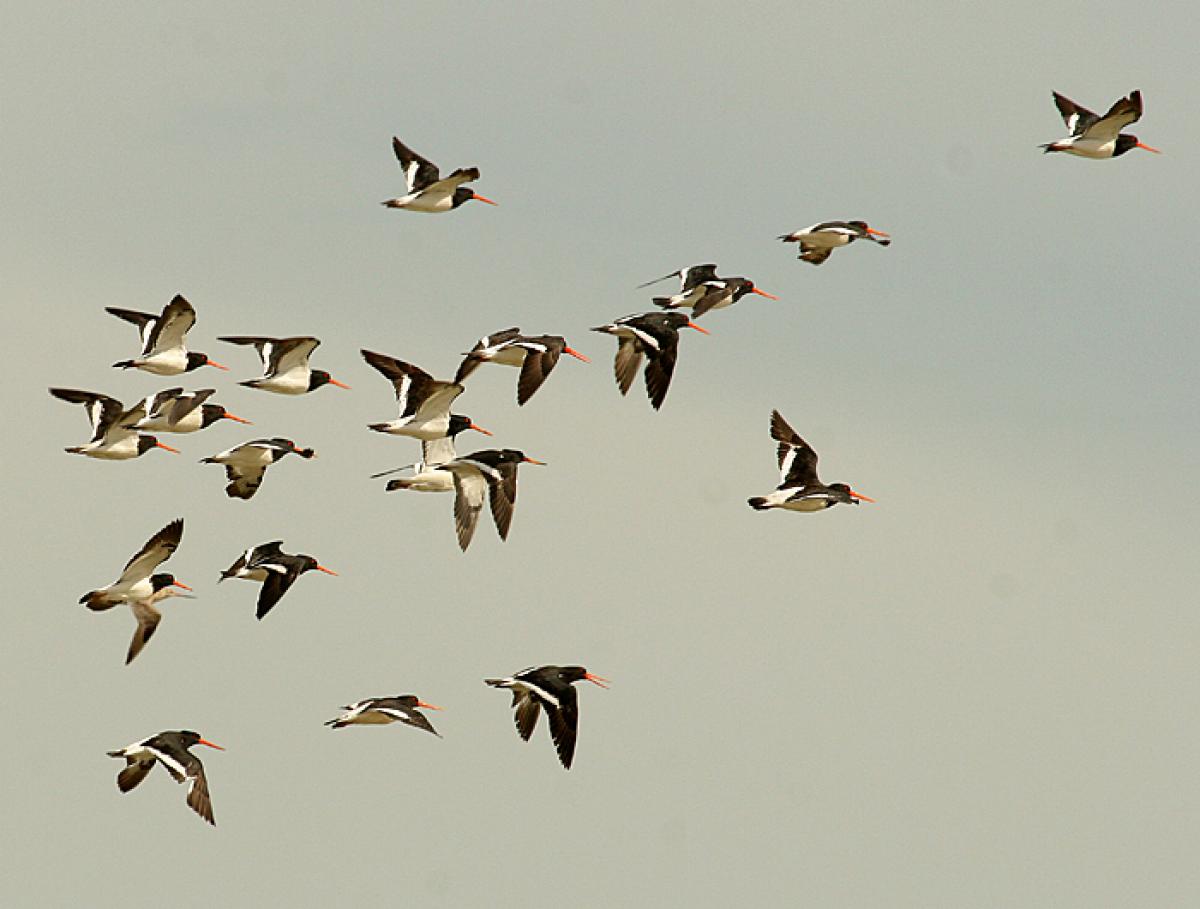
    Click the Image for more on Variable Oystercatchers via NZ Birds Online.

    Today, I write only with a light touch about the sacred. I’m no expert. Neither am I entirely sure of the fullness of its nature. My spiritual sense of self, you could say, is often non-existent. Otherwise, it lays somewhere in a starry haze of semi-conscioussness that is ill-defined. I need to be full of wine to feel anything like I imagine it to be, unless it is simply the feeling of loving and being loved. I have no faith in an afterlife, and heaven is most definitely a place of ecological vibrance, a place on Planet Earth. Theologians have their time-layered works bound in chained libraries, and literature is loaded with the romance and the symbolism. Research potential is vast and just a little bit daunting. So I’m going to be bold and say here only what I have been thinking over the last few weeks.

    Despite the amplitude of human thought, maybe we’ll never fully articulate what constitutes the most sacred. In so many ways, I’d rather leave it a mystery. I do see purpose in exploring the sacred extrinsically, none-the-less. This is the reason why I write today.

    There’s credence in declaring ecological networks sacred as a route to the protection of life, a full sanctity of life. Nurtured this way, perhaps, the sacred become inviolable. Constituent lives are liberated to evolve with a free-will, a flourish of nature’s effervescent, green fuse. More, by cultivating a collective reverence for the presence of a community of living beings ~ through narratives, ritual and rules ~ we may look and ‘see’ life in new ways, a wave of sanguimund spreading though each one of us, the wonder of interconnected life. There have been many before us using sacred words with similar meanings now lost, and I hope many after, with words yet to be created. All I ask that we think about creating our own sacred, build the narratives and exercise the rituals. Then, defend from the profane. And that defense, in sanctity and in love, will need to be strong.

    Guarding the sacred is not limited to protection from human intrusion. Sometimes, the opposite is vital. Sometimes, the sacred is one’s presence or consciousness and the tending of ecosystem in a loving, fluministic way. Fenced-off zones around Chernobyl have led to non-human life returning in abundance. There is a sanctity in the absolute devotion of ecological networks of that place. But the absence of humans is not a pre-requisite of the sacred. Churches may seem at their most holy when the bells toll loudly, when the stalls are heaving with parishioners singing hymns at the top of their voices. The sacred seems to exist somewhere in the union of the people in the nave, all facing east, a sense of reverence helped along by those clever architects placing windows in the clerestory to remind of God’s presence in beams of moted dustlight. The land can hold us with a similar sense of direction, committment and devotion. And God need not be involved, unless he is simply love.

    But a private moment, no less, can be the touch of grace, with such strength that it can change one’s perspective forever. I lean over my Grandmother’s grave and remember her strength. Fused into my memory cells, she’d garden with such force as to create her own weather system. This memory seems sacred, but not her grave. I feel the difference in remembering I am her kin.

    It may not be a surprise to you that I feel the sacred most in perceiving those bristling interconnections in the living world, the living, quietly seen or unseen. A humble field maple will do it, with birds in the gnarly branches and fungi at the roots. Their Autumnal yellow glow takes my breath way and I am minded to sit for hours and just be present. It is a profound love, intense and moving. A mother fox licking her young, a tender petal opening to a bee, these are all things bright and beautiful. Light is important to me, I’ve been to the darkest of dark (I call this blog Seasonalight, light seeking). That the direct or diffused sunlight gives succour to life seems profound. I love the light around waterfalls. So do the mosses and the liverworts. There are also also the green rays at sunset, or during eclipses, the last and first moments of light bent and scattered through our thin atmosphere like moments of magic.

    The sacred can also be a memory, an event marked at a place only by the truth-myths passed down through generations. From the eastern sunrise, I once arrived at the spectacular Hokianga Harbour, North Island, New Zealand, an area brimming with sacred Maori sites. Yellow dunes on the far side of the bay shone brightly sucked back into a baby-blue vacuum. An incoming tide from the Tasman sea swept the bay clean with crested wave upon wave, and variable oystercatchers flew low at blistering speed (I could just make out their uncanny calls). I followed a sign to a look-out point high above the harbour entrance and sat on a low wooden bench. I felt an immediate essence of something profound here. I was positioned somewhere on the edge of it all, and it felt like sanctuary. Later, I walked along nearby Omapere wharf and talked to a Maori man from the village who was fishing with a simple line and hook. I was just a tourist, yet he was so generous in conversation. He told me his Maori oral tradition, that legendary Polynesian explorer, Kupe, of the Matahourua canoe, made first Aotearoa landfall and lived here. The story goes that he named it Te Puna i te ao marama ~ the spring of the world of light ~ until in his old age he decided to return to his island birthplace, Hawaiki. The words he spoke as he left were, Hei konei ra i te puna i te ao marama, ka hoki nei ahau, e kore ano e hokianga-nui mai  ~ this the spring of the world of light, I shall not come back here again ~ and so, granted Hokianga its name.

    The vessel of the sacred contains a good measure of vulnerability. Maybe this is an essential tension that drives us to protect. Great sacrilege occurred at Hokianga, long after Kupe’s departure, against the endemic and the Maori. The mighty kauri trees, like the blue whales of the world’s forests, were wrenched from inland Waipoua and floated down the river for milling and global export, mainly by the hands of Pakeha (non-natives). Unlike the Maori, who would take chosen trees with a reverence, for canoe-building, the Pakeha took nearly all. And without the kauri, large parts of the forest died and many endemic species lost forever. What was left was turned over to dairy, and again those products exported globally from the Harbour. To destroy the interconnections between living things is to destroy the most sacred ~ life. Thankfully, another Pakeha, William Roy McGregor, professor of Zoology, successfully campaigned to end logging of the Waipoua Forest in 1952 and created the Waipoua Forest Sanctuary. The sanctuary is still weak from attack, with Kauri Die-back disease laying claim to regenerating forest, and climate change will be having its effect. Let’s hope this small part of a once vast, ancient forest recovers to it’s truest dynamic state of being, given full protection and time.

    Unlike the great Kupe, perhaps, I’ll return to Hokianga again one day. Modern technology makes it easier for me, though I’ll have to watch those emissions (always somekind of price to make such returns). The harbour and surrounds are a wealth of flora and fauna and, until then, it will be the distant sounds of the oystercatchers, torea-pango, that will remain in my memory as symbol of the sacredness of that place. If I am quiet enough, I can still hear the sacred, right now in my head.


    ~~~~~~~~~~~~~~~~

  • Love, in measures.

    7531008050_0ddfbc8cc1_b

    Photo by me.

    I retweeted a generic meme on my twitter timeline recently, rare for me, caught before it was lost to the bottomless void beneath my screen… “Measure your life in love” ~ RENT, it said.

    I had been pondering about how we measure love, rent aside.

    Can love only be measured by actions? How far do words count, especially beyond the human world? Words are for human to human communication, although some other species will learn some spoken words. I think we are generally very poor at understanding their languages, though I would encourage all to try.

    Picture this. I may stand in a wood beneath the canopy-glo on a sunny day and speak outloud, in my English, that I love this wood. I don’t need to shout, mindful not to disturb others. This is not my home. I would not impose, uninvited, by being intentionally loud. The sounds gently echo back from the tree trunks, through my head and into my brain cells. I am telling myself that I love the wood, and it seems to work as an affirmation. That maybe of some value to me. But what about the community of individuals of the woodland realm? Do they respond? Are the trees, the birds, the reptiles, the soil amoebas and the hyphae responding to being told they are loved?

    We now know trees are sentient, but I am uncertain, spirituality aside, if they really understand exactly what I am saying. There are more humans than not, who wouldn’t understand what I am saying. So, maybe, I think these words do not matter so much…

    Now that my love is affirmed, what about actions? In making moral judgements, emotions and rationale (verbalised, either internally or externally), motivate us to act. If I were to protect those trees, understorey and all dependent life from a bulldozer, to educate people to respect the woodland as community, to fence it from deer overgrazing, to leave woody debris for roots to gain nutrients, to water it in drought, would they understand those actions I take, rooted in my love for them? Still, I am unsure. Most Westerners might consider there’s no consciousness in a wood. Perhaps, to remain open-minded…

    I might, of course, be incorrect in suggesting the wood be fenced, for example, as such an action might restrict the passage of individuals, granivores, to and from their home. This is something I need to investigate first, to be sure that prior evidence is weighted in my decision making. I might be damaging the wood in the name of love, so I need to double check. This is why we need to be consequentialist in our understanding. Evidence is needed to support our actions, to guide us to a likely outcome, but, this also is rooted in love. It is a loving thing to do.

    So, actions rooted in love can be empirically measured as love.

    Next, go back to those words. “I love this wood”. How do actions compare to strength of feeling, or words? I am highly motivated, morally, to protect this wood. To protect it is the right thing to do. The voracity of my actions are measurable not in how loud I shout about it, but in how good I am at researching and implementing the best possible action to take. A good photo of this same wood, or a painting, or a poem, may help me to strengthen that affection of the real community they represent. I may also tweet about that love. Others may read what I tweet and discuss with friends and family. I have read the conservation evidence written by others, of the good (or bad), of certain actions compared with others. I try to look for a consensus. I may not get things right every time. But still, the love can be measured, in the protection of that wood, from all the words communicated to me, the words I affirm to myself and extend to others, the actions I take and the results.

    So, I can’t find any real divide between love’s actions and words, at least when they are genuine. Maybe, I knew this all along. But I had to check.

    Love’s actions and words, like everything else I try to tease apart, are connected. More, it is similar for all species that communicate in some way, via sound, vibration, chemicals and touch and other methods we may not yet be aware. This is intrinsically fluminism. Actions and communications ~ a flow between all individual entities for ‘good’, from within to without. Fluminism is a very powerful form of love.

    In conclusion, I think we can measure all life in love and love by life in its diversity and abundance, breadth and depth. Love-life. Life-love.

    ~~~~~~~~~~~~

  • Notes on companionate love.


    CombJellies1_jpg

    In losing companionate love, it seems the understanding sharpens…

    (I might add or take away)

    ~~~~~~~~~~~~

    There are no crashing waves, as when one is falling into love. Instead, there are deep oceans trenches of life-love.

    This is a creative force ~ life enhancing, forged in those salty depths. There is a creativity of each other, and in the union. We share, we glow, bioluminescence under pressure and at depth.

    Sharing of one’s life, daily, is a work of transcendence above selfishness and self centredness. Each one of us must remain in tact, so there is no completion of ourselves. But there is a sum greater than ourselves.

    Potentialities of the individual shine around the other, when both would otherwise remain unseen. Kindness and empathy towards each other may spill over to community, in the spirit of agape.

    There are daily deeds, daily communions, of sorrow and of joy. There are exothermic moments, when one absorbs the heat of the other, where one absorbs the anger of the other. There is reciprocity, especially in laughter.

    Love gives life meaning, but not a particular meaning ~ rich hydrothermal vents of ingenuity and succour.

    There is porosity. And there is adhesion. Touch is essential, daily. More than daily.

    Companionate love finds connection in incremental expansions, like cryptic hyphae exchanging signals in deep ocean sediments.

    Like the prevailing current, we each are the fetch of one another’s skin. There still can be passion. Reunions.

    We share an outward glance from internal seeing.

    There will be the quietest moments. Stillness. There is tenderness.

    And then there is grief. For one or the other.

    There are times when love recedes, an ebb, when hurt and insult is felt in ways that one’s own wellbeing is harmed. Sometimes, the deepest love leaves us.

    ~~~~~~~~~~~~~